Mandela Day (18 July): How Gandhi’s Spirit Unites Mandela and Martin Luther King?
 3 months, 1 week ago
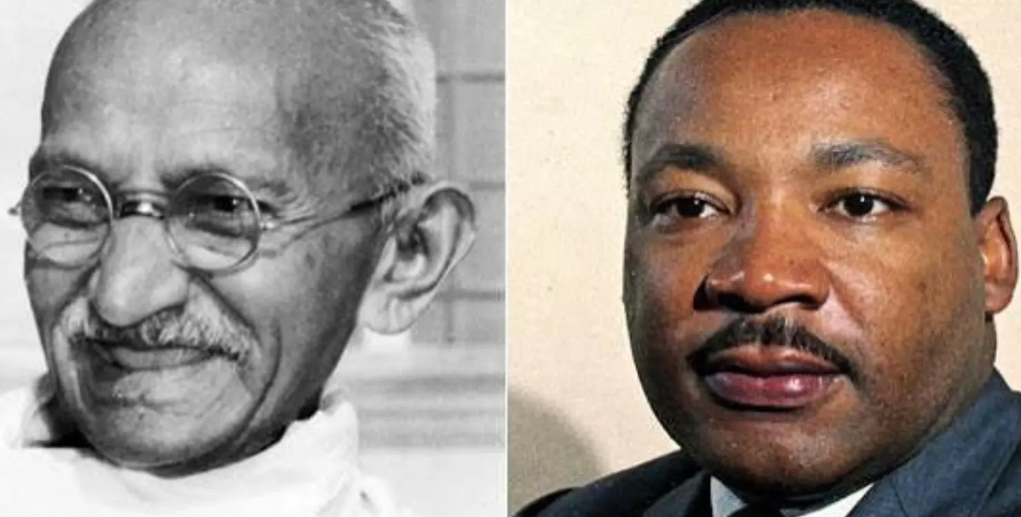
The winter mist enveloped Delhi as anti-apartheid icon Martin Luther King Jr. arrived at Rajghat on 10 February 1959 to pay homage to his inspiration, Mahatma Gandhi. Thirty-one years later, on 18 October 1990, another champion of the cause of blacks, Nelson Mandela, visited the same sacred site. Though the two leaders never met in their lifetimes, India’s capital became a common spiritual ground where both drew deep inspiration from Gandhi’s philosophy of non-violence, truth, and human dignity.
Champion of civil rights Martin Luther King Jr. first set foot in the city in 1959. Nelson Mandela arrived in 1990, shortly after spending 27 gruelling years in prison. Delhi welcomed both Black leaders with open arms, warmth, and deep respect. They participated in public programmes, engaged with Indian leaders, and paid solemn homage at Rajghat, the Samadhi of their shared inspiration, Mahatma Gandhi.
Mandela’s first visit on 15 October 1990 was nothing short of triumphant. Nelson Mandela also visited Gandhi Smriti, the sacred site where Mahatma Gandhi spent his last days and was assassinated. Deeply moved, Mandela walked through the quiet rooms and gardens, reflecting on the man whose philosophy had shaped his own struggle against apartheid. He described the visit as a spiritual pilgrimage, drawing fresh strength from Gandhi’s message of truth, non-violence, and forgiveness. Standing there, Mandela paid heartfelt homage to the guiding light of his life.
He returned in 1995 and again in 2001 to receive the International Gandhi Peace Prize. These visits reinforced the deep historical friendship between India and South Africa and injected fresh momentum into bilateral cooperation in trade, education, technology, healthcare, and culture. Delhi received him each time like a returning hero. Its streets, echoing with memories of India’s own freedom struggle, felt familiar to a man who had sacrificed decades for dignity and justice. The author had the privilege of covering Mandela’s historic 1990 visit and witnessed first hand how his calm, dignified presence moved thousands. His quiet strength and infectious smile bridged cultures effortlessly.
On 10 February 1959, Martin Luther King Jr. arrived in Delhi accompanied by his wife, Coretta Scott King. As one of the first prominent African-American leaders to visit independent India, King’s journey was a pilgrimage. At Rajghat, visibly moved to tears while placing a wreath, he told reporters: “To other countries I may go as a tourist, but to India I come as a pilgrim.” The couple received a heartfelt welcome from Gandhian leaders and government officials. King met Prime Minister Jawaharlal Nehru and Vice President Sarvepalli Radhakrishnan, an encounter he later described as meeting the founding fathers of a nation in a single day. He addressed students and citizens on the transformative power of non-violent resistance, drawing powerful parallels between India’s independence movement and the American civil rights struggle. The Kings stayed at the Janpath Hotel (whose building now houses the Indira Gandhi National Centre for the Arts). King’s Indian tour continued, but he returned to Delhi before departing on 18 March 1959, carrying renewed inspiration.
“King’s time in Delhi was short but profound. It linked the struggles of Black Americans with India’s own fight against injustice and colonial oppression,” noted peace activist Kaatsu Saan, who is part of the All Faith Prayer at the Rajghat for over half- century.
Both leaders found in Delhi something rare and special. A living testament to the power of ideas over force. Mandela’s visits in 1990, 1995, and 2001 celebrated hard-won victory after decades of imprisonment and exile. King’s 1959 arrival came at the height of his rising influence, when he was already a global icon of moral courage. Delhi, with its layered history of empires, invasions, resilience, and rebirth, became a shared chapter in their extraordinary stories. The capital listened attentively to their voices and amplified their dreams of equality and justice back to the world.
Mandela’s remarkable ability to forgive after 27 years of hardship and King’s steadfast commitment to peaceful marches despite constant threats offer timeless lessons. Their examples, deeply rooted in Delhi’s soil through Gandhi, continue to guide contemporary fights for racial justice, social equity, and human rights across the globe.
As another 18 July arrives, it is fitting to reflect on how two great men discovered inspiration, solidarity, and friendship in India’s capital. Mandela’s warm receptions and King’s thoughtful pilgrimage wove bright new threads into Delhi’s rich historical tapestry. Their legacies of hope, dignity, non-violence, and unity remain alive in the city’s landmarks, institutions, and collective memory.
Their visits remind us that freedom’s call echoes across time, borders, and generations. In a world still grappling with inequality and division, Delhi stands proud as a witness to these luminous chapters of history.
In essence, Delhi did more than host these leaders; it embraced their spirits, absorbed their wisdom, and now carries forward their light for future generations to follow. Through its streets, memorials, and living institutions, the capital continues to remind the world that the pursuit of equality is a shared human journey that Gandhi ignited and Mandela and King carried forward with unmatched grace and determination.





[[comment.comment_text]]