Questions Without Answers

 an hour ago
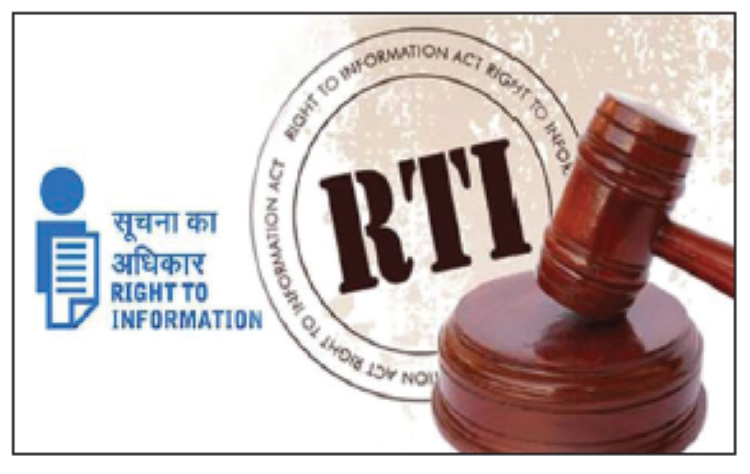
India’s transparency law transformed citizens into watchdogs of public accountability. But mounting delays, institutional vacancies and concerns over legal safeguards are testing whether the promise of open governance can survive bureaucratic resistance.
Democracy does not end with the casting of a vote; it begins to weaken when citizens are denied the information needed to question those who govern them. Twenty-one years after India introduced the Right to Information (RTI) Act, 2005, this fundamental principle of accountable governance faces a critical test. A law that once opened the doors of government offices to public scrutiny now confronts a familiar obstacle: the distance between a right guaranteed by legislation and a right that citizens can effectively exercise. The question is no longer whether information empowers people, but whether the institutions responsible for delivering it are functioning with the urgency and independence that the law demands.
When the RTI Act came into force on October 12, 2005, it represented a decisive departure from the culture of official secrecy that had long characterised administrative functioning. Rooted in the constitutional guarantee of freedom of speech and expression under Article 19(1)(a), the legislation established a statutory mechanism through which citizens could seek government records, question administrative decisions and examine the use of public funds. It transformed access to information from a matter largely dependent on official discretion into an enforceable legal entitlement, subject to specific exemptions.
The impact was significant. Citizens, journalists, social activists and civil society organisations gained a practical instrument to investigate irregularities in public distribution systems, employment schemes, recruitment processes, welfare programmes and infrastructure projects. Information that once remained confined to government files could now be brought into the public domain. RTI helped expose administrative failures, strengthen public debate and compel officials to explain decisions involving public resources. More importantly, it redefined the relationship between the state and the citizen: government information was no longer simply an administrative asset but, within the limits prescribed by law, a resource to which the public had a legitimate claim.
However, a legal entitlement is meaningful only when it can be enforced within a reasonable time. Under Section 7(1), public information officers are generally required to respond to RTI applications within 30 days. Yet applicants continue to encounter delayed replies, incomplete information, evasive responses and refusals that may be difficult to challenge without further legal or administrative effort. Exemptions under Sections 8 and 9 are necessary to protect specified interests, but their application must remain within the boundaries of the law. When legitimate exemptions are invoked without adequate justification, transparency risks becoming subordinate to administrative convenience.
The problem becomes more serious when an applicant has to pursue an appeal. The RTI framework provides for a first appeal before the designated authority and a second appeal or complaint before the relevant information commission, depending on the circumstances. But an appellate mechanism that cannot deliver timely decisions weakens the practical value of the original right. Information about a delayed pension, an irregular recruitment exercise or the diversion of funds may lose much of its immediate relevance if it arrives years after the underlying decision. Delayed justice in information matters can therefore protect administrative inaction, even without an explicit decision to withhold information.
The functioning of the Central Information Commission and State Information Commissions is consequently central to the future of RTI. Vacancies, inadequate staffing and mounting backlogs have constrained the ability of these bodies to dispose of appeals and complaints promptly. These commissions are not merely administrative offices; they are statutory institutions expected to enforce disclosure obligations and, where the legal requirements are satisfied, impose penalties on officials who fail to perform their duties. Governments must ensure that appointments are initiated before vacancies disrupt operations, that commissions have sufficient resources and that selection procedures preserve institutional credibility.
Concerns over institutional independence have also intensified following the Right to Information (Amendment) Act, 2019. The amendment changed the statutory framework governing the tenure and service conditions of information commissioners, empowering the Central Government to prescribe these matters through rules. Transparency advocates have argued that this arrangement may weaken the independence of institutions tasked with scrutinising government functioning. The central issue is whether information commissions possess adequate institutional safeguards to exercise their statutory responsibilities without undue executive influence.
The relationship between transparency and privacy presents another difficult test. The Digital Personal Data Protection Act, 2023, amended Section 8(1)(j) of the RTI Act through its consequential amendment provisions. This change has prompted concerns that personal-data protection could restrict access to information even where disclosure may be relevant to public accountability. Privacy is a legitimate right, and the unnecessary disclosure of personal information must be prevented. But privacy protections should not become a convenient shield against scrutiny of public decisions, official conduct or the use of public money. The challenge is to preserve both rights through clear legal interpretation and responsible implementation.
The social reach of RTI remains equally important. Although the law is available to citizens across the country, awareness and access are uneven. People in rural areas and economically disadvantaged communities may lack the information, documentation, digital access or assistance required to navigate the application and appeal process. Women, informal workers, pensioners and beneficiaries of welfare schemes may have particularly strong reasons to seek government records, yet face practical barriers in doing so. A transparency law cannot fulfil its democratic purpose if its benefits remain concentrated among those who already possess the resources and knowledge to use it.
Making RTI accessible requires sustained public education. Panchayats, block offices, district administrations, educational institutions and public libraries can play a role in explaining how to file applications, identify the appropriate public authority and pursue appeals. Equally important is the implementation of Section 4, which requires public authorities to proactively disclose specified categories of information. Budgets, expenditure records, eligibility criteria, administrative procedures and details of public programmes should be published in accessible formats wherever legally required. Effective proactive disclosure can reduce unnecessary applications while improving public confidence in government institutions.
The media, too, has a continuing responsibility to use the law for public-interest journalism. RTI can help reporters examine government expenditure, verify official claims and investigate discrepancies between policy announcements and implementation. But its value depends on access to reliable records, timely responses and the ability to verify information independently. A functioning transparency regime strengthens journalism by making public administration more open to scrutiny; a dysfunctional one raises the cost of investigative reporting and weakens citizens' ability to assess official claims.
The future of the RTI Act must be measured not by official assurances but by concrete institutional reforms and enforceable accountability. The government must fill vacancies in the Central and State Information Commissions within a fixed timeframe, publish a time-bound plan to clear pending appeals and complaints, and ensure that no commission remains paralysed because appointments have been delayed. Every public authority must be held accountable for statutory deadlines, while unjustified denials, deliberate delays and incomplete disclosures must invite action in accordance with the law. The government must also publish regular, publicly accessible data on applications received, information denied, appeals pending, penalties imposed and compliance with disclosure orders.
Equally urgent is the need to safeguard the institutional independence of information commissions and prevent privacy provisions from becoming a blanket justification for withholding information in matters of legitimate public interest. Parliament should undertake a transparent review of the legal framework to ensure that the right to privacy and the right to information are reconciled without undermining public accountability. Every district should have an accessible RTI assistance mechanism, supported by local-language awareness campaigns, while public authorities must strictly implement their proactive disclosure obligations under Section 4. These are not optional administrative improvements; they are essential conditions for making the law effective for ordinary citizens.
The government must also recognise that the right to information is not a concession from those in power but a statutory right secured through democratic struggle. Citizens, journalists and civil society organisations must continue to scrutinise its implementation and demand corrective action wherever the system fails. The real test of India's commitment to transparency is whether an ordinary citizen can obtain a government record within the prescribed period, challenge an unlawful refusal without years of waiting, and secure accountability when an official violates the law. Twenty-one years after the RTI Act came into force, the country needs a time-bound action plan, measurable performance standards and public accountability for institutional failure. Without these commitments, the right to know risks becoming a promise repeatedly celebrated but inadequately delivered. Democracy cannot function effectively when citizens have the right to ask questions but must wait indefinitely for answers.
(Author is senior journalist and commentator on current affairs.)










[[comment.comment_text]]