Silencing the Capital: How Dissent and Independent Media Were Muzzled in New Delhi

 2 hours ago
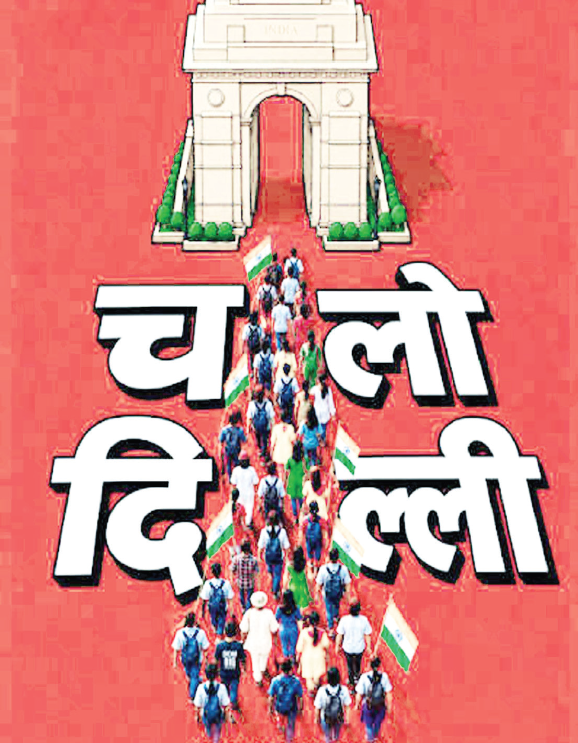
Over the past week, the heart of the national capital was forcibly transformed into a heavily fortified garrison, characterized by multi-tiered steel barricades, sharp concertina wire, and thousands of armed security personnel deployed to suppress widespread public indignation. What began as a peaceful, democratic movement demanding basic transparency and institutional accountability from the country’s premier electoral body was met with a disproportionate and brutal display of state power. Citizens, student organizations, legal experts, and civil rights advocates had gathered in massive numbers to register their profound alarm over the integrity of the voting process. Central to their grievances was the Special Intensive Revision of electoral rolls—a process marred by allegations of arbitrary voter deletions and structural irregularities—and an unequivocal demand for the immediate resignation of Chief Election Commissioner Gyanesh Kumar. Instead of addressing these fundamental constitutional concerns through democratic dialogue, the state responded by turning central arteries like Jantar Mantar and the avenues leading toward the Supreme Court into sites of systematic containment and violence.
To prevent demonstrators from exercising their constitutional right to assemble, administrative authorities enforced an aggressive, military-style lockdown across strategic parts of New Delhi. Key metro stations were abruptly shut down without prior public notice, shutting off access to the city center. Public transportation routes were diverted or suspended, and an overarching blanket of restrictive orders was imposed across the capital. Mass detentions were initiated well before protesters could assemble in significant numbers. Six major public facilities on the city's perimeter, including sports stadiums and community complexes, were hastily converted into open-air detention camps to house thousands of citizens swept up from the streets. This massive administrative lockdown revealed a calculated administrative calculus: to paralyze civil society, isolate peaceful demonstrators from public visibility, and send an unmistakable signal that any questioning of the electoral machinery would be met with swift and unyielding punitive action.
Systemic Brutality on the Streets: Lathis, Dragging, and Unlawful Detentions
The physical force unleashed against non-violent demonstrators across the capital was severe, systematic, and entirely unprovoked. Security contingents—comprising riot police, armed local law enforcement, and heavily geared paramilitary units—repeatedly charged into stationary crowds without issuing formal dispersal warnings or adhering to statutory crowd-control guidelines. Protesters sitting quietly on public pavements, chanting slogans advocating for free and fair elections, were met with relentless baton charges. On-the-ground visual evidence demonstrated police officers repeatedly striking unarmed citizens on their heads, torsos, and limbs, knocking vulnerable individuals to the asphalt before kicking and stomping on them.
Women demonstrators were subjected to particularly egregious abuses. In direct violation of mandated legal protocols requiring female personnel to handle female citizens, male police officers were repeatedly observed grabbing, shoving, and physically assaulting young female student activists. Protesters who attempted to form peaceful human chains were violently torn apart, lifted by their clothes and limbs, and shoved into the iron interiors of unnumbered police vans. Dozens of citizens suffered severe injuries, including bone fractures, joint dislocations, deep lacerations, and head contusions. Once bundled inside detention vehicles, citizens were held for hours in extreme heat without basic access to drinking water, adequate ventilation, or emergency medical attention. These police vans traversed the National Capital Region for hours in a deliberate tactic to disorient detainees before dumping them at remote holding sites late at night.
Targeting the Lens: The Calculated Assault on Independent Journalists and Influencers
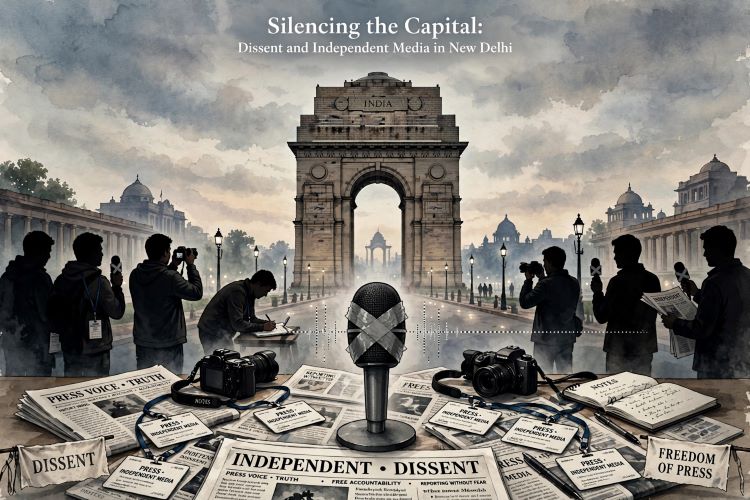
While the physical assault on peaceful protesters was severe, security forces exhibited an even greater level of aggression toward those attempting to document the abuses. In a media landscape where mainstream broadcast networks largely amplified official statements or turned a blind eye to the scale of public outrage, independent journalists, YouTube reporters, digital news creators, and mobile social media influencers emerged as the sole chroniclers of ground reality. Recognizing that real-time digital broadcasts threatened their official narrative, security agencies mounted an aggressive, organized effort to silence independent media personnel.
A clear pattern of targeted harassment emerged across multiple protest sites. Police officers systematically isolated independent reporters operating with handheld cameras, gimbals, and smartphones. While corporate broadcast crews were permitted to operate safely behind police lines, independent news reporters and digital content creators were actively harassed, surrounded, and threatened with arrest if they did not cease recording. When journalists stood their ground, citing their constitutional rights to report from public spaces, law enforcement officers resorted to direct physical violence. High-grade cameras were swiped and thrown onto the street, wireless microphones were crushed, and smartphones used for live streaming were snatched and intentionally smashed.
In numerous documented instances, independent journalists and digital influencers were physically assaulted while actively broadcasting live to audiences numbering in the hundreds of thousands. Officers twisted reporters' arms behind their backs, shoved them against iron barricades, and held physical shields over camera lenses to blind feeds. Several prominent independent commentators and video creators were bodily lifted and dragged into police buses alongside protesters, their press credentials discarded or openly mocked by commanding officers. By deliberately neutralizing digital creators whose reach bypasses traditional media gatekeepers, the administration sought to create a total news blackout, ensuring that undeniable proof of police excess would be kept from the public eye.
Voices of Terror: Victims Recount Physical Abuse and Legal Deprivation
The full extent of state overreach is starkly revealed through the harrowing personal accounts of those who endured detention and physical battery during the crackdown. Testimonies delivered by surviving victims paint a disturbing picture of custodial abuse, psychological intimidation, and the systematic denial of basic constitutional safeguards inside police stations and temporary detention centers.
A young female university activist recounted being seized by several male police officers while standing peacefully near a perimeter barricade. She detailed how officers subjected her to crude misogynistic verbal abuse, dragged her by her hair across the pavement, and struck her repeatedly across her back with batons before forcing her into an overcrowded transport vehicle. She was subsequently detained for over fourteen hours without access to a phone call, legal representation, or sanitary facilities. When she repeatedly requested medical care for a severely swollen and dislocated wrist, police personnel ridiculed her and refused to provide medical assistance.
An independent video journalist recounted how law enforcement personnel targeted him specifically because his live online feed was documenting the aggressive arrest of elderly citizens. Officers tackled him from behind, stomped on his mobile transmission kit, and seized his phone. When he displayed his press credentials, an officer threw the phone onto the concrete road, stomping on it until the device was completely destroyed, while telling him that no unauthorized broadcasting would be permitted. He was then held in undisclosed police custody for nearly twelve hours without any formal record in the station diary, effectively depriving his family and colleagues of any knowledge of his location.
A civil legal observer who was present at Jantar Mantar to monitor potential human rights violations described being physically assaulted by security officers while attempting to record the unlawful detention of peaceful marchers. He noted that inside the detention vehicles, police officers routinely used threatening language against young activists, threatening them with fabricated criminal charges under severe public order statutes, while denying them access to legal counsel who had gathered outside police stations attempting to provide aid.
Institutional Collapse and the Shattered Promise of Constitutional Governance
The brutal measures witnessed in the national capital do not represent a temporary breakdown in law enforcement protocols; they signal a fundamental institutional crisis within India's democratic structure. When citizens who raise legitimate concerns about the integrity of the voting process and the Special Intensive Revision of electoral rolls are met with militarized violence, the constitutional right to peaceful assembly becomes virtually extinct. When independent journalists, YouTubers, and digital commentators are beaten, detained, and stripped of their equipment for documenting state actions, the guarantee of free expression is reduced to empty rhetoric.
The actions of the police reveal an alarming evolution of state institutions from neutral defenders of public order into instrumentalities of political enforcement. The total absence of administrative accountability or independent judicial scrutiny regarding police excess further cements public disillusionment.
By deploying heavy-handed violence to shield the Election Commission from public accountability and forcibly silencing those who demand transparency, the state has signaled an aggressive departure from democratic norms.
When non-violent protest is treated as an act of subversion and independent journalism is suppressed with physical violence, the core foundation of a constitutional republic is severely undermined. The events unfolding in New Delhi serve as a grave warning: when institutional checks collapse and state power operates without restraint, democracy itself is eroded on the public square.
(The author, a former member of the history faculty at St. Xavier’s College, Mumbai, is known commentator on diversity, pluralism, and dissent issues. Views are personal.)







[[comment.comment_text]]