Threat to the Constitution Lies Not in Its Words, But in Their Denial

 1 year, 3 months ago
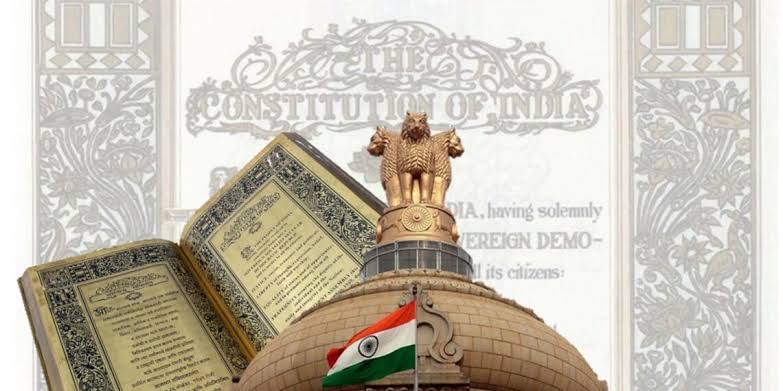
The Constitution of India is more than a legal document—it is a moral compass forged through consensus and commitment to democratic pluralism. Yet recent statements by key figures in the ruling establishment—RSS General Secretary Dattatreya Hosabale, Assam Chief Minister Himanta Biswa Sarma, and even Vice President Jagdeep Dhankhar—suggest a deliberate attempt to rewrite that moral compass. Their suggestion: remove the words “socialist” and “secular” from the Preamble, branding them as “alien” or “Emergency-era impositions.”
Such rhetoric is not just intellectually dishonest—it strikes at the foundational values of the Republic. What follows is a systematic rebuttal of this assault on constitutional fidelity, democratic inclusiveness, and historical truth.
The 42nd Amendment Was Not an Illegitimate Coup
Critics, especially from the BJP and RSS, argue that the insertion of the words “socialist” and “secular” during the Emergency in 1976 makes them illegitimate. But laws passed during the Emergency are not invalid merely by association. The 42nd Amendment was passed by Parliament in accordance with constitutional procedure, with a two-thirds majority in both Houses. It was not a Presidential Ordinance, nor was it a fiat from Indira Gandhi’s desk.
Emergency-era governance deserves criticism, but the addition of these words reflected principles that were already deeply embedded in India’s constitutional and political ethos
.
“Socialist” and “Secular” Were Always Implied
Even before 1976, the Constitution’s texture reflected both socialism and secularism.
• Socialism: Article 39 (Directive Principles) talks of equal pay for equal work, protection against economic exploitation, and the distribution of material resources to serve the common good. Article 43 urges the State to secure a living wage for all. These are unmistakably socialist goals—not in the Marxist sense of state ownership, but in the Indian sense of social justice and economic equality.
• Secularism: Article 25 guarantees freedom of religion. Article 15 prohibits discrimination based on religion. Article 30 safeguards minority rights in education. What do these signify if not secularism? The term was merely made explicit in 1976; it was always the spirit of the document.
Removal Would Violate the Basic Structure Doctrine
The Supreme Court, in its landmark Kesavananda Bharati judgment (1973), made it clear: the “basic structure” of the Constitution is beyond the reach of Parliament. Any amendment that violates its essential features—democracy, secularism, federalism, rule of law—is unconstitutional.
The Preamble, though not enforceable in itself, is a key to understanding the Constitution’s intent and basic structure. To erase “secular” and “socialist” from it would be to surgically excise the very DNA of the republic.
And it’s not just these two terms at stake. The 42nd Amendment also added “integrity” to the phrase “unity of the nation,” a word deeply significant in India’s fractious landscape. Are the BJP and RSS leaders also willing to strike that off?
Misreading Secularism: A Convenient Straw Man
RSS ideologues claim that “secularism” means appeasement of minorities. But Indian secularism is not the same as Western separation-of-church-and-state. It is about equal respect and distance from all religions—not their marginalization, not their erasure.
The Supreme Court in S.R. Bommai v. Union of India (1994) held that secularism is a basic feature of the Constitution. The court warned that any deviation by state governments from this principle could invite Article 356 (President’s Rule). That’s how sacrosanct secularism is.
To portray secularism as a vote-bank conspiracy is a deliberate political misreading—one that reveals more about the accuser’s intentions than about the word itself.
Socialist is Not Synonymous with Soviet-Style Centralism
Another common argument is that the term “socialist” shackles India’s economic aspirations. But this, too, is a false binary. Indian socialism is not anti-market; it is pro-equity. The Constitution envisages a welfare state—where the economy serves the people, not the other way around.
Even after 1991’s liberalization, successive governments—across parties—have continued policies like MNREGA, public distribution systems, and subsidized education. These are socialist in spirit, and yet indispensable in a country with massive income disparity.
To remove “socialist” is to signal that the Indian State owes no duty to its poor. It is to privilege capital over citizenship.
Vice President Dhankhar’s Role: A Constitutional Conflict
When Vice President Jagdeep Dhankhar publicly questions these words, he does more than express an opinion—he undermines his constitutional office. The Vice President is the ex officio Chairperson of the Rajya Sabha, and is bound by the oath to uphold the Constitution as it exists, not as he personally wishes it to be.
His statements represent a dangerous blurring of lines between ideological partisanship and constitutional responsibility. If the Vice President wants to rewrite the Preamble, he should first resign and contest elections—not campaign from the sanctity of a constitutional chair.
Congress and Opposition Are Right to Push Back
The Congress and several Opposition parties have rightly called out these statements as anti-constitutional. The words in the Preamble are not symbols of a single party’s ideology—they are the ideological consensus of a Republic forged in the furnace of colonialism and Partition.
To call for their removal today is not a legal argument; it is a cultural and political one. And it comes at a time when the ruling establishment has been accused of majoritarianism, communal polarization, and undermining democratic institutions. The criticism, therefore, is both principled and necessary.
What’s Really at Stake? The Idea of India
This controversy is not about semantics. It is about what kind of country India wants to be in the 21st century. A secular, socialist democracy that protects all its citizens equally? Or a majoritarian, market-driven state where pluralism is an inconvenience?
The Constitution’s words matter because they are a mirror to its soul. To erase “secular” and “socialist” is not to clean the glass—it is to break the mirror.
Preamble is the Soul of Constitution
India’s Constitution has survived wars, emergencies, political upheavals, and economic crises. What it may not survive is the steady erosion of its moral and philosophical core.
The call to delete “socialist” and “secular” is not a debate about legal phrasing. It is an attack on constitutional morality. And the country must choose: not between 1976 and 2024, but between fidelity to the republic or its gradual dismemberment in the name of ideological convenience.
Let it be remembered: changing the words of the Preamble may be possible—but not without violating the soul of the Indian Constitution. And that is a price too steep for any democracy to pay.
(Author, a former member of the history faculty at St. Xavier’s College, Mumbai, is a known columnist and commentator. Views are personal.)






[[comment.comment_text]]