A Blue Wave Reshapes America: Voters Deliver a Stinging Rebuke to Trump’s Second Term

 2 hours ago
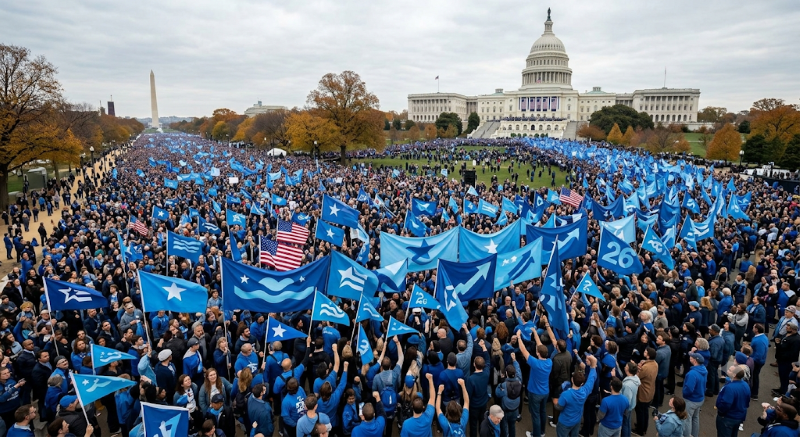
The 2026 midterm elections have produced one of the most decisive shifts in modern American political history. Democrats have seized control of both the Senate and the House of Representatives, flipping long-held Republican strongholds and rewriting the balance of power in Washington just two years into Donald Trump’s second presidency. What many expected to be a conventional midterm correction has instead become a broad repudiation of the governing agenda that defined the past two years.
In the Senate, Democrats netted seven seats, securing a clear majority that includes independents who caucus with them. Victories in Kansas, Texas, Iowa, Ohio, South Carolina, Maine and North Carolina stand out not merely as partisan gains but as historic ruptures. Kansas elected its first Democratic senator since 1932. Texas sent a Democrat to the upper chamber for the first time in nearly four decades. South Carolina, long a Republican citadel, flipped as well. These results arrived in states Trump carried comfortably in 2024, underscoring the depth of voter discontent. As of early November, with a handful of races still being finalised, Democrats stood at a projected 54-44 edge.
The House followed a parallel path. Democrats flipped more than two dozen seats—tallies climbing toward 25–30 net gains in early counts—and built a working majority. Combined with gubernatorial flips in Texas, Georgia, Iowa, Ohio and Nevada, the night produced a rare midterm trifecta of congressional and state-level power for the opposition. In Texas, Gina Hinojosa became the state’s first Latina governor, denying Greg Abbott a fourth term. Across the map, voters elevated candidates who campaigned explicitly against the status quo.
The Political Reckoning in Washington
Control of Congress transforms the remaining two years of the Trump presidency. Unified Republican government is over. The new Democratic majorities will possess the tools of oversight, investigation and legislative obstruction. Expect aggressive committee inquiries into administration policies, spending decisions and appointments. Confirmations that once moved smoothly will face prolonged scrutiny. Budget negotiations will become contests of attrition rather than rubber stamps.
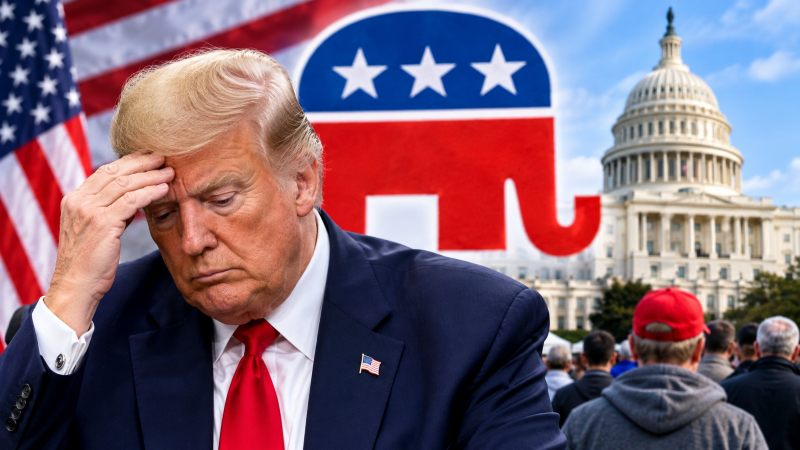
For the Republican Party the implications cut deeper. The scale of losses in previously reliable territory raises uncomfortable questions about the durability of Trump’s grip on the coalition that returned him to office. Candidates closely aligned with the president underperformed in multiple contests. Party leaders now confront the classic midterm dilemma: whether to double down on the existing direction or recalibrate toward a broader electorate. Factional tensions that were manageable while majorities held are likely to intensify as the minority searches for a path back to relevance.
Democrats, meanwhile, face their own test. Majorities bring responsibility as well as opportunity. The party must demonstrate it can govern rather than merely oppose. Internal debates over the pace of progressive priorities versus pragmatic deal-making will surface quickly. The electorate that delivered this wave included independents and moderate Republicans who rejected specific policies more than they embraced a sweeping alternative ideology. Sustaining that coalition will require discipline.
Society and the Mood of the Country
Beneath the partisan scoreboard lies a deeper social signal. Turnout patterns and geographic spread suggest frustration that transcended traditional demographic lines. Cost-of-living pressures, the economic aftershocks of tariffs, and the human and fiscal costs of military engagement abroad featured prominently in campaign messaging and voter conversations. Many Americans appear to have concluded that the governing experiment of the past two years extracted too high a price in daily life.
The election also accelerated demographic and cultural shifts already underway. Victories by candidates from historically underrepresented backgrounds in states once considered closed to them expand the visible face of American political leadership. At the same time, the intensity of polarisation remains. Celebration in Democratic circles is matched by anger and denial in others. Trust in institutions, already fragile, will be tested further as the new majorities exercise power and the defeated minority contests the narrative of what the results mean.
Economic Stakes and Policy Reversal
Markets registered the outcome with an upward move, reflecting investor preference for divided government and the reduced likelihood of unilateral executive action on trade and regulation. Yet the economic consequences will unfold more slowly. Democratic control of the purse strings and committee chairs means tariff policy, tax priorities and regulatory approaches face new constraints. Attempts to reverse or modify recent trade measures will encounter resistance from the White House, producing stalemate or incremental compromise rather than clean reversals.
Fiscal policy enters a period of heightened conflict. Debt ceiling confrontations, appropriations battles and debates over social spending will dominate the calendar. Businesses that adapted to the previous policy environment must now recalibrate expectations. Consumers, still sensitive to inflation and interest rates, will watch closely to see whether political gridlock translates into policy stability or renewed uncertainty.
Foreign Policy, Geopolitics and the Shadow of Two Wars
The most immediate geopolitical effect is constraint on presidential freedom of action. A hostile Congress can limit funding for military operations, impose reporting requirements, and use the confirmation process to shape the national security team. Ongoing commitments now face sharper domestic scrutiny. Allies who preferred continuity and adversaries who sought to exploit American division will both recalibrate.
Nowhere will this constraint be felt more acutely than in the two conflicts that have defined much of the administration’s second term. The war with Iran, launched jointly with Israel in late February and now entering its ninth month, has exacted a heavy domestic political price. Higher energy costs and voter fatigue with the conflict contributed directly to Republican losses. Vice President JD Vance has already begun distancing the administration from the war’s unpopularity, calling it a key reason for the Republican losses. A Democratic Congress will now possess the tools—funding leverage, oversight, and war-powers resolutions—to constrain further escalation even as the president retains significant residual authority.
With Democrats controlling both chambers, the White House will confront new barriers to sustained military operations. Lawmakers can withhold supplemental funding, demand formal authorisation for further action, and intensify oversight of targeting decisions and regional escalation risks. The result is likely to strengthen the incentive for a negotiated off-ramp even as Tehran tests the limits of American resolve. A full-scale renewal of major combat operations becomes politically costlier, though limited strikes or a prolonged stalemate remain possible if diplomacy stalls. Recent limited defensive actions and ongoing mediated talks underscore the fluid situation, yet congressional leverage will only grow once the new majorities are seated.
Ukraine presents a parallel but distinct challenge. Direct American financial and military assistance has been sharply reduced, and certain sanctions on Russian energy have been eased. A Democratic Congress is positioned to reverse that course. New aid packages can be advanced, potentially with enough bipartisan support to survive a veto. Scrutiny of any pressure on Kyiv to accept terms favourable to Moscow will intensify, as will efforts to restore economic penalties on Russia. The incoming majorities cannot dictate battlefield outcomes, yet they can alter the material balance and the political signals Washington sends to both sides. Negotiations already under discussion will now take place against a backdrop of renewed congressional leverage, complicating any rapid settlement that appears to reward aggression while offering Ukraine a firmer hand in demanding credible security guarantees.
Europe, Asia and Latin America will interpret these shifts through their own interests. Partners who worried about abrupt changes in alliance commitments may find reassurance in congressional checks. Rivals may see opportunity in legislative gridlock. Trade negotiations, sanctions regimes and security assistance packages will move more slowly and with greater conditions attached. Soft power, already strained by domestic polarisation, will depend on whether the new Washington can project coherence rather than perpetual contest.
A Moment of Choice, Not Settlement
Midterm elections rarely settle the direction of a nation. They rearrange the board and force all players to reassess strategy. The 2026 results have done so with unusual force. Voters rejected the concentration of power and the policy trajectory of the previous two years without fully endorsing an alternative governing philosophy. The coming session of Congress will test whether the new majorities can convert electoral success into durable policy outcomes, and whether the minority can rebuild without descending into recrimination.
American democracy has once again demonstrated its capacity for course correction. The question now is whether the institutions and the political class can meet the moment with seriousness rather than the theatrical combat that has characterised so much of recent public life. The blue wave has redrawn the map. The harder work of governing a divided country, and managing two unresolved wars under new constraints, begins.
(The author, a former member of the history faculty at St. Xavier’s College, Mumbai, is a senior columnist and commentator.)










[[comment.comment_text]]