SHOOTING THE MESSENGER: THE BLACK SUNDAY OF PRESS FREEDOM IN THE HEART OF INDIA’S CAPITAL
 an hour ago
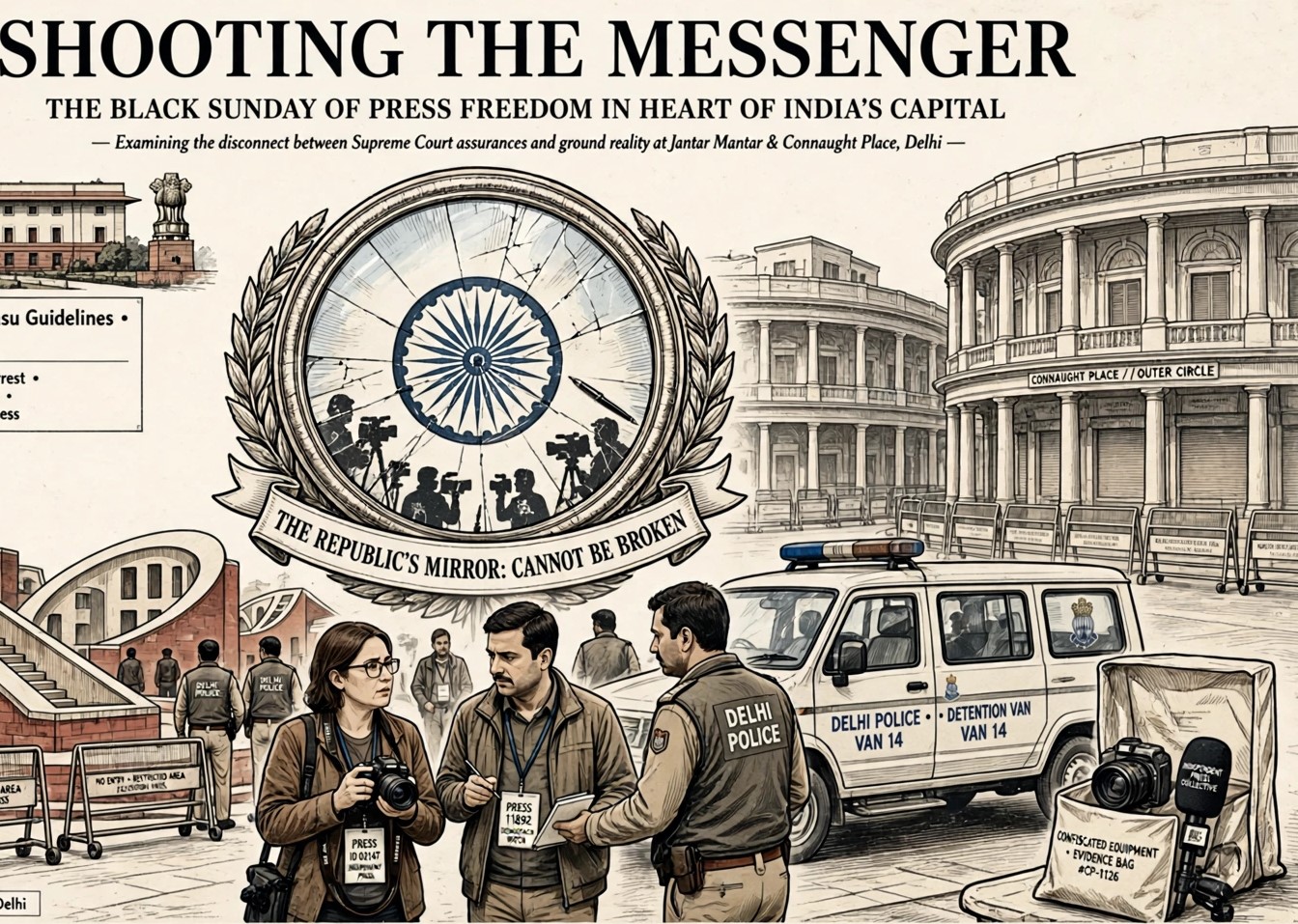
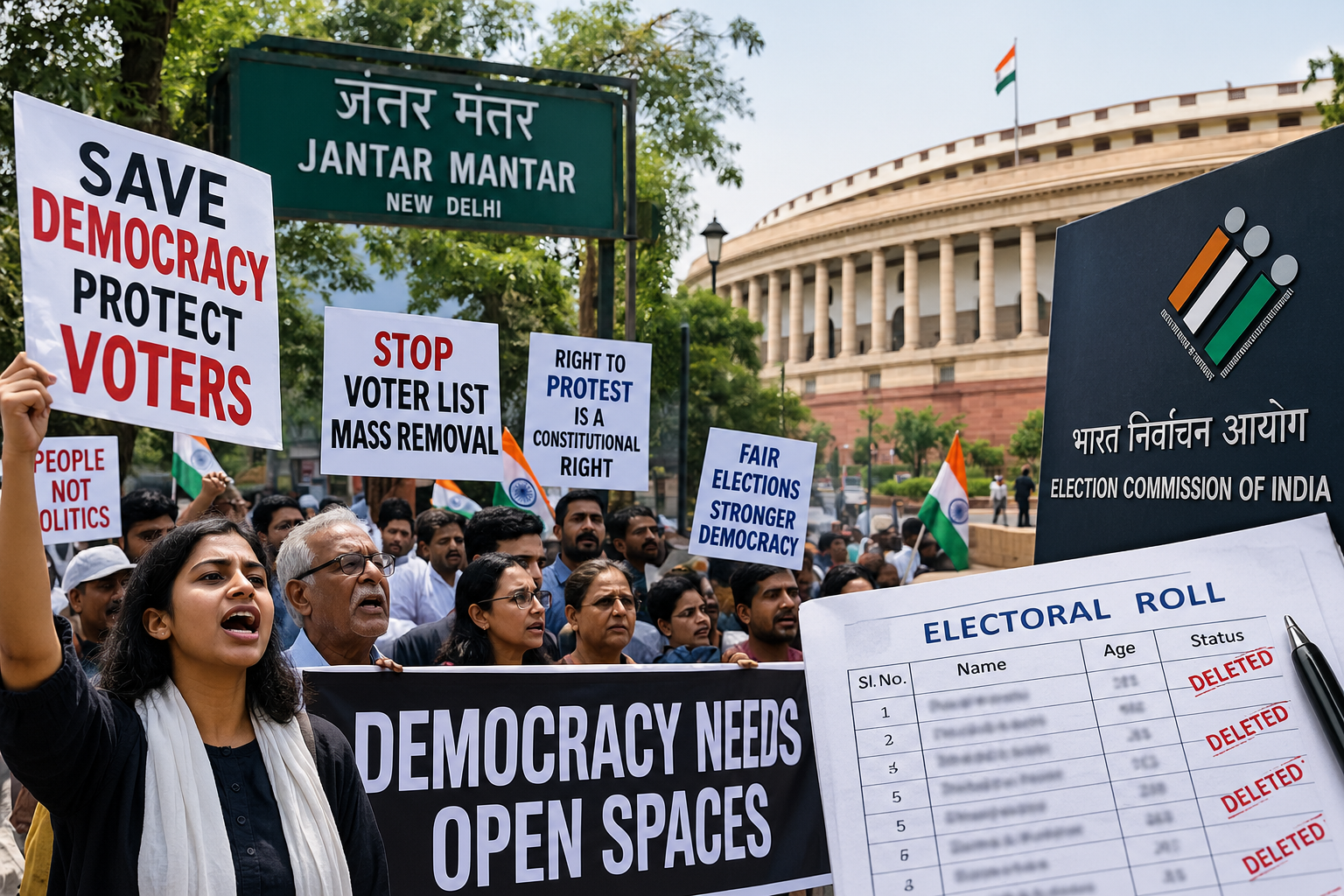
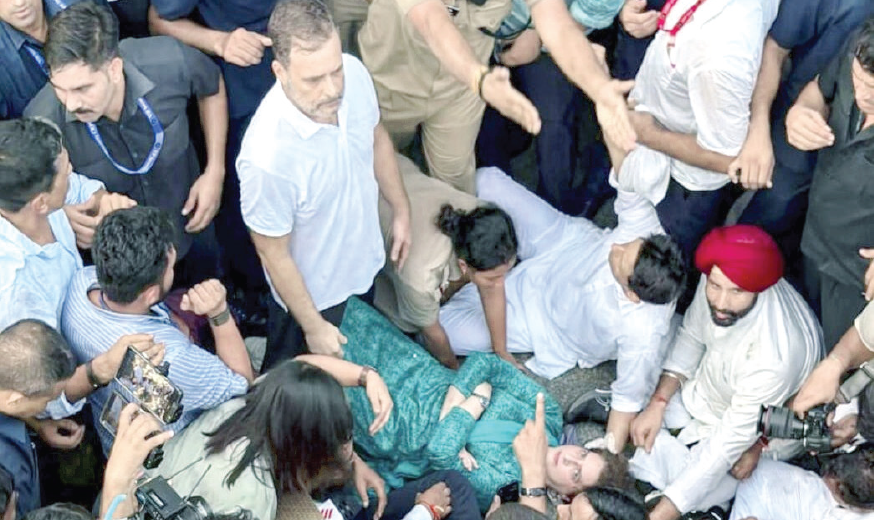
On Sunday, October 11, 2026, the broad avenues surrounding the heart of New Delhi were transformed into a tightly policed zone of friction, containment, and systemic heavy-handedness. What was scheduled as a public demonstration against administrative and electoral authorities—drawing thousands of citizens, civil rights advocates, and student organizations—rapidly descended into something far more troubling for the state of Indian democracy: a sweeping, high-handed state crackdown directed not merely at containing public assembly, but at silencing the very individuals tasked with chronicling it.
As citizens gathered near Jantar Mantar, Connaught Place, and adjacent transit nodes, law enforcement agencies deployed an overwhelmingly coercive security apparatus. Yet, as the hours unfolded, the operational focus of the police visibly shifted from managing public order to conducting an aggressive, systematic dragnet against independent journalists, photojournalists, and digital news crews. Dozens of reporters—holding valid press credentials, displaying visible media badges, and operating in full view of public cameras—were physically restrained, shoved into police vans, stripped of their equipment, and whisked away to distant police outposts. The day marked one of the most severe, organized, and unvarnished assaults on freedom of the press in recent memory within the national capital.
A Capital Fortified Against Scrutiny
From the early hours of Sunday morning, central Delhi resembled a fortified enclosure. Barricades were erected across major intersections, metro stations including RK Ashram Marg were restricted, and thousands of security personnel lined the roads leading to key government landmarks. As groups such as the Citizens for Justice and Peace and the All India Students’ Association attempted to exercise their constitutional right to assemble and raise grievances regarding key constitutional offices, police forces moved in swiftly with mass detentions.
However, the primary obstacle facing the authorities was not the peaceful crowd itself, but the presence of live cameras and independent media personnel who refuse to rely on official press handouts. Over the past decade, independent digital platforms, YouTube news outlets, and freelance journalists have become the primary, if not sole, chroniclers of civil unrest in India, filling a void left by mainstream television networks that increasingly broadcast sanitized accounts of public dissatisfaction. On October 11, law enforcement treated these independent reporters not as constitutional observers, but as active adversaries to be removed from the scene at all costs.
The Targeted Sweep of Independent Chroniclers
The dragnet was both swift and indiscriminate, targeting some of the country’s most recognized independent voices alongside young ground reporters. Pragya Mishra, editor of the widely followed digital platform Ulta Chasma, was intercepted while attempting to report live from the field. Despite repeatedly displaying her official press card and explaining to police officers that she was performing her professional obligation as a journalist, plainclothes personnel physically grabbed her and bundled her into a waiting police van. Video footage captured on the spot showed officers ignoring her protestations and refusing to cite any legal justification for taking her into custody.
Similarly, senior broadcast journalists and independent commentators found themselves directly in the line of fire. Saurabh Shukla, co-founder of The Red Mike, spent hours documenting the continuous round-up of citizens and fellow media workers before his own reporting was forcibly interrupted by police action. His live coverage laid bare the sheer intensity of the policing, showing security personnel forming human walls to block lens viewports and forcibly separating reporters from their recording crews.
Meanwhile, veteran journalist Ajit Anjum, broadcasting from the heart of the capital, provided continuous real-time commentary on what he described as an unprecedented state strategy designed to create a total information blackout. Anjum pointed out that the massive deployment of tens of thousands of security personnel was calculated not merely to disperse a demonstration, but to dismantle the infrastructure of independent reporting in real time.
By late afternoon, the roster of detained journalists read like a cross-section of India’s independent press. Reporters, researchers, and multimedia producers from digital platforms including Scroll.in, Newslaundry, The Quint, BoomLive, AltNews, Molitics, and The Caravan, alongside international correspondents from agencies like Reuters, were swept into police custody. In almost every instance, journalists reported that showing a valid press card made no difference to the officers on duty; in several cases, displaying credentials appeared to invite harsher physical handling.
Escalation of Force: Violence, Seizures, and Remote Isolation
What distinguished the events of October 11 from routine police friction was the level of aggression and procedural lawlessness exhibited by law enforcement. Reports and testimonies emerging from those detained paint a stark picture of physical assault, illegal seizure of equipment, and deliberate isolation tactics designed to prevent real-time news dissemination.
Multiple journalists suffered direct physical violence. A multimedia producer for The Caravan, Ryan Thomas, was brutally beaten by police officers before being thrown into a custodial vehicle. Another independent reporter, Nitin Katiyar, stated that after presenting his press accreditation to security personnel near Connaught Place, he was struck directly in the face, sustaining injuries to his eyes. Other reporters were subjected to verbal abuse, shoved onto asphalt, and dragged by their clothing across public thoroughfares.
In addition to physical assault, the systematic confiscation and destruction of working tools formed a central pillar of the police strategy. Mobile phones were forcibly snatched out of reporters' hands while live broadcasts were active. Cameras were seized, memory cards were confiscated, and independent reporters were ordered under threat of physical violence to delete recorded footage documenting police conduct. By disabling the tools of the trade, authorities ensured that the public received only the official state narrative regarding the day’s events.
Furthermore, law enforcement deployed a tactic of geographic dislocation. Instead of taking detained journalists to nearby central Delhi police stations where legal counsel, media colleagues, and human rights advocates could easily locate them, police buses transported reporters to remote outposts on the extreme peripheries of the capital, such as Pandwalan Khurd. Held in far-flung facilities tens of kilometers away from the protest sites, journalists were kept in custodial detention for hours without access to basic medical care, legal representation, or the ability to inform their employers and families of their whereabouts.
The indiscriminate nature of the crackdown was so severe that even constitutional figures who attempted to observe the policing were subjected to high-handed treatment. Member of Parliament John Brittas was physically intercepted, pushed into a police vehicle, and later left on a roadside by security personnel after protesting the illegal detention of citizens and reporters. Brittas subsequently described the incident as an unmitigated assault on parliamentary privilege and democratic freedoms, lodging formal complaints with the highest constitutional authorities of the Republic.
Trampling Statutory Norms and Judicial Mandates
The actions of the Delhi Police on October 11 represent a comprehensive failure to adhere to the statutory guidelines and constitutional limits governing police powers in India. Under the landmark Supreme Court ruling in D.K. Basu v. State of West Bengal, law enforcement personnel conducting arrests or detentions are legally bound to wear visible, clear identification tags specifying their name and designation. They are required to prepare a formal memo of detention at the site, specify the precise grounds for taking a citizen into custody, and immediately notify a relative, friend, or legal counsel.
During the Sunday crackdown, these binding legal mandates were systematically disregarded. Numerous detentions were carried out by personnel wearing plain clothes without any visible badges or name tags. Journalists were dragged into unmarked vehicles without being informed of any pending charges, formal detention orders, or legal justifications.
The institutional contempt displayed during this operation is rendered even more stark by the judicial context of the day. Even as police officers were snatching phones and bundling reporters into vans, the Supreme Court of India was recording formal state assurances that working journalists and members of essential professions would be permitted to carry out their duties without hindrance or obstruction. The blatant disconnect between assurances given in apex court halls and the brutal reality enforced on the streets of the capital reveals an alarming breakdown in administrative accountability and respect for the rule of law.
The Chilling Effect: From Public Oversight to State Monologue
The broader implications of the October 11 crackdown extend far beyond the immediate trauma inflicted on individual reporters. By establishing a precedent that performing independent journalism at a public protest is a detainable, punishable offence, the state is seeking to engineer a chilling effect across the entire media ecosystem.
When state power operates without the presence of independent witnesses, public accountability collapses. The fundamental purpose of a free press during civic demonstrations is not to take sides, but to record factually what occurs between state authority and the citizenry—to document whether force used by police is proportionate, whether laws are being respected, and whether peaceful protesters are being afforded their constitutional rights. By removing journalists from the equation, law enforcement creates a controlled environment where official statements become the sole source of historical record, uncorrected by ground truth.
This shift transforms democratic governance into a one-way monologue. It signals to young reporters and independent news outlets that covering public dissent carries severe personal costs, including physical harm, property seizure, and arbitrary detention.
The Republic’s Mirror Cannot Be Broken
A constitutional republic cannot function when those whose job it is to hold up a mirror to society are treated as enemies of the state. The events of October 11 in New Delhi serve as a stark warning about the fragility of democratic safeguards when executive power is permitted to override constitutional guarantees with impunity.
Journalism is not a privilege granted at the discretion of police officers or state bureaucrats; it is a foundational pillar of democratic citizenship, protected under the freedom of speech and expression guaranteed by Article 19(1)(a) of the Indian Constitution. When law enforcement agencies shoot the messenger—metaphorically or physically—they do not eliminate the underlying public grievances or extinguish the right to dissent. They merely shatter the mirror that allows a democracy to see its own flaws and correct its course.
If the events of October 11 are allowed to pass without rigorous judicial scrutiny, departmental accountability, and systemic reform, the capital will have established a dangerous precedent. The ultimate test of India's constitutional framework lies in its ability to protect those who speak truth to power, especially when the noise of conflict is at its peak. A free nation cannot afford to let its messengers be silenced in the dark.
(Author, a former member of the history faculty at St. Xavier’s College, Mumbai, is a senior columnist.)






[[comment.comment_text]]