The Ballot for Restoration of Democracy: What America’s Voters Told a World Exhausted by War and Hate
 an hour ago
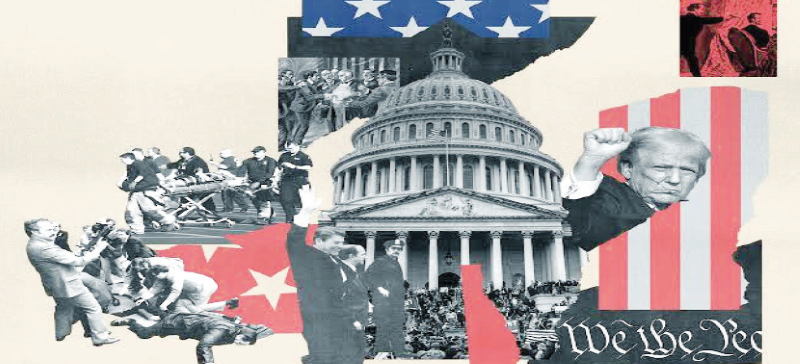
- In a democracy, power is entrusted by the people — and on 3 November 2026, American voters reminded their leaders that decisions about war, fear and public life must remain answerable to them.
There are evenings in the life of a republic when an election stops being a contest between parties and becomes a conversation between a people and its conscience. The American midterm elections of 3 November 2026 may come to be remembered as one such evening. Across the country, tens of millions of voters walked into polling stations carrying very different worries — petrol prices, grocery bills, healthcare, immigration raids, the future of their children. Yet when the counting was done, their separate anxieties had converged into a single, unmistakable message: this is not the politics we want.
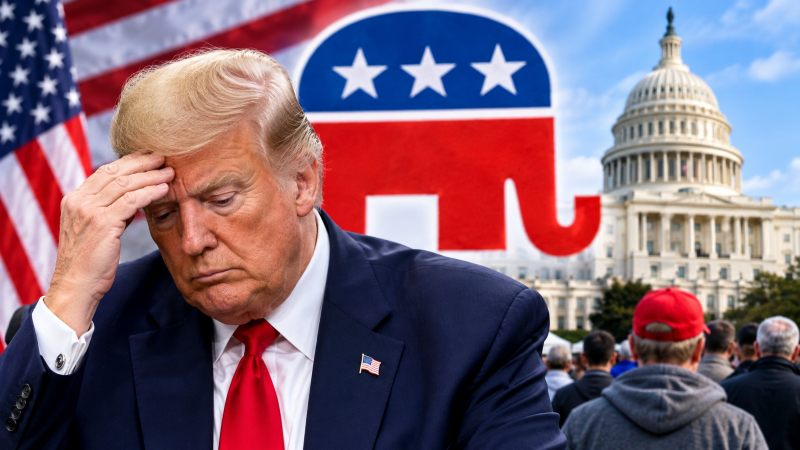
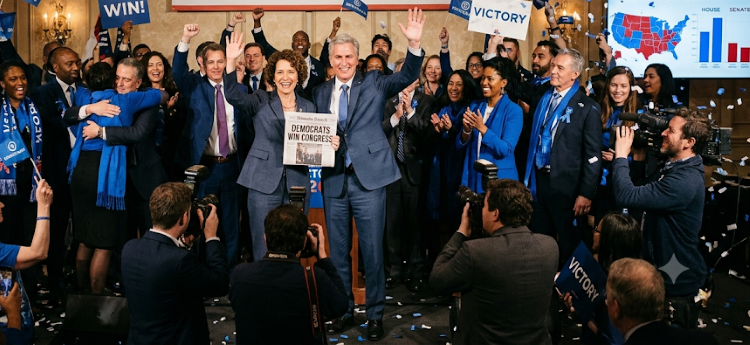
According to media projections reported by Reuters and the Associated Press, Democrats were projected to win control of both the Senate and the House of Representatives, with victories that reached deep into territory long considered safe for the Republican Party, including Texas, Ohio, Iowa and South Carolina. In Michigan, Democrat Abdul El-Sayed defeated Republican Mike Rogers, according to the Associated Press projection, becoming the first Muslim American elected to the United States Senate.
Election-night results and projections cited here are unofficial as of 4 November 2026 and remain subject to certification. The two stories are different, but they belong together: one speaks of an electorate tired of a government that seemed to govern by confrontation, the other of an electorate that, when pushed to treat a neighbour’s faith as a threat, declined. These results deserve to be read far beyond America’s borders. For a world weary of wars fought in the name of security, civilisation or faith, they offer something rare: evidence that fear, however loudly marketed, is not an unbeatable political product.
Reading the verdict honestly
Intellectual honesty requires a caution at the outset. An election is not a referendum on a single question, and nobody should pretend that every voter in Michigan or Texas cast a ballot with Gaza or Tehran in mind. The evidence points to a layered verdict. Reuters noted that voters’ frustration was driven by the cost of living and by the decision to launch a war against Iran in February, which pushed petrol prices sharply upward. Exit polls conducted by SSRS for a consortium of American media organisations found that half of voters regarded the election as a chance to rebuke the president, that three-quarters were angry or dissatisfied with the direction of the country, and that seventy per cent wanted Congress to provide more checks and balances on the presidency.
That last figure may be the most important number of the night. A population does not ask for more checks on a president unless it believes that power has been exercised without enough restraint. Americans were not merely expressing a preference between two parties; they were expressing a view about the proper limits of executive power, including the power to take a nation to war. This is precisely why the election matters to a global audience. The decision to strike another country is among the gravest a government can take, and in the modern age it can be taken quickly, by very few people, far from the sight of those who will pay for it — the conscript, the taxpayer, the motorist at the petrol pump and, above all, the civilian under the bombs. When voters respond to such a decision by demanding oversight, they are asserting an old democratic principle: that the authority to make war is entrusted, never owned.
A Senate seat that answers a slur
No story from the night carries more symbolic weight than that of Abdul El-Sayed. Al Jazeera reported that he defeated the Republican candidate, Mike Rogers, after a campaign marked by anti-Muslim attacks, including an avalanche of accusations, among them the charge that he was a “jihadist”. Reuters reported that his opponent sought to portray him as sympathetic to Islamic extremism through alleged ties to the Muslim Brotherhood, claims that El-Sayed denied and that remain unsupported by evidence. The campaign he ran was, in substance, about ordinary things: extending government-funded healthcare to all Americans, reducing the influence of money in politics and easing the affordability crisis that squeezes working families. His opponents chose to fight on different ground, placing his faith and ancestry at the centre of the argument.
The aim was transparent: to persuade voters that a man’s faith was a sufficient reason to doubt his loyalty. It was a strategy with an ugly lineage, and democratic societies have seen it before, directed at Catholics, Jews, immigrants and many others. Its logic is always the same — to convert a difference into a danger. It did not work. According to the same reporting, El-Sayed performed well among Black voters in Detroit even after he was targeted with a narrative that tried to set Arab and Black communities against each other, and voter turnout in Dearborn, the Michigan city often described as the capital of Arab America, was high, with long queues at polling stations.
A leader of the Arab American Institute described the outcome as a rejection of bigotry that would matter to every child, whatever his or her name, because the real question at stake was whether the country believes in an inclusive democracy. A historian of Arab American communities at the University of Michigan-Dearborn added that the result expressed a desire for change that includes a rejection of hatred in politics and a recognition that Palestinian lives count alongside American ones. It would be a mistake to treat this victory as a prize for one community. A Muslim in the Senate is not a concession to Muslims; it is a confirmation of what the American constitutional tradition has always promised on paper, that there is no religious test for public office. But the deeper lesson belongs to everyone. A democracy that allows citizens to be disqualified by their faith is a democracy that has already begun to fail, and a democracy that refuses to do so renews itself.
The politics of the convenient enemy
Why does hatred of a religious or ethnic group keep returning as an instrument of political mobilisation? Because it is cheap. Governments that struggle to deliver prosperity, security or peace discover that it is far easier to name an enemy than to solve a problem. The immigrant becomes the explanation for stagnant wages. The minority becomes the explanation for insecurity. The critic becomes a traitor. A foreign dispute becomes a civilisational struggle, and a civilisational struggle, by definition, cannot be negotiated; it can only be fought. This is the point at which domestic prejudice and foreign war meet. The habit of mind that treats a neighbour’s faith as a threat is the same habit that makes distant populations seem expendable.
If a billion believers can be collectively associated with the crimes of a few, then the death of civilians in a faraway city can be described, with a shrug, as regrettable but necessary. Collective suspicion at home is the rehearsal for collective punishment abroad. The election suggests that American voters, at least in sufficient numbers, have grown tired of the rehearsal. They heard the warnings that were meant to frighten them and weighed them against what they could see with their own eyes: rising fuel bills, economic insecurity and neighbours facing immigration enforcement on their own streets. A Detroit teacher volunteering at a polling station told Al Jazeera that the number one demand was to get immigration enforcement agents off the city’s streets, and added that people also wanted an end to foreign wars. In a single breath, the local and the global were joined.
Gaza, Iran and the arithmetic of grief
A world watching the American election was also, necessarily, watching its own wounds. In Gaza, civilians have lived through destruction on a scale that is difficult to describe: homes reduced to rubble, families displaced again and again, parents burying children, hospitals and water systems pushed beyond collapse. In Iran, the war launched in February has meant the ordinary fear of a population that did not choose it — workers, students, the elderly, mothers listening for sirens. In Lebanon, Ukraine and Sudan, the pattern repeats with different flags and the same arithmetic of grief. The moral question is not complicated, even if the geopolitics is. Why should a child in Gaza be mourned less than a child in New York? Why should an Iranian civilian’s death be reported as a statistic while an American’s is a tragedy? Why should the tears of a mother in Beirut or Khartoum draw less international compassion than those of a mother elsewhere?
Human suffering carries no passport. A child’s fear is not spoken in Arabic, Persian, Hebrew or English; it is spoken in a language that every parent understands. Saying so is not an endorsement of any government, movement or ideology. One can condemn the killing of civilians in Gaza without excusing the atrocities committed against Israelis; one can oppose a war on Iran without admiring the Iranian state; one can mourn the dead of Ukraine and Sudan in the same breath.
The principle is simple and demanding: civilians must never be treated as an acceptable cost of political ambition. And criticism of a government’s military policy is not hostility towards its people. The two must be kept apart if the world is ever to leave behind the dangerous habit of collective blame. It is in this light that the American result should be understood. The voters of Michigan, Texas and Ohio did not vote as one bloc on Gaza or Iran, and it would be dishonest to claim that they did. But the electorate as a whole signalled discomfort with a leadership that had chosen to open another war while livingcosts rose at home. That is a form of peace sentiment, even if it speaks the language of petrol prices and household budgets. Peace, for most people, is not an abstraction. It is the ability to fill a tank, pay a bill and sleep without fear.
Why democracy and war sit uneasily together
Political thinkers have long observed that democracy and perpetual war make uncomfortable neighbours. War centralises authority, narrows debate and invites the suspicion that dissent is disloyalty. Democracy, by contrast, depends on the free circulation of argument, on the right to question those in power and on the willingness of rulers to be removed. When a nation is placed on a permanent war footing, the first casualty is often not an enemy soldier but a civil liberty. That is why the American demand for more checks on the presidency is a constitutional instinct, not an anti-patriotic one.
What Washington owes the world
The incoming Congressional majority now carries a responsibility that extends beyond partisan advantage. It will be tempting to treat the result as a victory to be consumed in the next round of political combat. The better course is to treat it as a mandate for restraint and transparency. That means scrutinising military decisions, insisting on a clear public account of the costs and aims of the war with Iran, and ensuring that any future use of force is debated openly rather than announced after the fact. It also means returning to the idea that American influence is best exercised through diplomacy and law.
The United States possesses extraordinary economic, military and diplomatic weight, and with weight comes obligation. It can use that position to encourage negotiation instead of escalation, to protect humanitarian access in conflict zones, to uphold the international rules it has so often urged on others, and to insist that the protection of civilians is a universal duty, not a favour reserved for friends and allies. None of this requires naivety, and none of it denies that a government must protect its people. Hostile actors exist; threats are real; alliances matter. But a country can win a battle and lose the confidence of the world. It can hold the most advanced weapons ever built and still be unable to answer the moral questions raised by a destroyed neighbourhood. The most durable form of strength is the kind that others are willing to trust, and trust is not manufactured by force. It is earned by consistency — by applying the same standards to oneself that one demands of others.
The unfinished work of peace
No single election can end a war or heal a ruined city; the ballot is a beginning, not a conclusion. Yet beginnings matter. For many Muslims in America and around the world, the sight of a Muslim candidate winning a Senate seat against a campaign of insinuation will be a moment of quiet vindication. It tells young people that their names, their faith and their heritage are not obstacles to belonging. For people of every faith, it carries a parallel message: that the protection of any minority is the protection of all, because the logic that targets one group is never content to stop there. A Muslim life is not worth less than a Christian life. A Jewish life is not worth less than a Palestinian life. An Iranian child deserves the same protection as an American child. These are not slogans; they are the moral minimum of any society that claims to believe in human dignity. The test of a democracy is not how comfortably it serves its majority but how fairly it treats the person who is different, and whether it is willing to extend that fairness beyond its own borders.
The people of the United States have just reminded the world that, given a choice, many of them prefer a politics of healthcare to a politics of hostility, a politics of bread to a politics of bombs, a politics of neighbours to a politics of enemies. They have not solved the problem of war, and they would be the first to say so. But they have restated, in the most democratic language available, that no government should expect to wage war, stoke fear or demonise a faith indefinitely and expect applause. The ballot box has spoken. The world is still waiting for peace. Between those two sentences lies the real work of the coming years — and it belongs not only to the leaders in Washington but to every citizen, in every democracy, who believes that human life should never be treated as the price of political ambition.
References
1. Ali Harb, “Rejecting hate: Abdul El-Sayed wins Senate seat despite racist attacks,” Al Jazeera, 4 November 2026. https://www.aljazeera.com/news/2026/11/4/rejecting-hate-abdul-el-sayed-wins-senate-seat-despite-racist-attacks
2. Reuters, “Democrats seize Congress in sweeping midterm repudiation of Trump,” 3–4 November 2026. https://www.reuters.com/legal/government/democrats-seize-congress-sweeping-midterm-repudiation-trump-2026-11-04/
3. Reuters, “Abdul El-Sayed becomes first Muslim elected to US Senate,” 4 November 2026. https://www.reuters.com/world/us/abdul-el-sayed-becomes-first-muslim-elected-us-senate-2026-11-04/
4. Associated Press, “Abdul El-Sayed defeats Mike Rogers in Michigan Senate race, making history,” 4 November 2026 (race called by the Associated Press at 2:27 a.m.). https://www.wkar.org/election-2026/2026-11-04/abdul-el-sayed-defeats-mike-rogers-in-michigan-senate-race-making-history
(Author, a Kashmiri sociologist, is a writer, -researcher, and columnist. His research Interests Include Kashmir Affairs, South Asian Politics, Human Rights, and Public Policy issues. krasool70@gmail.com)

[[comment.comment_text]]