The Midterm Verdict That Restored People’s Faith in American Democracy

 an hour ago
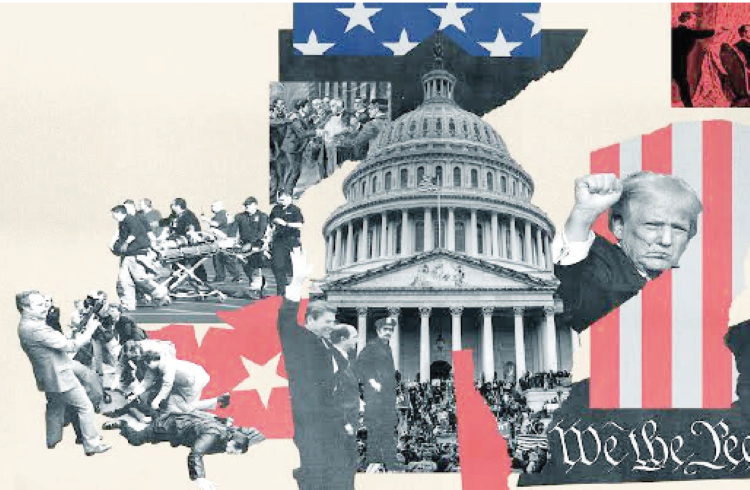
When a leader begins to mistake an electoral mandate for a personal crown, democracy has a rather elegant way of reminding him who wears it
I have watched American politics for years with a mixture of admiration, curiosity and, increasingly, concern. America has not merely been another powerful country; it has been an idea… a promise that democratic institutions, individual freedoms and the rule of law can survive even the most turbulent political times. That is why the results of the 2026 US midterm elections have given me a sense of relief and, quite honestly, restored some of my faith in American democracy.
Donald Trump returned to the White House in 2024 selling the American people a familiar but powerful dream: Make America Great Again. The businessman would fix the country, the master negotiator would end wars, tariffs would bring prosperity, borders would become secure and Washington would finally be cleansed of corruption. The sales pitch was impressive. Unfortunately, the delivery has been rather less so.
Less than two years later, Americans seem to have discovered that buying a political slogan and living with its consequences are two very different experiences.
The president who promised peace has presided over the continuing war in Ukraine and drawn America into another dangerous conflict with Iran. What was meant to be an era of American restraint has instead become another chapter of military escalation in an already volatile Middle East. Diplomatic efforts have yet to produce a breakthrough, while the economic and geopolitical consequences extend far beyond the battlefield.
The president who promised prosperity has unleashed tariffs that have disrupted global trade, unsettled markets and added to the cost pressures facing businesses and consumers. Meanwhile, inflation and soaring fuel prices have made everyday life increasingly difficult for ordinary American families. For the American middle class, the grand MAGA dream has increasingly come with a rather un-MAGA price tag.
There is a cruel irony here. A president elected to champion the forgotten American seems to have forgotten what life actually looks like for one. While families worry about grocery bills, housing, fuel and their children’s future, political attention has too often been consumed by personal feuds, cultural battles and the interests of those enjoying proximity to power.
The promise to drain the swamp has become increasingly difficult to reconcile with allegations of conflicts of interest, favouritism and cronyism. Apparently, the swamp was not to be drained; some merely needed better access to it.
And then there is the rest of the world. Tariffs have become instruments of diplomacy, allies have been treated like adversaries, neighbours have been needlessly antagonised, and international relationships have been reduced to contests of presidential ego. In a world already struggling with wars, geopolitical rivalries and economic uncertainty, the last thing humanity needs is another source of instability from its most powerful democracy.
There is a difference between strong leadership and permanent confrontation. Unfortunately, that distinction seems to have been lost somewhere between the tariff announcements and presidential pronouncements.
To be fair, border security and immigration enforcement were genuine electoral promises, and the administration pursued them aggressively. But securing a country’s borders cannot be the sole measure of making it great. A nation is also judged by the prosperity of its citizens, the quality of its institutions, the strength of its alliances and the confidence it inspires across the world.
Perhaps my greatest concern has been the apparent disregard for democratic checks and balances. The judiciary, the media, independent institutions and political opponents have repeatedly found themselves at the receiving end of presidential hostility. A democratic mandate is meant to provide the authority to govern, not the authority to control everything. Congress is not a rubber stamp, the judiciary is not a subordinate department, and the Constitution is certainly not a document to be rewritten around one man’s personality.
Trump was given an enormous political opportunity in 2024. He could have used it to unite a divided country, restore economic confidence and demonstrate responsible American leadership to a troubled world. Instead, much of that opportunity was squandered on personal grievances, confrontations and the pursuit of political dominance.
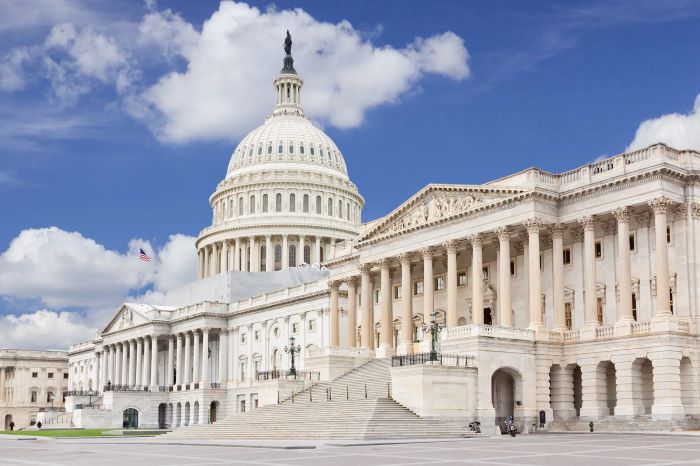
The Democratic victories in both chambers of Congress, including stunning gains in traditionally Republican territory, represent a powerful political rebuke. Voters who once believed in Trump’s promises have demonstrated that their loyalty has limits. Their message is unmistakable: electoral mandates come with accountability.
I do not see this simply as a victory for Democrats. Nor do I believe that a change in congressional control will magically resolve America’s problems. The opposition must now demonstrate that it can offer constructive solutions. But the deeper message is far more important than party arithmetic.
It is a victory for accountability. It is a reminder that institutions matter, that power must be questioned, and that no elected leader can claim ownership of a country.
From outside of America, this matters deeply. When the world’s most influential democracy weakens its own democratic conventions, the damage is not confined to Washington. It emboldens authoritarian tendencies elsewhere, unsettles global markets, weakens international cooperation and undermines the credibility of democratic values everywhere.
That is why this election feels significant to me personally. It has reminded me that democracy is not necessarily defeated when an arrogant leader comes to power. It is defeated only when people stop questioning him, institutions stop resisting him and citizens stop believing that their vote can make a difference.
American voters have shown that they have not stopped believing.
Perhaps the most important lesson for every democracy is that a mandate is a responsibility, not a personal entitlement. Elections may bring leaders to power, but only their conduct determines how long the people’s trust will last.
Trump promised to make America great again. The American people have reminded him that greatness cannot be built on tariffs, tantrums and personal loyalty. It requires integrity, restraint, economic security and respect for democratic institutions.
Midterm poll results are significant, not because one political party has defeated another, but because the people have reminded the powerful that they are not the owners of democracy. They are merely its trustees. And perhaps that is the most beautiful thing about democracy: however loudly a leader may speak, the people always retain the final word.
(Author, a US-based NRI, is a political analyst and commentator.)






[[comment.comment_text]]