Task of Managing: Human-Elephants Conflicts in Karnataka

 an hour ago
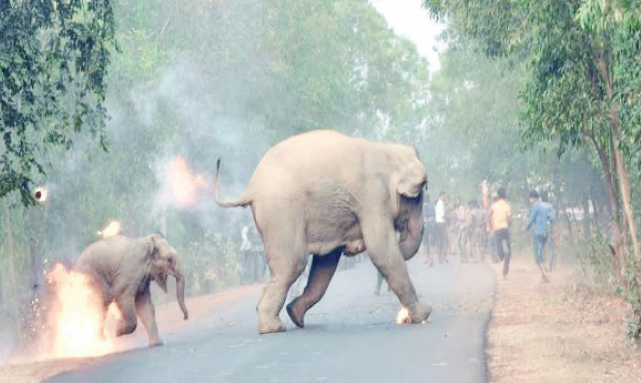
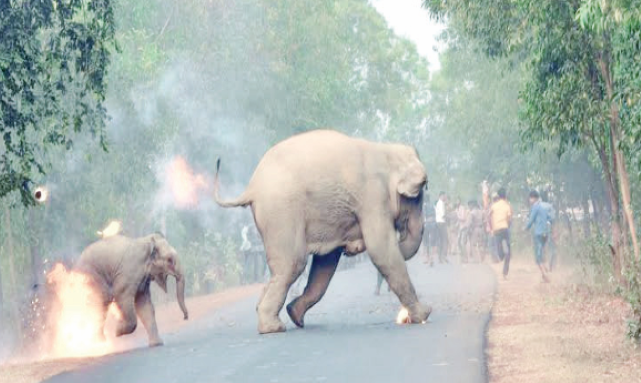
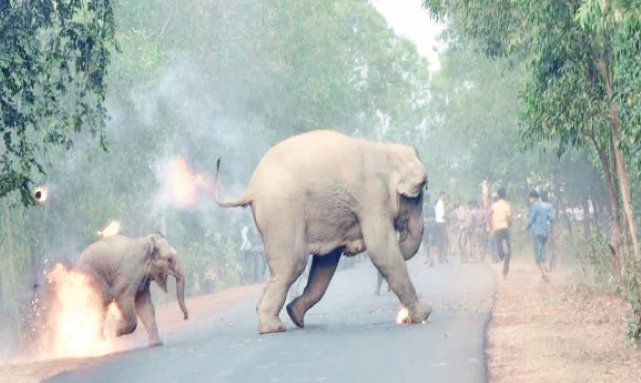
Human-Elephants Conflicts (HECs) refers to the negative interactions between humans and elephants- harm to people and their livelihoods or harm to elephants and their habitats.
Elephants cause harm to people like physical injury, trampling and death to those who come across them; crop raiding, eating and destroying the standing crops in farms and gardens; damaging humans properties like pump houses, sheds of food grain and stacks of harvested crops before trashing etc.
Humans-when encounter with elephants retaliates by opening fire and cause death of elephants and of late..they use the solar fence or barbed wire fences or put ordinary aluminum wire across the elephant entry to their crop lands and connect it to the live electric lines and cause electrocution of elephant or elephants with instant death whichever come in contact while entering the crop fields…this is the most common retaliation against elephants found in Karnataka.
Generally elephants raid the crops in herds and damage & destroy heavily except some thrown away male elephants from herds raid the crops in single or two at the most.
In Karnataka, the problem of HECs surfaced in 1990s and the farmers in the vicinity of the Mysore Elephant Reserve (ER); the farmers agitated against the crop depredation by elephants and other wild animals for which the State government woke up and started giving compensation for the crop damages and action to create barrier between the ER and the humans habitations along the boundary, first-Elephant Proof Trenches (EPT), Rough Rubble Stone wall, Size Stone wall, spaced RCC pillars, Steel pillars across stream, then pulsating Solar fence and combination of the above; solar fence to farmers lands on 50% cost grants etc and finally Old Rail Fence (ORF) with high cost….most of the Mysore ER boundary abutting humans habitations have been covered with barriers. No elephant herds can escape and raid the crops except some bull elephants crossing ORF to raid crops and entangle in HECs and end up in electrocution etc.
Conservation Efforts for Elephants
India has 33 Elephant Reserves (ERs) out of which Karnataka has only 2 ERs namely Mysore ER- over 8,055.94 sq.km covering Bandipur TR, BRT TR, MM Hills WLS & Nagarahole TR and adjoining forests contiguous to Nilagiri ER of the TN state and Wayanad ER of Keralam State providing vast areas for the elephants to roam for food, water, shelter and breeding. The Dandeli ER-over 2,321.10 sq.km covers the Kali TR and adjoining forest areas as an isolated ER.
There are 9 elephant corridors in Karnataka state namely,
1.Karadikkal–Madeshwara (also known as the Ragihalli corridor): Connects the Harohalli and Anekal ranges of Bannerghatta National Park.
2. Tali–Bilikkal: Links habitats across Karnataka and Tamil Nadu.
3. Bilikkal–Javalagiri: Facilitates interstate movement between Karnataka and Tamil Nadu.
4. Edayahalli–Guttiyalattur: Connects forest patches across Karnataka and Tamil Nadu.
5. Edayahalli–Doddasampige: Links habitats in the Malai Mahadeshwara (MM) Hills and Biligiri Rangaswamy Temple (BR) Hills landscape.
6. Chamarajanagar–Talamalai at Punjur: Connects forest areas between Karnataka and Tamil Nadu.
7. Chamarajanagar–Talamalai at Muddahalli (also spelled Mudahalli): Links the BR Hills and Sathyamangalam landscape across Karnataka and Tamil Nadu.
8.Kaniyanpura–Moyar: Connects habitats in the Bandipur landscape.
9. Beguru–Brammangiri: Connects forest areas across Karnataka and Kerala.
Elephant Corridors (EC) are the narrow pathways of forests or created forests connecting forests or PAs of wider habitats to facilitate elephants to move from one habitat to other seasonally. Let us examine the above corridors- which were identified and mapped by the Scientists of the Wildlife Institute of India in 2005.( I am the one officer who drafted the first Management plan for the Mysore ER in 1994 as Dy. Director Bandipur TR after collecting data for the CWLW-Karnataka for finalization-when the EC was not an issue).
I was in Charge of Bannerghatta NP 2001-2003 and looking after Corridor no.1 has faced the problem of preventing the movement of elephants from Bannerghatta to BM Kaval and on to Savandurga RF of Ramanagar & on to Huliyurdurga RF or to Shivagange RF of Bengaluru and on to Tumakuru & Hassan dist…massive barriers have been built and this traditional EC has been blocked against since it has no forests to link and fully a civil habitation with some open forest blocks. Rest of the corridors cited above are within the forest areas and there is no problem for the moment of the elephants except in EC no-9 through which elephants have no chance to reach Brahmagiri WLS of Karnataka in the WGs-a crux for the elephants of the state.
With the stabilization of elephants population after enhanced protection measures with launch of Elephant Project(EP) in 1992 and starting of Anti-Poaching Camps (APC) under EP; and the amendment to WLPA in 1996 and creation of National Tiger Conservation Authority (NTCA) to check the decline of tiger population in India… the wildlife management was geared up and the problem of poaching of tigers for its body parts and poaching of elephants for ivory all came under control with strict monitoring by the NTCA. (Elimination of the Brigand Veerappan- a notorious elephant poacher/sandalwood smugglers with shoot out in October, 2004 by the Task Force created to eliminate him by Karnataka & the TN states was a plus point to remember for the good of elephant welfare in South India).
Rise in elephant population-a pride of Karnataka:
With the better implementation of wildlife protection, the elephant population rose with time as pride of Karnataka to stand as first state in hosting maximum number of elephants-about 6,000+ out of 22,460+ in India after Assam even through the population trend of elephants in India is negative but it is positive in it (2026).
When there is a pride there will be a problem too-how to reign with the increasing HECs in the state ?
The state has done its job in sealing the borders of the Mysore ER to resolve the HECs but the intelligent elephants have their own ideas to find routes for seasonal migration in search of food, water, shelter and open area for basking in the winter Sun with raiding of crops in fruits as nutritious annual feasts- This is the hobby of the elephants that I have observed in my service in PAs in Mysore ER that the migration of elephants to the open forests for basking and raiding the crops in fruits during nights and return back or stay under the cover of vegetation there or move on in their traditional routes. I have experienced such trends and driven them back…a herd of elephants from Bannerghatta NP entered into Bengaluru city in Dec, 2021 which we managed to drive back the next day evening. Next they invade crops when fodder sources become scarce in the pinch period or during the rainy season before grass comes up in their habitats..
Present Crisis: A huge herd of 54 elephants from the Nagarahole TR has managed to enter forests in Kodagu dist and on to Hassan District in Sakleshpur tq and on to Beluru taluk-a rain shadow area with some open forests of softwood trees and caused havoc by raiding crops with 2 human deaths in Nov.2026 (whereas 7 elephants electrocuted in Nov.2026) A serious issue alerted the Forest Authorities, Chief Wildlife Warden (CWLW) and Forest Minister to drive the elephant herd back to its habitation. The CWLW granted permission to capture and relocate 10 young bull elephants suspected to have caused human deaths and raiding crop fields; and to drive away the huge herd to the nearby Bhadra TR in Chikkamagalur Dist which is 1,072 sqkm in the WGs.
All arrangements made and hundreds of forest force and the officers with 10 trained Kumki elephants gathered and succeeded in driving the elephants heard part to Mudigere tq of Chickamagaluru in 2days; the hon’ble MLAs of Mudigere, Chichkamagaluru and Tharikere opposed the plan to drive the eleephants into Bhadra TR with the fear of them creating HECs in future with a demand to drive them back to the place from where they have migrated. Even the MLA-Mudigere has resigned in protest against driving elephants to her constituency on 24th of Nov, without her opinion stating the people of her constituency are opposing to have so many elephants close to her constituency in Bhadra TR and other 2 MLAs may follow but they have been advised by the Speaker to wait for a meeting conveyed on 30th Nov, after return of the Chief Minister from abroad. The operation is stopped but elephants are moving on their own towards Bhadra TR.
Bhadra TR is an elephant habitat and there is a plan to create an elephant open-rescue center in it to the captured rogue elephants in the state. It is contiguous to vast forest areas in Chikmagalur, Shimoga and Dakshina Kannada/Udupi districts. For wildlifers,foresters and Environmentalists it looks wise to drive the elephants to Bhadra TR so that they can spread along WGs towards north and meet the elephants in the Dandeli ER…but, the political calculations are different.
The WGs are traditionally elephant habitats since the entire India was full of elephants till the beginning of Mughals rule in 16th century who captured and tamed more elephants for war fares and later followed by the kings; then the hunting free rule of British decimated the elephant population in India. The Bhadra TR and WGs are the old habitats of elephants and their herd driven to chikmagalur dist have the right to stay in the Bhadra TR. Driving them back to Mysore ER where their population is overcrowded with depleted carrying capacity of the habitats due to menace of invasive exotic weeds is against the rights of the wildlife to live guaranteed by our constitution vide article no,48A and 51A(g) in the forests.
Why are the elephants from Mysore ER not spreading on the WGs northward to join Dandeli ER?
It is an interesting question about the non-spreading of the increasing population of elephants along the hill ranges of the WGs northwards. The ridges of the WGs hill ranges are trees-less called Boluguddas- with grass growth due to heavy winds of the SW monsoon and shallow soils which are un-favourable for trees and favours only to grasses which attract fires during summer. These Boluguddas are the source of fodder for the big herbivore-like elephants/Bisons which can climb to the ridges and forage. Eg. Gopalaswamy hill range in the Bandipur TR is a very good foraging round for elephants since the BTR is infested with weeds as observed now. The absence of a corridor for the elephants to move along the WGs from the Mysore ER is the visible root cause. Out of the 9 elephant corridors (EC) identified for the Mysore ER, only the Begur-Brahmagir EC connects to Wynadu WLS and from it, Thirunelli -Brahmagiri EC connects to the WGs of Karnataka …but this EC is blocked by the private properties and the elephants which migrate to Wayanad WLS return to Begur RF ie Bandipur TR, means there is no EC for elephants of the Mysore ER to reach Brahmagiri WLS and spread on WGs. But, the seasonal migration takes place to Hassan from Mysore ER as explained earlier.
Conclusion: To resolve this bottle neck of no route for movement of elephants to the WGs, the Elephant Project Director of Mysore ER has to work out on ECs to connect Mysore ER to WGs by acquiring the land across the Coffee plantation between Nagarahole TR and the forests in WGs in Kodagu district and open it for movement of the elephants to reach Brahmagiri WLS and on to forests of Bisle RF in Hassan and Kudremukh WLS in Chikkamagaluru and link to Bhadra TR and so on. Further, the blockades to elephants movement along the WGs- are said to be the NH-75 and the Yethinahole Drinking water canal cross cutting the WGs and blocking elephants routes should be provided with 2 each over bridges of 50 m or more wide with vegetation cover for the elephants to cross them at suitable places of their routes.
The Humans' conflicts with wild animals like elephants, tigers, leopards, bears, wild boars and gaurs are rising with the rise in their population in the state. Barriers between the wildlife habitats and the Human habitations concentrated in Mysore ER zone have to be spread in the WGs too. Wild animals have the right to live in the forests of WGs and their spreading with increasing population have to be respected and tolerated by the humans as they are part of the ecosystem and they have a definite role fixed by nature to play for the good of the human race. If any species of the wild animal dies, its role cannot be played by other animals in nature.
However, there should be a plan by the union govt. to address the overpopulated wild animals like elephants, tiger and wild boars in Karnataka to follow and resolve MACs by the state.
The hon’ble MLAs and other peoples’ representatives have to cooperate with wildlife management since wildlife has no representatives to pressure the government for their demands but they are part of nature for the good of humans.
(Author is a retired Indian Forest Service Officer, a well known writer, columnist and commentator on wildlife, forest and environment, Karnataka. Email: bmt.rajeev.ifs@gmail.com)







[[comment.comment_text]]