The Return of Religion: A Search for Faith, Identity or Security?

 2 hours ago
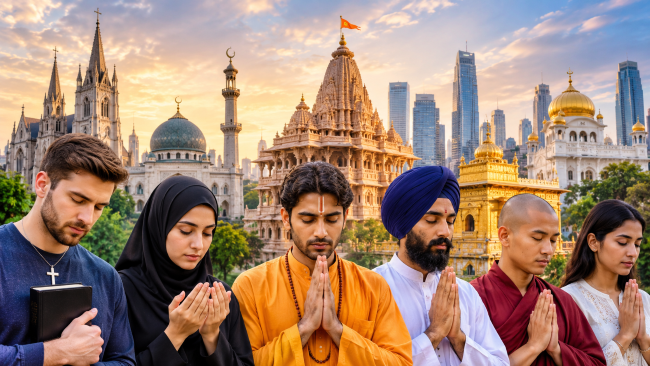
The growing visibility of religion in public life in the United States, Europe and India suggests that the long-predicted triumph of secularism may not be as inevitable as once believed. In the United States, the sale of 19 million Bibles last year, the highest figure in two decades, and renewed interest in Christian thought among sections of the intellectual, business and technology communities point to a significant change in the cultural landscape. In France, increasing numbers of adolescents and adults are seeking baptism into the Roman Catholic Church. India, too, is witnessing an extraordinary public expression of religious enthusiasm, reflected in the growing footfall at temples in Varanasi, Ayodhya and Mathura and the massive participation in Durga Puja, Diwali and Chhath celebrations. These developments may not constitute a comprehensive religious revival, but they certainly indicate that faith and religious identity continue to occupy an important place in contemporary society.
What makes this resurgence particularly interesting is that it is occurring in societies shaped by technological advancement, economic modernisation and expanding individual freedoms. The digital revolution, while connecting people across continents, has also created unprecedented distractions, social isolation and psychological uncertainty. Artificial intelligence is transforming the nature of work and raising questions about human purpose, professional identity and the value of individual effort. In such circumstances, religion offers something that technology cannot easily provide: a sense of belonging, moral discipline, continuity and a larger purpose in life. Religious practices such as prayer, collective worship, observance of the Sabbath and engagement with sacred texts can offer moments of reflection and human connection in an otherwise fragmented existence. The renewed interest in religion may therefore be understood, at least partly, as a response to the emotional and existential challenges of modern life.
India’s experience, however, carries additional social and political dimensions. Religious festivals and pilgrimages have always been integral to its civilisational and cultural traditions. The growing popularity of destinations such as Ayodhya, Varanasi and Mathura reflects not only devotional sentiment but also the increasing public visibility of religious identity. Yet, it would be simplistic to attribute this phenomenon entirely to spiritual awakening. Rising economic insecurities, social uncertainties, cultural anxieties and the search for collective identity may also be contributing factors. Religion-based political mobilisation has further amplified the public expression of faith. There is a need to distinguish between genuine devotion, cultural assertion and the political instrumentalisation of religious sentiments. A society’s religious enthusiasm should not automatically be equated with a corresponding deepening of spiritual values or ethical conduct.
The American and Indian experiences, despite their differences, raise a common sociological question: are people returning to religion because they have rediscovered faith, or because they are searching for stability in an increasingly uncertain world? The answer may lie somewhere between the two. Religion has historically provided communities with social support, moral frameworks and collective solidarity. In an age when digital platforms often encourage superficial engagement, individualism and polarisation, religious institutions can potentially restore meaningful human relationships and a sense of responsibility towards others. However, this constructive role depends on whether faith encourages compassion, tolerance and introspection or becomes an instrument of exclusion, prejudice and political confrontation. The distinction is crucial, particularly in pluralistic democracies where freedom of belief must coexist with respect for different religious traditions and the rights of those who do not subscribe to any faith.
The contemporary resurgence of religion should therefore be neither dismissed as a passing cultural fashion nor celebrated uncritically as an unqualified spiritual transformation. It deserves serious examination by sociologists, historians and political thinkers. The real measure of religious revival must not be the number of Bibles sold, the crowds visiting temples, the scale of religious festivals or the prominence of religious personalities in public life. It must be judged by the values that faith inspires in society. Does it make people more compassionate, responsible and tolerant? Does it strengthen social harmony and encourage service to humanity? Or does it deepen divisions and reinforce competing identities? Ultimately, religion can be a source of moral renewal in a troubled world, but only when its spiritual essence rises above political expediency and sectarian interests. The true test of this renewed religious interest will be whether it makes humanity more humane.









[[comment.comment_text]]