Prof. Prabhakar Sinha: The Courage to Defend Liberty When Dissent Becomes Difficult
 18 minutes ago
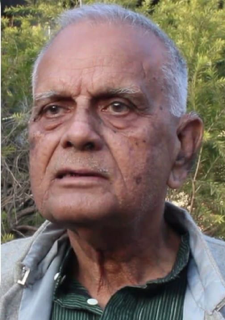
Democracy is tested not when those in power are applauded, but when they are questioned. Its strength lies in protecting individual freedoms, safeguarding the dignity of the vulnerable and ensuring that dissent does not become punishable. Prof. Prabhakar Sinha, the distinguished academic and human rights activist from Muzaffarpur, devoted his life to defending these principles. His death at Medanta Hospital in Patna marks the passing of a courageous voice in India’s civil liberties movement.
As national president of the People’s Union for Civil Liberties (PUCL) for three consecutive terms, Sinha made a significant contribution to India’s human rights movement. Yet his legacy extends beyond organisational leadership. He represented a tradition of independent public engagement in which constitutional values, individual freedom and state accountability mattered more than political convenience.
His journey began in the student movements of the 1950s, when India’s democratic institutions were still taking shape. Sinha became actively involved in student activism in Patna and sustained injuries during a police lathi-charge. He also played a leading role in demanding a judicial inquiry into police firing on Patna University students. Subsequently, he represented the students in the inquiry headed by the Chief Justice of the High Court.
His commitment to democratic rights was equally visible in the teachers’ movement. On December 10, 1966, police firing at Ram Dayalu Singh College in Muzaffarpur killed a teacher and a student and injured several others. Sinha participated in the protest and served as convenor of the Teachers’ Action Committee formed against the then Congress government. The incident strengthened his conviction that educational institutions must enjoy autonomy and that teachers and students must have the freedom to question injustice.
Alongside activism, Sinha pursued a distinguished academic career. He completed postgraduate studies in English and earned a PhD in Linguistics from the University of Pune. His doctoral research examined the grammatical structure of the Lepcha language of Sikkim and its linguistic relationships with Bengali, Santhali, Hindi and Vajjika. He served as professor of English at Ram Dayalu Singh College, Muzaffarpur, until retirement.
The Emergency of 1975–77 became a defining moment in India’s democratic history. The suspension of fundamental freedoms, press restrictions and arrests of political opponents exposed the vulnerability of democratic institutions. Sinha associated himself with the movement opposing the Emergency. After electoral democracy was restored, however, he refused to join the Janata Party, believing that party affiliation could compromise his independence. He also declined government office, preferring to preserve his freedom to question those in power.
The initiative of Jayaprakash Narayan led to the emergence of the People’s Union for Civil Liberties and Democratic Rights, providing an institutional platform for defending civil liberties. In time, separate organisations, including the PUCL and the People’s Union for Democratic Rights (PUDR), developed from this broader initiative. Sinha was associated with the movement from its formative years.
In Bihar, he became PUCL vice-president in 1981 and subsequently headed its state unit during the 1980s, continuing until 1991. His national-level organisational responsibilities began in 1988. He served as national vice-president from 1990 to 2009 and national president from 2009 to 2016, completing three consecutive terms.
His leadership coincided with a period when state accountability and individual freedoms were pressing national concerns. Allegations of custodial deaths, police excesses, fake encounters, arbitrary arrests, restrictions on free expression and violations of the rights of political prisoners repeatedly tested the constitutional framework. Through fact-finding missions, reports and public interventions, the PUCL sought to document violations and bring them into public view.
Sinha believed that a civil liberties organisation could retain credibility only through independence from political power and ideological preferences. He refused to divide human rights along political lines. Disagreement with an individual’s beliefs, he maintained, could never justify denying that person fundamental rights. The right to life, personal liberty and protection against unlawful state action belonged to everyone, irrespective of political affiliation.
His approach to Naxalite violence reflected this principle. He did not support Naxalite violence, but insisted that people accused of such activities were also entitled to legal and constitutional protection. If the police subjected an accused person to unlawful torture, human rights organisations had a responsibility to speak out. Equally, killings of innocent civilians by Naxalites demanded impartial investigation and condemnation. Defending human rights did not mean endorsing an ideology or overlooking violence. It meant ensuring that every individual received the protection of law, regardless of identity or political belief.
In 2018, his article on allegations of “Urban Naxalism” brought this position into sharper focus. He expressed his willingness to have his record in the human rights movement examined and argued that questioning rights violations did not amount to supporting violence or any political ideology. This remains relevant where dissent is portrayed as disloyalty and criticism of state action is viewed through partisan lenses. A democracy must distinguish between unlawful violence and peaceful dissent.
Sinha also valued institutional discipline and transparency. His book, Understanding PUCL, published in 2016, examined the organisation’s origins, constitution, structure, functioning, investigative procedures and the challenges facing the human rights movement. He believed that credibility required more than protests and public statements. It depended on a clear constitutional framework, transparent procedures and a shared understanding of founding objectives.
His work had a distinct regional dimension. Bihar’s history is shaped by agrarian inequalities, caste discrimination, political violence and struggles for land and dignity. In this setting, civil liberties were not abstract constitutional concepts; they were connected with the everyday experiences of marginalised communities confronting unequal power. His interventions under different governments showed that his assessment of state conduct did not depend on the political identity of those in power.
His life raises an important question about the future of India’s civil liberties movement. Ideological polarisation, pressure on independent voices and the tendency to view dissent through partisan lenses make the independence of human rights organisations vital. Their credibility depends on defending rights consistently, without political selectivity.
The legacy of Prof. Prabhakar Sinha lies in his insistence that constitutional rights cannot be conditional. They cannot be granted to those whose opinions are popular and denied to those whose views are inconvenient. The moral authority of human rights advocacy comes from defending the rights of every individual, not from serving the interests of a party or ideological group.
His passing marks the loss of a public intellectual who believed that democracy required constant vigilance and citizens must retain the courage to question authority. His journey shows how sustained civic engagement can strengthen democratic institutions.
The true test of a human rights defender is not whether one protects the rights of those who agree with one’s beliefs, but whether one stands up for those with whom one disagrees. This principle guided Sinha’s public life. His voice may have fallen silent, but the values he defended—constitutional liberty, institutional independence, impartiality and the right to dissent—remain indispensable to India’s democratic future. Democracy survives not merely through the institutions it creates, but through the courage of those who refuse to let them become unaccountable.
(The author, a senior journalist of Bihar, is a known commentator on governance, development, and diver sity issues.)

[[comment.comment_text]]