The Lone Voice That Said No: Maulana Hasrat Mohani and the Making of India’s Constitution
 54 minutes ago
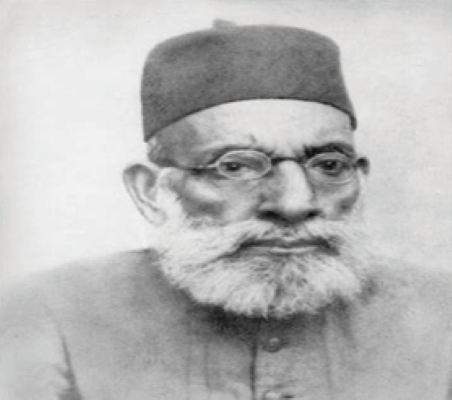
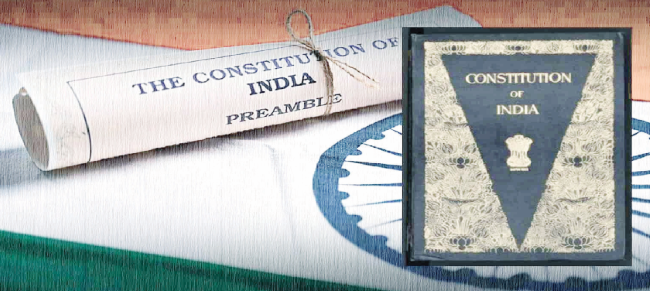
On 26 November 1949, as the Constituent Assembly of India adopted the final draft of the Constitution amid a chorus of affirmative voices, one member alone raised his voice in opposition. Maulana Hasrat Mohani, the veteran freedom fighter, Urdu poet and coiner of the immortal slogan “Inquilab Zindabad,” shouted “no.” Two months later, when members lined up to append their signatures to the document that would govern the new republic, he was one of only three sitting members who declined to sign. His refusal was neither theatrical nor obstructive. It was the culmination of years of principled engagement, rooted in a coherent vision of democracy, federalism and civil liberty that the final text, in his judgment, failed to realise.
Born Syed Fazl-ul-Hasan in 1875 in the village of Mohan in present-day Unnao district of Uttar Pradesh, Hasrat Mohani had already lived several political lives by the time he entered the Constituent Assembly. A disciple of Bal Gangadhar Tilak in his early years, he had edited the fiery Urdu journal Urdu-e-Mualla, suffered repeated imprisonment under colonial sedition laws, served as president of the All-India Muslim League in 1921, participated in the founding of the Communist Party of India, and remained a lifelong advocate of complete independence long before the Congress formally adopted that demand. After Partition he chose to remain in India, representing the residual Muslim League members from the United Provinces. He lived simply, often in a modest mosque near the Assembly hall even during the Delhi riots of 1947, without seeking armed protection. His personal conduct mirrored the republican and egalitarian ideals he repeatedly pressed upon his colleagues.
The Question of Legitimacy
Mohani’s deepest objection concerned the very authority of the body that claimed to frame India’s fundamental law. The Constituent Assembly had been elected in 1946 on the basis of a restricted franchise under the Government of India Act of 1935, through separate communal electorates. He estimated that it represented barely 15 per cent of the population. In his view, a constitution so framed lacked the democratic mandate of the masses.
On 4 November 1948, when the draft was taken up for consideration, he moved a formal amendment demanding that proceedings be postponed until a fresh Constituent Assembly could be elected on the basis of joint electorates and the formation of political rather than communal parties. “So long as the Constituent Assembly is not elected on a non-communal basis,” he declared, “you have no right to get a constitution passed by this Constituent Assembly.” He described the existing draft as a document produced essentially by one party and therefore unworthy of binding the nation. His amendment was rejected, yet the argument exposed a structural tension that has continued to surface in Indian constitutional discourse: the distance between elite constitution-making and popular sovereignty.
Federalism and the Architecture of Power
No issue engaged Mohani more consistently than the distribution of power between the Centre and the provinces. Long before Independence, he had opposed the Nehru Report of 1928 precisely because it failed, in his judgment, to secure a genuinely federal structure. Inside the Assembly he returned to this theme with relentless clarity. He insisted that the form of the Union government must be settled first; only then could the powers of the provinces be defined. Designing a strong Centre first, he warned, would leave the units with mere residual authority.
He championed provincial autonomy not as a communal demand but as a socialist and democratic principle. Power, he believed, should flow upward from the people rather than downward from Delhi. Village panchayats, organised cooperatively, ought to form the basic units of government. He also advocated the reorganisation of provinces on linguistic lines—an idea the Assembly initially resisted but which India adopted in 1956. Residuary powers, he argued, should rest with the provinces, not the Centre. A highly centralised constitution, however well-intentioned, would concentrate authority in too few hands and distance ordinary citizens from the decisions that shaped their lives.
His interventions on education, language and cultural rights reflected the same decentralising impulse. He sought to place education in the Concurrent List so that the Centre could intervene if provinces neglected linguistic minorities, while still preserving provincial primacy. The final text’s strong unitary features, emergency provisions and residual powers with the Union left him unconvinced that the federal promise of the Objectives Resolution had been adequately honoured.
Civil Liberties and the Shadow of Colonial Power
Having spent years in British jails for his writings and political activity, Mohani understood the ease with which a state could silence dissent. He therefore pressed the Assembly to restrict preventive detention and to safeguard the writ of habeas corpus. Colonial-style detention laws, he warned, would merely change the hands that held the key. A free India that retained such instruments risked turning them against political opponents and vulnerable communities.
The trauma of Partition sharpened these anxieties. He believed it had left Indian Muslims “friendless and helpless.” Yet his solution was not the perpetuation of communal safeguards. He opposed reserved seats for Muslims and the organisation of political parties on religious lines. Once joint electorates and adult franchise were introduced, he argued, reservation on communal grounds became both unnecessary and dangerous. Minorities would find security not behind separate electoral walls but in a democracy where every citizen’s liberties were firmly guaranteed against the state. When the Assembly ultimately abandoned reservations for religious minorities, it moved, at least in this respect, closer to the position he had consistently advocated.
He also criticised residual links with the British Commonwealth and the retention of Dominion status in the early years of independence, seeing them as incomplete expressions of sovereignty. His own political affiliations—ranging across Congress, Muslim League and communist circles—reflected a lifelong refusal to be confined by party orthodoxy. In the Assembly he helped found the Social Democratic Party, the first formal opposition group, seeking to create space for socialist and independent voices outside the dominant Congress fold.
A Vision Unfulfilled, Yet Still Resonant
Mohani’s dissent was not a rejection of the Indian republic. It was a demand for a more democratic, more federal and more rights-protecting order. He wanted a constitution that truly reflected the aspirations of the masses rather than the compromises of an elite minority, that distributed power widely rather than concentrating it, and that protected the individual against the potential excesses of the state. Many of his specific amendments were defeated. The final text tilted toward a strong Centre, retained emergency powers, and left preventive detention within the constitutional scheme.
Yet history has not rendered his concerns obsolete. Debates over the balance between Union and states, the scope of emergency provisions, the protection of civil liberties, the place of linguistic and cultural diversity, and the security of minorities continue to animate Indian public life. Linguistic reorganisation, the rise of regional parties, judicial interventions on federal questions, and recurring controversies over detention laws all echo the arguments he advanced more than seven decades ago.
Hasrat Mohani died in Lucknow on 13 May 1951, barely a year and a half after the Constitution came into force. He left behind no grand political machinery and sought no official recognition. What he left was a solitary, consistent voice that refused to confuse the achievement of independence with the perfect realisation of freedom. In an Assembly dominated by consensus and accommodation, he insisted that the Constitution must be measured against the highest standards of democratic legitimacy, decentralised power and individual liberty. That insistence, and the integrity with which he sustained it, remain part of the living inheritance of India’s constitutional tradition.
(Author is a former member of the history faculty at St. Xavier’s College, Mumbai.)





[[comment.comment_text]]