Ambedkar’s Generosity: Sharing the Credit for Making the Constitution
 43 minutes ago
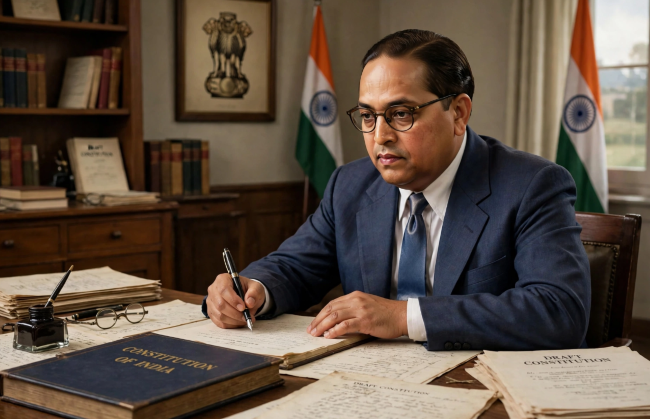
Who made the Constitution of India? The name of Dr B.R. Ambedkar immediately comes to mind, and rightly so. As Chairman of the Drafting Committee, he played a pivotal role in shaping the constitutional document that became the foundation of the Indian Republic. Yet, an important aspect of his contribution deserves greater attention: Ambedkar refused to claim the entire credit for himself. Instead, he publicly acknowledged the contributions of individuals whose intellectual abilities, legal expertise and hard work helped complete this historic task.
His speech in the Constituent Assembly on November 25, 1949, offers an enduring lesson in democratic leadership, intellectual honesty and institutional responsibility. At a time when personal recognition often takes precedence over collective achievement, Ambedkar reminded the nation that nation-building is never the work of one individual alone.
Responding to the credit being attributed to him, Ambedkar made it clear that he was not the sole person entitled to recognition. He specifically mentioned B.N. Rau, the Constitutional Adviser to the Constituent Assembly, who had prepared an initial draft of the Constitution for consideration by the Drafting Committee. This acknowledgement recognised the intellectual groundwork that preceded the Committee’s deliberations.
B.N. Rau’s contribution was significant. Preparing a constitutional framework required extensive research, comparative study of constitutional systems and an understanding of India’s complex social and political realities. Ambedkar understood that the final document could not be separated from the preliminary work that had made its preparation possible.
He also acknowledged the members of the Drafting Committee, who had worked through 141 days of meetings. Their ability to develop new formulations, tolerate differing viewpoints and engage in thoughtful deliberations had helped complete the task successfully.
This observation offers an important insight into constitution-making. A Constitution cannot emerge merely through the authority of one individual or the dominance of a particular political opinion. It requires debate, negotiation, disagreement and a willingness to accommodate different perspectives. The Indian Constitution was shaped through precisely such a process.
Ambedkar’s acknowledgement of S.N. Mukherjee, the Chief Draftsman of the Constitution, was particularly remarkable. He praised Mukherjee’s exceptional ability to translate complicated constitutional propositions into simple, clear and precise legal language. He also appreciated his extraordinary capacity for hard work.
Ambedkar observed that without Mukherjee’s assistance, the Constituent Assembly would have taken several more years to give the Constitution its final shape. Such generous appreciation from the Chairman of the Drafting Committee demonstrated his willingness to recognise professional expertise wherever it existed.
Constitution-making is not simply about developing political ideas; those ideas must also be translated into legally precise language. Every provision has implications for governance, individual liberty, institutional authority and the relationship between citizens and the state. Mukherjee’s contribution in giving legal form to complex proposals was therefore central to the drafting process.
Ambedkar did not limit his appreciation to senior advisers and committee members. He also remembered the employees working under Mukherjee, acknowledging that they had laboured tirelessly, sometimes continuing their work until after midnight. He thanked them for their dedication and cooperation.
This aspect of his speech deserves particular attention. In the history of major national achievements, the contributions of people working behind the scenes are often overlooked. Recognition generally goes to those holding prominent positions, while individuals responsible for research, documentation, drafting and administrative support remain anonymous.
Ambedkar deliberately brought their contribution into the public record. His acknowledgement demonstrated that the Constitution was not merely the intellectual achievement of a few prominent leaders but also the result of sustained effort by numerous individuals whose names might otherwise have remained forgotten.
He also graciously acknowledged the role of Dr Rajendra Prasad, President of the Constituent Assembly. Ambedkar thanked him for conducting the proceedings with considerable skill, generosity and goodwill towards the members.
Recalling occasions when technical or procedural objections threatened to prevent amendments proposed by the Drafting Committee, Ambedkar expressed gratitude to Rajendra Prasad for helping ensure that procedural formalities did not obstruct the larger objective of constitution-making.
This highlights another essential feature of democratic institution-building. Rules and procedures are indispensable, but they must serve the purpose for which institutions exist. Procedural correctness should not become an obstacle to meaningful deliberation or the fulfilment of constitutional responsibilities.
Ambedkar also recognised the contributions of his colleagues Alladi Krishnaswami Ayyar and T.T. Krishnamachari, who had defended the Constitution during the Assembly’s deliberations. Their role in explaining and defending its provisions was an important part of the process.
Taken together, these acknowledgements reveal a remarkable aspect of Ambedkar’s leadership. He recognised the Constitution as a collective achievement. He neither diminished his own contribution nor hesitated to appreciate the intellectual and practical efforts of others. His approach reflected the understanding that institutional success depends on individuals performing different responsibilities together.
The significance of this speech becomes greater when viewed against the political and social diversity of the Constituent Assembly. Its members represented different regions, communities, political traditions and ideological positions. They disagreed on fundamental questions concerning citizenship, individual rights, social justice, federalism and the powers of the state.
Yet, the Assembly continued its deliberations and worked towards a constitutional framework for an independent and diverse country. The process demonstrated that disagreement need not undermine democratic cooperation. Differences can be addressed through reasoned discussion, negotiation and respect for institutional procedures.
Ambedkar’s approach to sharing credit remains relevant to contemporary public life. Democratic institutions cannot be strengthened by concentrating recognition and authority around individuals alone. Their credibility depends on collective responsibility, respect for professional expertise and the willingness to hear different viewpoints.
Leadership is not merely the ability to make decisions or occupy positions of authority. It also involves recognising colleagues’ contributions, respecting institutional processes and giving credit where it is due. Ambedkar’s speech offers a powerful example of this principle.
However, his generosity should never be interpreted as a reason to diminish his own historic contribution. His intellectual leadership as Chairman of the Drafting Committee and his sustained engagement with social equality, individual rights and constitutional safeguards remain central to understanding the making of the Constitution. Recognising B.N. Rau, S.N. Mukherjee, committee members and supporting staff does not reduce Ambedkar’s stature. Instead, it provides a fuller and more accurate account of the constitutional process.
For Ambedkar, political democracy could not survive without social democracy. Liberty, equality and fraternity were not merely abstract ideals but essential conditions for building a just society. His commitment to disadvantaged communities, individual freedoms and constitutional safeguards shaped his larger vision of India.
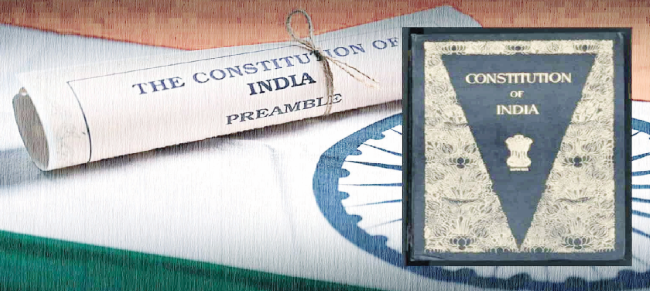
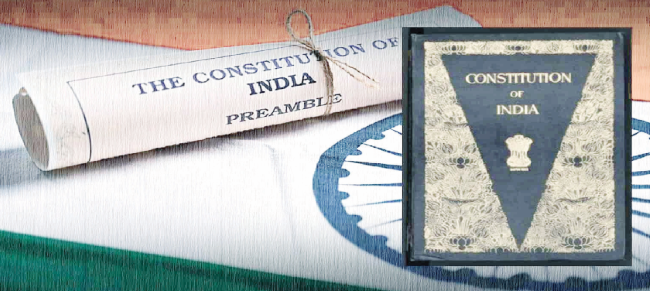
The Constitution must therefore be understood not merely as a legal document but as a commitment to transform the relationship between the state and its citizens. Its values of justice, liberty, equality and fraternity remain the foundation of India’s democratic aspirations.
As India observes Constitution Day on November 26, Ambedkar’s speech of November 25, 1949, deserves to be revisited. It reminds us that respecting the Constitution means more than remembering its principal architect or celebrating its adoption. It requires protecting the democratic values that informed its creation.
The most enduring message of Ambedkar’s speech lies in his willingness to share recognition. A leader secure in his contribution does not need to appropriate the work of others. By acknowledging advisers, colleagues, draftsmen, employees and institutional leadership, Ambedkar demonstrated that the strength of a democratic achievement lies in the collective effort behind it.
The Constitution belongs to the people of India. Its making involved many minds and many hands, and its protection remains a shared responsibility. Ambedkar’s generosity in distributing credit is therefore much more than a historical detail. It is a lesson in democratic ethics, institutional humility and public accountability—values indispensable to the future of the Indian Republic.
(The author, a senior journalist of Bihar, is a known commentator on governance, development, and diversity issues.)





[[comment.comment_text]]