Cabinet Approves Draft Bill for Fast-Track Courts and Tougher Punishment in Paper Leak Cases

 2 months, 2 weeks ago
New Delhi, July 24: In what could mark a significant overhaul of India's legal framework governing examination integrity, the Union Cabinet on Friday approved a draft bill proposing fast-track courts and stringent penal provisions for question paper leaks and examination malpractices. The move signals the Centre's attempt to shift from largely administrative responses to a dedicated legal mechanism aimed at treating organised examination fraud as a serious criminal offence with time-bound judicial scrutiny.
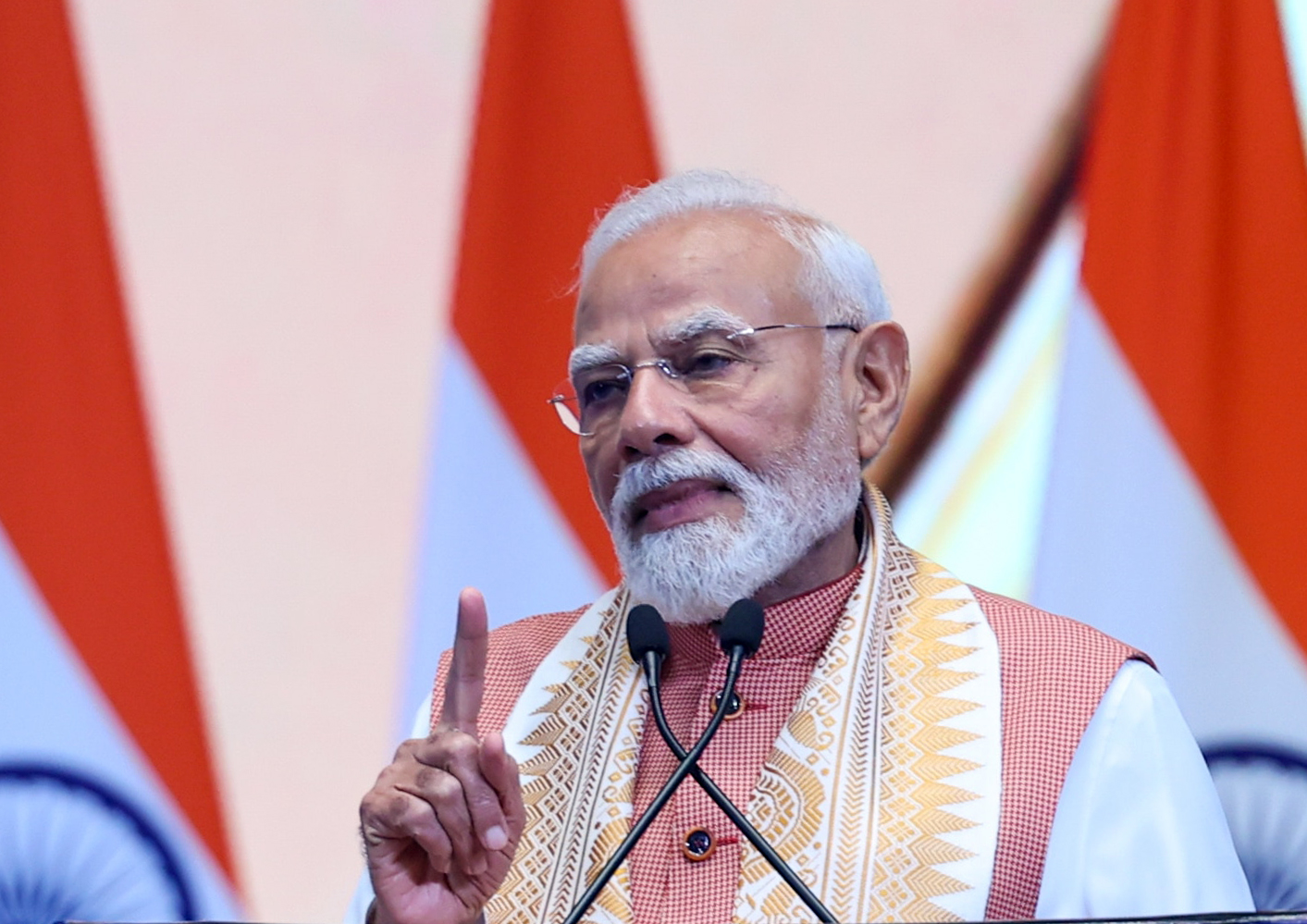
The draft legislation, approved at a Cabinet meeting chaired by Prime Minister Narendra Modi at the Parliament House complex, is expected to be introduced in Parliament next week. The decision follows the Prime Minister's announcement, made through a video message on Thursday, that the government would bring a law providing for strong action against those involved in paper leaks.
The proposed legislation comes against the backdrop of mounting public anger over repeated examination controversies that have shaken confidence in India's education and recruitment systems. Over the past few years, several national and state-level entrance examinations and recruitment tests have faced allegations of question paper leaks, organised cheating, impersonation, manipulation of answer sheets and irregularities in recruitment processes. In many cases, examinations had to be cancelled or postponed, resulting in significant delays in admissions and government recruitments while imposing substantial financial and psychological costs on millions of aspirants.
Unlike conventional criminal offences, examination fraud directly affects the principle of meritocracy on which India's higher education and public employment systems are built. Every cancelled examination represents not merely an administrative failure but a setback for candidates who spend years preparing through sustained academic effort, often supported by significant financial investment from their families. Repeated breaches have therefore transformed paper leaks from isolated incidents into a wider governance challenge involving institutional credibility and public trust.
The proposed bill seeks to address one of the most persistent weaknesses in the current system—the prolonged legal process that often allows examination-related cases to remain unresolved for years. While existing criminal laws permit prosecution for offences such as cheating, forgery and criminal conspiracy, investigations and trials frequently move slowly, reducing the deterrent effect of legal action. The establishment of dedicated fast-track courts is expected to accelerate judicial proceedings by ensuring time-bound trials in cases involving examination fraud and organised cheating syndicates.
The legislation is also expected to prescribe stricter punishments for individuals and criminal networks involved in leaking question papers, facilitating organised cheating or manipulating recruitment examinations. Although the detailed provisions are yet to be made public, government sources indicate that the objective is to create a stronger legal deterrent against offences that compromise the future of students and job aspirants.
Policy experts view the Cabinet decision as an acknowledgement that examination fraud has evolved into an organised and technologically sophisticated criminal enterprise rather than a series of isolated administrative lapses. Investigations conducted in several states in recent years have revealed the involvement of organised networks comprising intermediaries, technology experts, coaching operators and insiders with access to confidential examination material. Such networks frequently operate across multiple jurisdictions, making coordinated investigation and speedy prosecution particularly challenging under the existing legal framework.
The proposed law is also expected to complement recent administrative reforms aimed at improving examination security. Governments and examination agencies have increasingly adopted encrypted digital transmission of question papers, biometric verification of candidates, AI-enabled surveillance, CCTV monitoring, geo-fencing of examination centres and enhanced cyber-security protocols. However, experts argue that technological safeguards alone cannot eliminate organised fraud unless accompanied by swift criminal prosecution and meaningful punishment.
The decision carries particular significance because India administers one of the world's largest examination ecosystems. Every year, tens of millions of students and job seekers appear in school board examinations, university entrance tests, professional admissions and government recruitment examinations. Any breach in examination integrity therefore has consequences extending far beyond individual candidates, affecting institutional credibility, public confidence and labour market efficiency.
Economists also point out that repeated cancellations of examinations carry measurable economic costs. Governments incur additional expenditure in reconducting examinations, recruitment processes remain stalled, vacancies in public institutions persist longer than planned, and candidates lose productive months or even years waiting for fresh examinations. The uncertainty also increases household expenditure on coaching, accommodation and repeated travel while adding considerable psychological stress among aspirants.
At the same time, legal experts caution that stronger penalties alone cannot guarantee the elimination of paper leaks. The effectiveness of the proposed legislation will ultimately depend upon efficient investigation, inter-agency coordination, digital forensic capabilities and protection of evidence. Fast-track courts can accelerate judicial outcomes only if investigative agencies are equipped to complete high-quality investigations within prescribed timelines. Similarly, sustained improvements in examination governance, institutional transparency and accountability will remain essential for long-term success.
The proposed legislation also reflects a broader policy shift in the government's approach towards examination governance. Rather than treating paper leaks as isolated instances of misconduct, the Centre appears to be positioning examination integrity as an issue of national importance affecting educational equity, employment opportunities and institutional credibility. This approach aligns with the government's broader emphasis on improving governance through technology, accountability and legal enforcement.
The draft bill is expected to receive close scrutiny when introduced in Parliament, particularly regarding the scope of offences, the severity of punishments, procedural safeguards and the jurisdiction of proposed fast-track courts. Lawmakers are also likely to examine how the legislation will interact with existing criminal laws and state-level legal provisions dealing with examination offences.
If enacted, the law could become one of the most consequential reforms in India's examination governance framework in recent years. By combining specialised judicial mechanisms with enhanced criminal penalties, the government seeks not merely to punish offenders after a breach occurs, but to establish a credible deterrent capable of preventing organised examination fraud before it undermines the aspirations of millions of students. Whether the legislation succeeds, however, will ultimately depend not only on the severity of its provisions but also on the consistency, transparency and speed with which those provisions are enforced.










[[comment.comment_text]]