Erasing Voters, Banning Streets: The Growing Crisis of Institutional Trust

 an hour ago
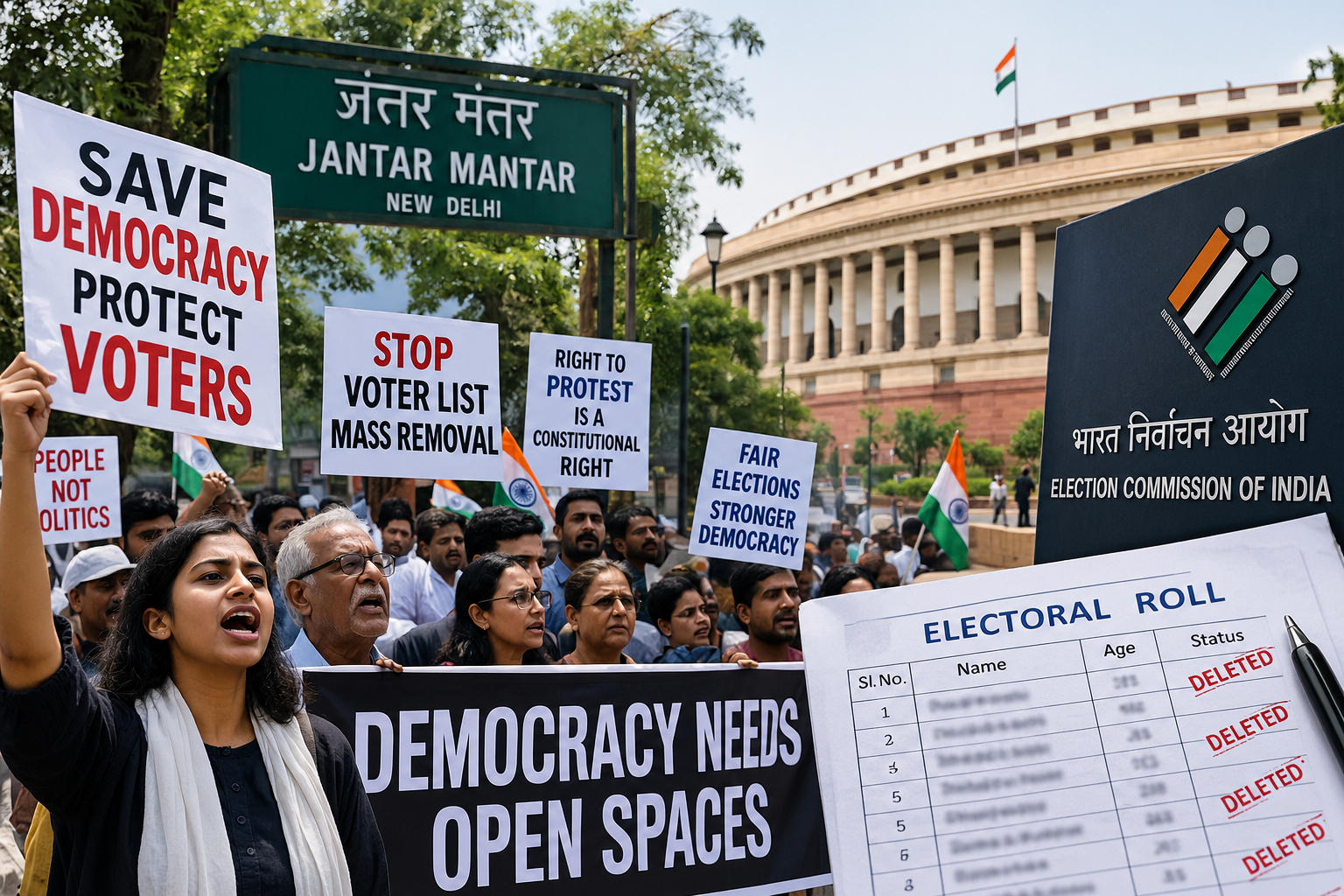
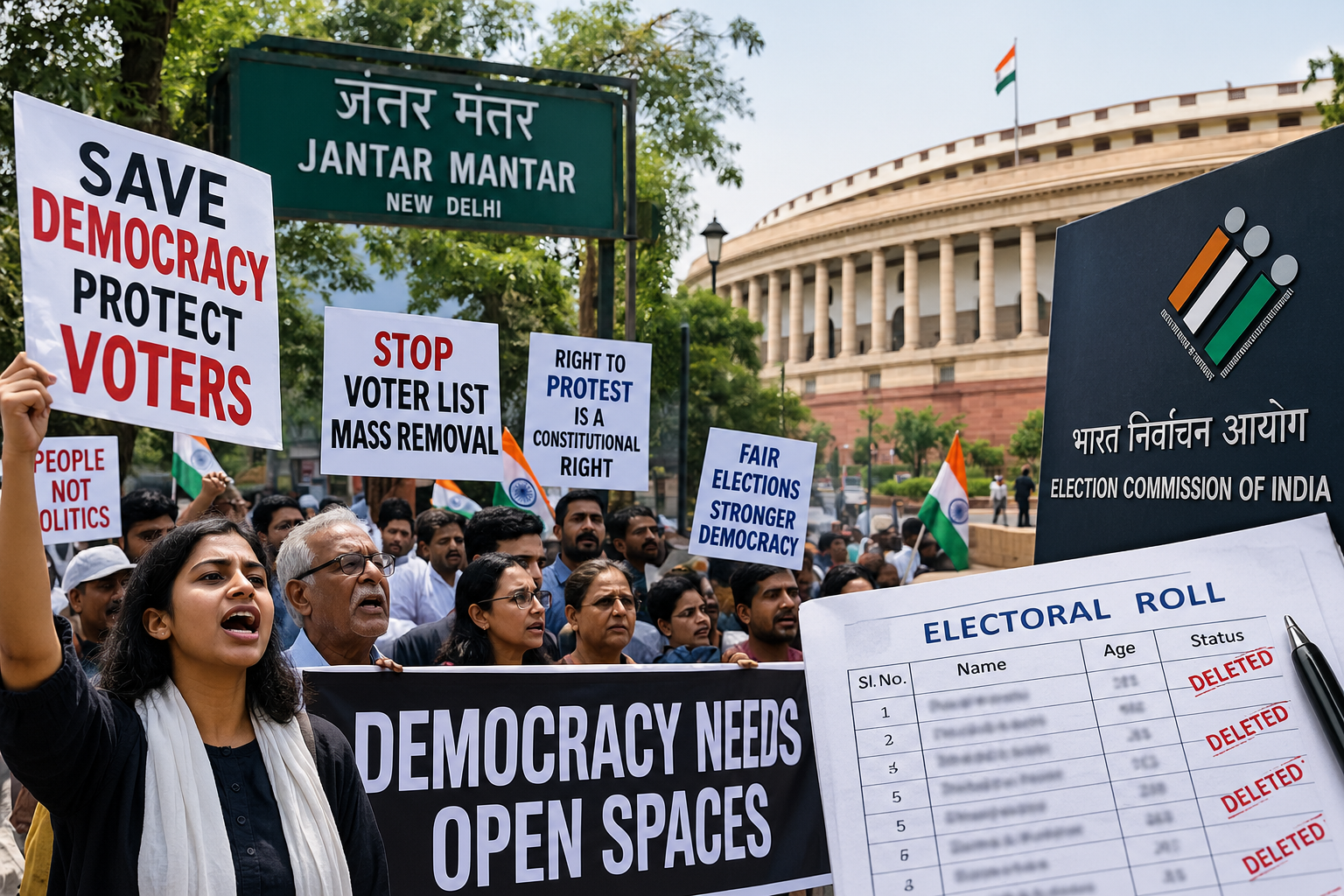
The recent political uproar in central Delhi highlights a deepening chasm between India’s ruling establishment and the opposition. As thousands of Indian National Congress supporters took to the streets to protest the Election Commission of India’s (ECI) Special Intensive Revision (SIR) of voter rolls—which has reportedly expunged over 130 million names—the government's response has shifted from heavy-handed detentions to administrative maneuvering. While the authorities allowed Monday's march to proceed without mass arrests, the simultaneous denotification of Jantar Mantar as a designated protest ground reveals an ongoing strategy to restrict dissent rather than engage with the underlying grievances.
For decades, the 18th-century monument of Jantar Mantar served as the democratic heart of the capital, offering citizens, activists, and political parties a visible space to air their demands near the seat of power. By declaring through its new guidelines that demonstrations can no longer be held in central Delhi, the government has effectively stripped the public of its most iconic venue for peaceful assembly. Relocating protests away from government corridors does not diminish public anger; it merely suppresses its visible expression. Tactics aimed at shrinking physical spaces for civil discourse set a concerning precedent for a robust constitutional democracy.
Rather than relying on public site denotifications and bureaucratic barriers, the government should have taken recourse to sustained dialogue and open consultation. A controversy as critical as the mass removal of voter names demands transparent discussion, public assurances, and multi-party consultation. Dismissing opposition voices as sources of chaos, or dismissing petitions on minor clerical defects like missing court fees or illegible identity cards, fails to resolve the core issue. By choosing administrative avoidance over genuine parliamentary or public dialogue, the ruling party risks deepening political polarization and alienating large sections of the electorate.
The greatest casualty of this unyielding confrontation is the democratic health and institutional credibility of the ECI. As an independent constitutional authority tasked with ensuring free and fair elections, the Commission relies entirely on public trust to function effectively. When sweeping voter roll revisions are met with widespread anxiety and allegations of political purging, the institution’s silence and lack of proactive engagement only fuel suspicion. Every administrative roadblock and refusal to enter into meaningful dialogue allows doubts to multiply, further eroding the Commission's neutral standing in the eyes of the public.
Ultimately, a thriving democracy cannot be sustained by barring protestors from public squares or dismissing institutional concerns through political invective. The path forward requires the government to pivot from confrontation to negotiation, opening clear channels of communication with opposition leaders, youth groups, and civil society. Restoring transparency to the election machinery and re-establishing accessible spaces for peaceful protest are essential first steps. Only by embracing genuine dialogue can the nation preserve institutional integrity, uphold citizen rights, and safeguard the core principles of Indian democracy.








[[comment.comment_text]]