Ayodhya's Modern Tent City to Provide Luxurious Accommodation and Culinary Delights for Pilgrims

 2 years, 9 months ago
Abhinit Kumar
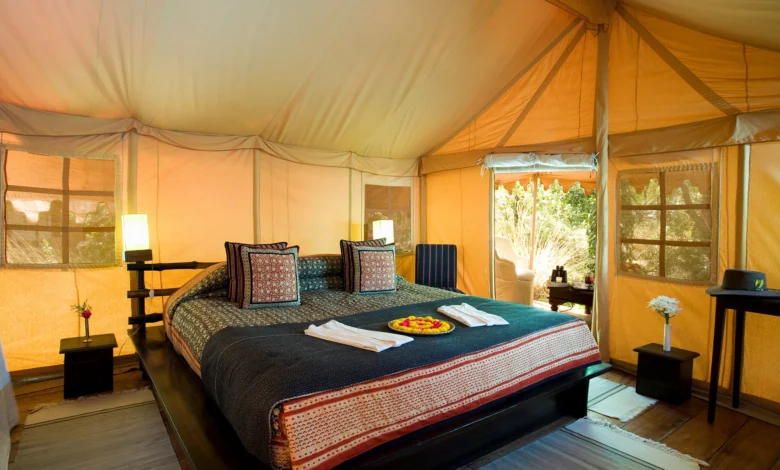
Ayodhya, In a groundbreaking initiative by the Ayodhya Development Authority, a modern tent city is redefining pilgrimage hospitality, extending its embrace even to luxury hotels. Pilgrims visiting the sacred banks of the Sarayu River near the upcoming grand Ram Temple will soon experience the unique charm of the 'Heritage Cottage Stay.'
These tent suites, with double occupancy, boast luxurious amenities reminiscent of high-end hotels. Nestled in the serenity of nature, they offer a blend of ancient and modern Ayodhya, providing pilgrims with a truly elevated experience.
The tent city, strategically placed near Brahma Kund, Ram Katha Park, Bagh Bijesi, Karsevakpuram, and Manidasa Ki Chavani, is prepared to host thousands of devotees across various categories. According to Chief Minister Yogi Adityanath's vision, these tent cities will serve special Avadhi and Banarasi cuisines made from millets, coarse grains, and seasonal greens.
As Ayodhya, the center of faith for Lord Rama, approaches the consecration ceremony of Lord Rama's idol in the grand Ram Temple on January 22, 2024, the city is witnessing extensive development projects. Among them is the construction of tent cities by the Ayodhya Development Authority, aimed at accommodating the multitude of pilgrims expected for the idol consecration ceremony.
The tent cities, strategically located in different areas such as Majha Guptaar Ghat, Brahma Kund, Ram Katha Park, Bagh Bijesi, Karsevakpuram, and Maniram Das Ki Chavani, will collectively provide accommodation for thousands of devotees.
Offering a glimpse of the 'Heritage Cottage Stay,' these tent cities will not only cater to the tastes of pilgrims from around the world but will also feature specially curated Avadhi and Banarasi delicacies. The tent city near Brahma Kund, operational since December 1, showcases a variety of local dishes, including millet-based and coarse grain preparations, along with seasonal vegetables.
In addition to exquisite interiors, the wooden deck-based tents will provide all comforts, including comfortable chairs, sofas, dining lounges, personal vaults, room heaters, air conditioning, and high-speed internet. The tents are designed for long durability and can be operated for up to ten years after installation. Pilgrims will also have access to open-air theaters for bonfires and cultural events, along with a souvenir shop for memorable mementos.
As Ayodhya emerges from centuries of obscurity, the vibrancy of its cultural and spiritual heritage is being revitalized. The tent cities stand as a testament to the vision of Prime Minister Modi and the proactive efforts of Chief Minister Yogi, creating a harmonious blend of tradition and modernity in the city of Ayodhya. *









[[comment.comment_text]]