AAP Outraged as Delhi Police Serve Notice to Arvind Kejriwal Over 'Poaching' Allegations

 2 years, 8 months ago
Commotion at Chief Minister's Residence as Crime Branch Attempts to Deliver Probe Notice
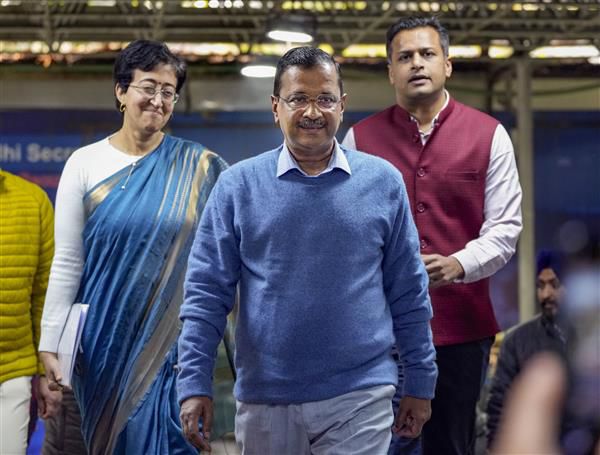
New Delhi, EW Correspondent : In a dramatic turn of events, Delhi Chief Minister Arvind Kejriwal has been served a notice by the city police, igniting a heated exchange between the Aam Aadmi Party (AAP) and law enforcement officials. The notice pertains to Kejriwal's recent claims that the Bharatiya Janata Party (BJP) was allegedly attempting to poach AAP MLAs.
On Saturday, a team from the Delhi Police Crime Branch made their way to Kejriwal's official residence to hand over the notice and request his participation in the ongoing probe. However, the situation escalated into a confrontation between the police team, led by an Assistant Commissioner of Police (ACP)-level officer, and officials present at the Chief Minister's residence.
AAP leader Jasmine Shah captured the incident on video and shared it on social media platform X (formerly known as Twitter). In the footage, Shah can be seen questioning the crime branch official about the legal basis for insisting on delivering the notice personally to Chief Minister Arvind Kejriwal.
"I asked a simple question to the Delhi police officer standing in front of the entrance of the residence of CM Arvind Kejriwal: Under which law is he insisting to hand over a notice personally to CM? He had no answers. It is clear they are only here to do nautanki (drama)," Shah wrote, accompanying the post with the video.
The video captures the intensity of the exchange, emphasizing the AAP's accusation that the police visit was more of a theatrical performance than a legitimate investigative process. The notice serves as a new chapter in the ongoing political tussle between the AAP and the BJP in the national capital. The development has sparked widespread discussions on the nature of political drama and the role of law enforcement in such high-profile cases. The political atmosphere in Delhi remains charged as both parties continue to trade allegations and counter-allegations.






[[comment.comment_text]]