Unmasking the Myth: The Truth Behind Jodha Bai

 1 year, 3 months ago
A Governor’s Controversial Claim Sparks Historical Debate
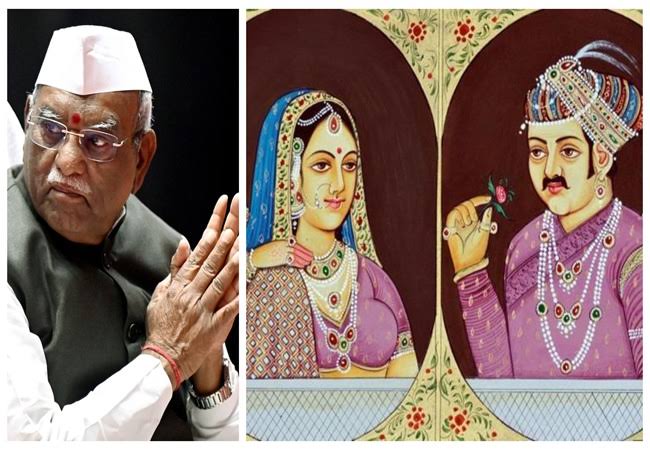
In May 2025, Rajasthan Governor Haribhau Bagade stirred a storm by asserting that Mughal Emperor Akbar’s wife, commonly referred to as Jodha Bai, was not a Rajput princess but the daughter of a maid. At an event in Udaipur, the governor further claimed that the marriage between Akbar and Jodha was a fabrication, calling into question a cornerstone of Mughal-Rajput diplomatic history. His remarks have reignited long-standing debates over the identity of Akbar’s Hindu consort and the historical veracity of the name “Jodha Bai,” a label popularized more by colonial misreadings and pop culture than by original records.
As the controversy unfolds, this article revisits archival chronicles and authoritative scholarship to clarify who Akbar’s wife truly was, what role she played in the Mughal court, and where the name “Jodha Bai” originates.
Dissecting the Claim: Was She Really a Maid’s Daughter?
Governor Bagade’s claim that Akbar’s Hindu wife was not a Rajput princess but a maid’s daughter is devoid of evidence from contemporary sources. While it is true that the name “Jodha Bai” does not appear in primary Mughal texts such as the Akbarnama by Abu’l Fazl, the absence of this specific name does not invalidate the well-documented existence of Akbar’s Rajput wife.
In 1562, Akbar married the daughter of Raja Bharmal of Amber (present-day Jaipur), a Kachwaha Rajput ruler. This alliance is amply recorded in official Mughal chronicles. Though her birth name is not definitively preserved, she was later known by the imperial title Mariam-uz-Zamani—“Mary of the Age”—after she bore Prince Salim (later Emperor Jahangir) in 1569.
It is important to understand that Mughal records rarely used women’s given names, instead assigning titles that reflected their roles or status. This is a common reason for subsequent confusion, especially in the context of oral traditions and later colonial-era reinterpretations..
Historians such as Ruchika Sharma and Parvati Sharma affirm that Akbar’s Hindu wife was indeed a Rajput princess and not the daughter of a maid. Governor Bagade’s assertions seem to stem more from modern political revisionism than substantiated historical evidence. While some colonial historians like James Tod did introduce inaccuracies, the governor’s extrapolation about a maid’s daughter has no foundation in verified sources.
The Rajput Princess Who Bore an Emperor
The Rajput woman whom Akbar married in 1562 played a crucial role not just as a royal consort but as a figure of political consolidation. According to historical accounts, Raja Bharmal faced internal threats, notably from his brother-in-law Sharif-ud-din Mirza. In a bid to ensure political survival, Bharmal offered his daughter’s hand to Akbar, a gesture that symbolized submission and alliance.
This marriage set a diplomatic precedent and was instrumental in shaping Mughal policy. It marked the beginning of a series of matrimonial alliances between the Mughal emperors and Rajput clans, facilitating relative peace and administrative integration in north India.
Akbar’s wife gave birth to twin sons, Hassan and Hussain, in 1564, both of whom died in infancy. Her most significant contribution, however, came with the birth of Salim in 1569, who would later ascend the throne as Emperor Jahangir. She was honored with the title Mariam-uz-Zamani, and her status in court was second to none among imperial women.
Mariam-uz-Zamani: Power Beyond the Harem
Mariam-uz-Zamani was not a passive consort. Her influence extended far beyond the confines of the royal harem. As the mother of the heir apparent, she occupied the highest position among the emperor’s wives. In a patriarchal era, she wielded extraordinary autonomy and authority.
She was one of the few individuals—male or female—granted the rank of 12,000 zat (personal rank), a distinction later shared only by Empress Nur Jahan. She was also permitted to issue farmans (imperial orders), a rare privilege for any woman in Mughal history.
Her influence was not limited to politics. Mariam-uz-Zamani was an accomplished businesswoman who managed a vast enterprise in the trade of spices and silk. She owned ships that engaged in overseas trade. The most famous of these, the Rahimi, was seized by Portuguese forces in 1613, prompting a diplomatic crisis and retaliation by Jahangir—underscoring her importance in the imperial economy.
She used her immense wealth for architectural patronage, building mosques, gardens, and public works. The Begum Shahi Mosque in Lahore, constructed between 1611 and 1614, stands as a testament to her enduring legacy.
.
The Myth of “Jodha Bai”: A Colonial Misnomer
The title “Jodha Bai” is, in fact, a historical error. It was popularized by the British officer and orientalist James Tod in his early 19th-century work Annals and Antiquities of Rajasthan. Tod mistakenly referred to Mariam-uz-Zamani as “Jodha Bai,” suggesting a connection to Jodhpur. However, she hailed from Amber, not Jodhpur.
The real “Jodha Bai,” if one adheres to the literal meaning of the title (“Lady of Jodhpur”), was likely Jagat Gosain—a Jodhpur princess married to Jahangir, not Akbar. Jagat Gosain, also known as Mani Bai or Taj Bibi Bilqis Makani, was the mother of Shah Jahan and died in 1619.
The misattribution was further entrenched by popular media. The iconic 1960 film Mughal-e-Azam and the 2008 film Jodhaa Akbar both used the term “Jodha Bai” to refer to Akbar’s Rajput wife, cementing the error in the public imagination. Despite their cinematic beauty, these portrayals blurred historical accuracy, perpetuating colonial-era myths.
Some fringe theories, like those by Goan scholar Luis de Assis Correia, suggest that Jodha Bai was a Portuguese noblewoman named Dona Maria Mascarenhas. However, these theories have been widely discredited by serious historians for lack of credible evidence.
Setting the Record Straight
Governor Bagade’s controversial claim—stating that Akbar married a maid’s daughter named Jodha Bai—collapses under the scrutiny of primary records and expert analysis. The woman in question was not only a Rajput princess from Amber but also one of the most influential figures of the Mughal period. Her contributions ranged from diplomacy and economics to cultural integration and imperial administration.
While the term “Jodha Bai” continues to be used in popular discourse, its origins lie in colonial misinterpretation, not historical fact. The legacy of Mariam-uz-Zamani remains undiminished. She was not merely Akbar’s wife, but a queen mother, political actor, and cultural bridge who played a formative role in the evolution of the Mughal Empire.
In an era of historical revisionism, it is all the more critical to uphold evidence-based scholarship. Distortions—whether colonial or contemporary—must be interrogated so that the past is neither weaponized nor romanticized, but understood in its full, nuanced truth.
(Writer, a journalist and commentator, formerly served as a History professor at St. Xavier’s College, Mumbai.)







[[comment.comment_text]]