Saudi Arabia at The Crossroads: Who will Succeed Prince MBS?

 1 year, 3 months ago
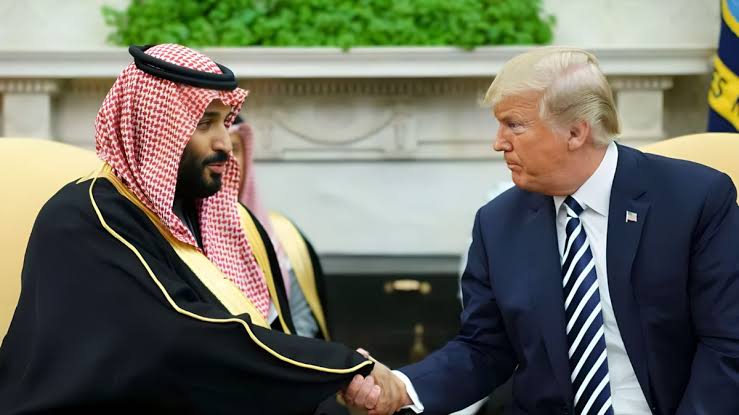
Donald Trump's visit to Saudi Arabia, which occurred some time ago given his departure from office, was characterized by the lavish display of traditional pomp and pageantry one might expect from a state visit to the kingdom. Horse-mounted guards of honor and opulent banquets in grand palaces were all part of the elaborate welcome. Yet, amidst this spectacle, one figure was conspicuously absent: King Salman himself. His advanced age, 89, and frail health mean he is rarely seen in public, leading to his son, Crown Prince Mohammed bin Salman, stepping into the role of host.
Crown Prince Mohammed bin Salman (MBS), currently 39 years old, took center stage during Trump's visit. He presided over the ceremonial events, including visits to grandiose development projects and a regional summit held in the Saudi capital. This highly visible role served as a powerful affirmation, if any were still needed, of his unrivalled leadership within the kingdom. Eight years after his dramatic ascent to power, which upended decades of established Saudi tradition, MBS is now virtually assured of taking the throne upon his father's passing.
With MBS's succession to the throne largely a foregone conclusion, the real point of uncertainty within the autocratic state shifts to a more sensitive and rarely discussed topic: who might be in line to succeed MBS should anything unforeseen befall him. This question, often whispered about rather than openly debated, highlights a significant void in the kingdom's traditional succession protocols.
MBS's rapid rise has ushered in a rare moment in the modern Saudi state's history, a period with no clear succession order. Since the kingdom's formation in 1932 by his grandfather, King Abdulaziz, such ambiguity has been uncommon. Currently, there is no designated deputy crown prince, who would typically be the natural successor to the heir apparent, nor has a deputy prime minister been appointed. This absence of a clear line creates a unique challenge for the future stability of the monarchy.
Given his relatively young age, MBS could potentially rule for many decades. However, the current lack of a named successor has created what experts refer to as "key-man risk." David Rundell, a former US chief of mission in Saudi Arabia and author of “Vision or Mirage: Saudi Arabia at the Crossroads”, emphasises this point. He highlights MBS's highly centralized leadership and his pivotal role in spearheading the ambitious, yet still incomplete, social and economic reforms outlined in his Vision 2030 plan, which have significantly shaken up the conservative nation.
Rundell further elaborates on the implications of this "key-man risk," stating, "There's one guy who's in charge, and it's not clear what would happen if he departs." This uncertainty goes beyond merely finding a new person to ascend the throne. It also involves identifying a leader capable of continuing the ongoing reforms and the ambitious Vision 2030 initiatives, which, according to Rundell, presents a "potential problem."
However, not all experts share the same level of concern regarding this immediate uncertainty. Bernard Haykel, a professor of Near Eastern studies at Princeton University, offers a contrasting perspective. He suggests that should MBS become king, he could announce the crown prince on the very same day or soon after, a move Haykel believes is "in the plan."
Haykel further contends that such a decision would undoubtedly have been "discussed with key members of the royal family." While acknowledging that the specific identity of the next crown prince remains unclear, he asserts that this ambiguity is "not a source of structural instability" for the kingdom. This suggests a belief that the royal family has mechanisms in place to manage this transition, even if not publicly disclosed.
When Saudis speculate about who MBS, who is believed to have three young sons and two daughters, might choose as his successor, some prominent names emerge, though not without their own complications. His younger brother, Prince Khalid, currently 37 and serving as the defense minister, is often mentioned. However, a significant legal hurdle exists: the Saudi Basic Law of Governance, which acts as the constitution, stipulates that the king and the crown prince cannot originate from the same branch of King Abdulaziz's descendants.
While the king possesses the power to amend this law, any changes to the succession, in theory, would still require approval from a council of senior royals. Other names that come up in these discussions include Prince Turki bin Mohammed bin Fahd, a grandson of King Fahd, who is a minister of state and royal court adviser managing Riyadh’s relations with its Gulf neighbors, and Prince Abdullah bin Bandar, the minister of the powerful National Guard, though his family branch is considered less prominent. The question of "After him, what?" continues to linger for many Saudis, reflecting a palpable concern about the kingdom's future leadership beyond MBS.






[[comment.comment_text]]