Russia Warns the U.S. Against Military Intervention in Iran-Israel War
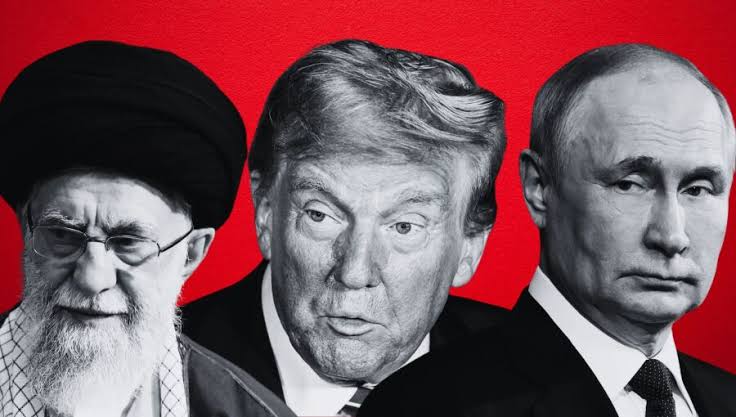



Russia issued a strong warning to the United States against any "military intervention" in the ongoing conflict between Iran and Israel, describing such a step as "extremely dangerous" with "unpredictable negative consequences." The warning came from Russia's foreign ministry spokeswoman Maria Zakharova, who also expressed grave concern over Israeli strikes on Iranian nuclear infrastructure.


Ms. Zakharova stated that the world was "millimetres" from a catastrophe, drawing parallels to the 2011 Fukushima accident and questioning the lack of global outcry from environmentalists. She emphasized that "nuclear facilities are being struck," and the UN nuclear safety watchdog has already noted specific damage.


Adding to Russia's concerns, the head of Russia's nuclear energy corporation cautioned that an Israeli attack on Iran's Bushehr nuclear power plant, which was built by Russia and is Iran's only operating nuclear plant, could lead to a "Chernobyl-style catastrophe."


These warnings follow US President Donald Trump's announcement on Wednesday that he was considering joining Israel in strikes against Iran, stating, "I may do it, I may not do it." Russia, along with the UAE, had called for an immediate cessation of the conflict between Iran and Israel advocating for a diplomatic and political solution to Tehran's nuclear issue. Russian President Vladimir Putin had even offered to mediate the conflict last week in calls with Israeli Prime Minister Benjamin Netanyahu and Iranian President Masoud Pezeshkian.


Russia's warning is a significant factor in the complex dynamics of the Iran-Israel conflict. It signals Russia's strong opposition to US military involvement and highlights the potential for wider, unpredictable consequences. While it may influence US decision-making by raising the stakes, it doesn't guarantee that the US will refrain from intervention. The situation remains highly fluid and dangerous.

 

Political Earthquake: Raghav Chadha Leads Seven AAP MPs Switch Over to BJP

The political landscape of India shifted dramatically this Friday, April 24, 2026, as Raghav Chadha, along with six other Aam Aadmi Party (AAP) Rajya Sabha MPs, announced their departure from the party to merge with the Bharatiya Janata Party (BJP).

Dinesh Dubey   |  5 days, 5 hours ago

Women's Reservation law in Limbo: Gender Politics or political chicanery

The government logic is simple by adding new seats; the state can carve out a 33% quota for women without unseating current male representatives. It was a win-win situation which the opposition’s short sightedness derailed it. The DMK and the Congress raised the spurious issue of demographic dominance of North which is a frivolously diversionary Politics as the proposal has equal share for each state in the ratio of 50%.

VK Bahuguna   |  5 days, 11 hours ago

Record Turnout, Unclear Tide: Bengal’s 92.9% and Tamil Nadu’s 85.1% 2026: Psephologist’s Nightmare

West Bengal’s 92.9 per cent turnout—close to 93 per cent in 152 seats—has been described by authorities as the highest in the state’s electoral history since Independence, surpassing even the 84.72 per cent seen in 2011 when Mamata Banerjee dislodged the 34‑year Left Front regime. The raw energy of crowds, the extension of polling hours, and the visible mobilisation of Bengali‑Hindu, Muslim, and backward‑caste voters alike suggest an electorate that sees this election as more than a routine change of tenants.

Hasnain Naqvi   |  5 days, 12 hours ago

A Woman, Quite Womanly!

Men have dominated history, controlled ideas, and shaped the lives of women, and somehow they managed to infect the only idea that was supposed to unite us. They created these binaries and, with a little fake affection and care, told women that all this was propaganda and that they should carry on being submissive.

Shafiya Showkat Wani   |  6 days, 8 hours ago

The Strategic Imperative: Navigating Geo-economic Volatility in an Age of Conflict

Energy security has re-emerged as the most critical bottleneck for industrial competitiveness. Conflict, particularly in regions vital to energy production and transit, acts as a force multiplier for inflation, driving up costs for manufacturers and transporters alike.

EW•NN   |  1 week, 1 day ago

Road Safety as a Constitutional Imperative!

Highways, in particular, represent a paradox. They are symbols of economic progress—facilitating trade, reducing travel time, and connecting regions. Yet, their design and usage also make them high-risk environments. Speed, volume, and mixed traffic conditions combine to create vulnerabilities that are often underestimated.

Manoj K. Pathak   |  1 week, 1 day ago

Comments

YOU MIGHT ALSO LIKE

View More

By Shafiya Showkat Wani   |   6 days, 8 hours ago
A Woman, Quite Womanly!
By Manoj K. Pathak   |   1 week, 1 day ago
Road Safety as a Constitutional Imperative!