Revisiting Religious History In India: Temples, Myths, and the Politics of Memory

 3 months, 1 week ago
The contemporary struggle over religious monuments in India cannot be understood without revisiting the deeper historical questions that underlie it: the nature of “Hinduism” in the past, the evolution of temple architecture, the role of Buddhism under state patronage, and the present-day politicisation of Islamic-period monuments. Taken together, these questions reveal not only a contested past but also a deliberate project of mythmaking in the present, designed to forge a unified religious-national identity by cultivating hostility toward Muslims.
Ancient Hindu Civilisation and the Problem of Monumental Evidence
A common observation, particularly in North India, is the relative scarcity of very large, monumental Hindu temples that can be securely dated to two or three thousand years ago. This seems at odds with the widespread claim that Hindu civilisation is one of the world’s most ancient religious traditions.
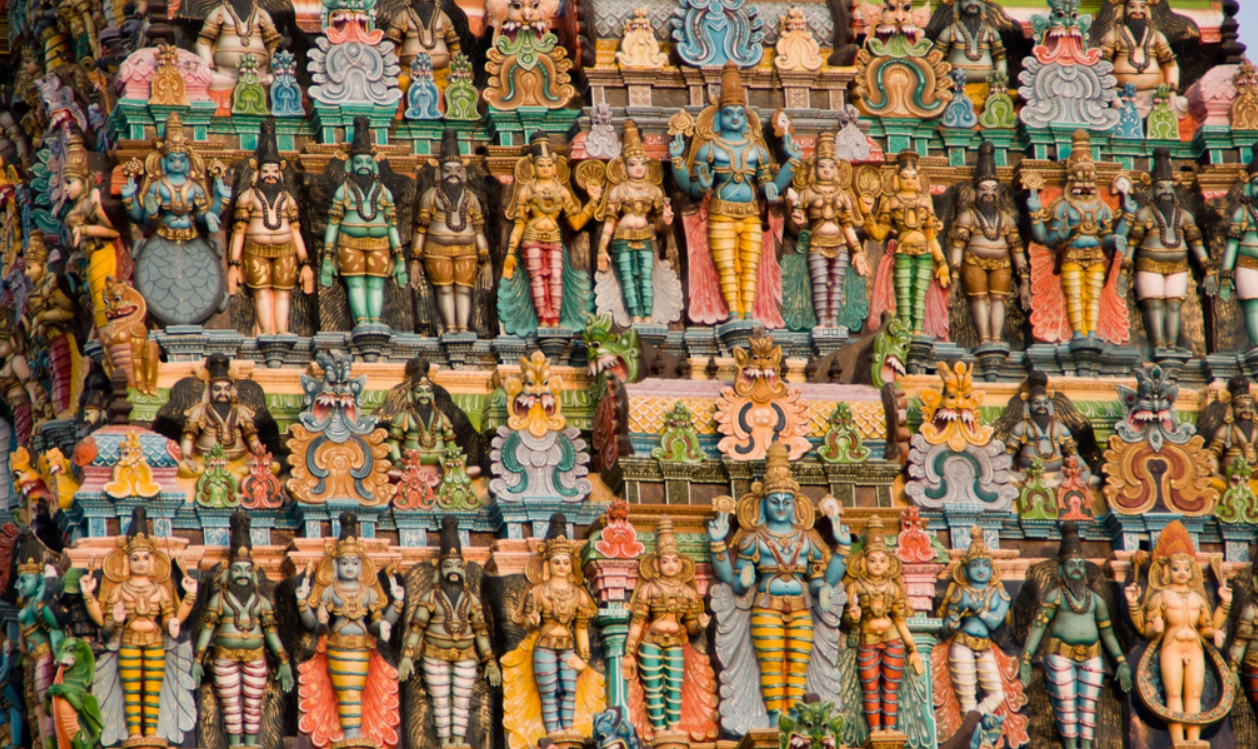
The apparent tension lies not so much in the antiquity of religious practices as in the material form those practices took and the survivability of their structures. Early religious life in the subcontinent—especially in Vedic and immediately post-Vedic times—did not revolve around the kind of grand stone temples that dominate the imagination today. Rituals were often centred on open-air altars, sacrificial fires, sacred groves, rivers, trees, hills, and village shrines constructed from perishable materials such as wood, mud, and unbaked brick. These could not survive millennia of climatic change, war, and urban transformation.
Substantial stone temple architecture becomes visible in a sustained way from roughly the Gupta period onward (around the 4th to 6th centuries CE), and then proliferates in the early medieval period (approximately the 7th to 12th centuries). Many of the large temples still standing today—particularly in North and Central India—belong to this broad time frame of the last 1000–1500 years, rather than to a putative 3000–4000-year antiquity. This does not prove that earlier Hindu religious practice did not exist; rather, it shows that the technologies and political economies needed for durable, monumental stone architecture matured later, and that earlier, more fragile sacred structures simply did not endure.
“Hinduism” as a Unified Religion: A Modern Construction
A second critical point relates to the very concept of “Hinduism” as a single, codified religion. Many historians and scholars of religion argue that in ancient and early medieval India, there was no such entity as “Hinduism” in the modern sense of a unified, centrally codified religion with a single canonical structure and uniform institutional apparatus.
The term “Hindu” itself originated primarily as a geographical and cultural designation—used by outsiders to refer to the people living beyond the Indus (Sindhu) River—rather than as a self-defined religious category. What we now call “Hinduism” emerges historically as an umbrella term for a diverse array of practices, including Vedic ritualism, Brahmanical orthopraxy, Shaiva, Vaishnava, Shakta and Tantric traditions, as well as innumerable local and clan-based cults.
In premodern India, each region, kingdom, clan, and even village often had its own tutelary deity (kul devta), village goddess, or local spirit. Religious life was deeply localized: small shrines, village temples, sacred trees, and modest ritual sites formed the basic infrastructure of devotion. There was no single, centralized “Hindu church” that conceived and executed a continent-wide program of temple construction. Large temples emerged where specific rulers adopted particular deities as state or royal deities and invested significant resources in monumental construction.
Thus, the absence of an early, uniformly codified “Hindu religion” does not mean an absence of religious life; it means that religious organization was plural, fragmented, and regionally specific. Large temples, where they appear, are best understood as products of political regimes and regional power structures, not as manifestations of a monolithic “Hindu” ecclesiastical project.
Buddhism, State Patronage, and the Question of Appropriated Temples
One important contrast to this diffuse religious landscape is Buddhism, which, at various points in Indian history, enjoyed substantial state patronage. Under rulers such as Ashoka and in subsequent dynasties, Buddhism spread across broad swathes of the subcontinent, supported by royal sponsorship of monasteries (vihāras), universities, and stupas. Large institutional complexes such as Nalanda and Vikramashila in eastern India, or major stupas and monastic centres in other regions, testify to Buddhism’s capacity to build enduring monumental structures.
This historical fact underlies a contemporary assertion by some Buddhist scholars and critics: that many large Hindu temples standing today in North, Central, and South India were originally Buddhist monasteries or stupas, later appropriated and “Hinduised” after the decline of Buddhism. According to this narrative, once Buddhism was marginalised or displaced, many of its institutions were taken over, reinterpreted, or rebuilt as Hindu temples, while their Buddhist origin stories were effaced.
It is historically plausible and sometimes demonstrable that sacred sites changed hands—sometimes from Buddhist or Jain to Brahmanical/Hindu use, and in other cases in the opposite direction. Sacred hills, rivers, crossroads, and city centres have often remained religiously important even as different traditions succeeded one another. However, the sweeping claim that “all” or “most” large Hindu temples were originally Buddhist complexes goes beyond the available evidence and functions more as a polemical counter-narrative in present-day politics than as a carefully substantiated historical conclusion.
The more nuanced and defensible view is that many of today’s sacred sites are layered: what we now see as “Hindu temples” are often the latest visible stratum in a long and complex history of religious reuse, reinterpretation, and architectural transformation. Sacred places are palimpsests, not the exclusive property of a single community across time.
Islamic-Period Monuments and the New Politics of “Hidden Temples”
The historical complexity of sacred sites becomes highly charged in the present context, where numerous Islamic-period monuments are being recast as “originally Hindu temples.” Structures such as the Qutub Minar and the Quwwat-ul-Islam Mosque in Delhi, various Jama Masjids, and iconic monuments like the Taj Mahal have increasingly been targeted by claims that they were once Hindu temples or palaces seized and modified by Muslim rulers.
In many of these cases, historians and heritage bodies have long-standing assessments of these monuments as Islamic-period constructions, sometimes incorporating reused materials from earlier structures, in line with global architectural practice. Yet in recent years, petitions have been filed in courts demanding new surveys, reinterpretations, or even legal reclassification of these sites as Hindu religious properties.
These efforts are not purely academic. They are part of a broader political project to construct a grand narrative in which Hindu temples were systematically destroyed or appropriated by Muslim “invaders,” and in which contemporary Muslims are implicitly or explicitly held responsible for this historical grievance. By claiming that almost every major Islamic monument sits atop a destroyed or hidden temple, this narrative seeks both to delegitimise the Muslim historical presence and to lay symbolic claim to the nation’s most prominent landmarks.
Mythic History, Unified Identity, and Anti-Muslim Mobilization
Underlying this project is the attempt to forge a unified “Hindu nation” by retroactively projecting a single, continuous, millennia-old religious identity. The historical reality—of localised cults, diverse sects, overlapping traditions, and shifting power structures—does not easily support this myth. Nor does the material record provide a simple catalogue of ancient Hindu monuments that match the grandeur and international visibility of certain Islamic-period sites.
Faced with this discrepancy, the nationalist imagination often responds by “filling the gaps” through mythic elaboration. When the evidence does not clearly show an unbroken chain of monumental Hindu architecture, the solution is to assert that such monuments once existed but were destroyed or appropriated—most notably by Muslims. Islamic monuments are not recognised as their own historical achievements but are treated as illegitimate overlays on an underlying Hindu civilizational substrate.
In political practice, the revenge narrative becomes a potent tool for mobilising the Hindu majority. It fosters a sense of shared grievance and righteous anger, encouraging different castes, regions, and social segments to overcome their internal differences in the name of a common enemy. Muslims become the primary “Other” against whom a unified Hindu identity is to be forged. The goal is less to understand the past than to weaponize it.
Contemporary India: Mythic Projects and Developmental Drift
The current trajectory of India offers a vivid illustration of this danger. While the country possesses enormous potential in terms of human capital, demographic size, and institutional memory, its public discourse is increasingly dominated by mythic projects aimed at rewriting history and amplifying religious pride at the expense of rational, evidence-based policy.
As the state and segments of society fixate on symbolic battles—over temples, mosques, statues, and historical figures—the country’s performance in education, scientific research, economic equality, and technological innovation shows signs of strain and relative slippage. Instead of candidly acknowledging developmental shortcomings and addressing them through policy, planning, and investment, there is a growing tendency to manipulate or cosmetically present data, to inflate achievements, and to hide structural weaknesses behind rhetoric.
Simultaneously, the burden of external and internal debt has grown substantially, and systemic corruption—especially among segments of the ruling classes and allied business interests—has deepened. The combination of heavy indebtedness, institutionalized rent-seeking, and diversion of public attention into cultural-religious conflicts creates a vicious cycle: as real socio-economic problems intensify, the political incentive to distract the public with mythic pride and manufactured enemies becomes even stronger.
Thus, the more the country falls behind in genuine intellectual, scientific, and economic terms, the more it retreats into illusory narratives of civilizational greatness. Instead of confronting the world with concrete achievements, it seeks refuge in stories about an eternally glorious past and in aggressive campaigns against internal “others.”






[[comment.comment_text]]