China-Pakistan Working on an Alternative to SAARC

 1 year, 3 months ago
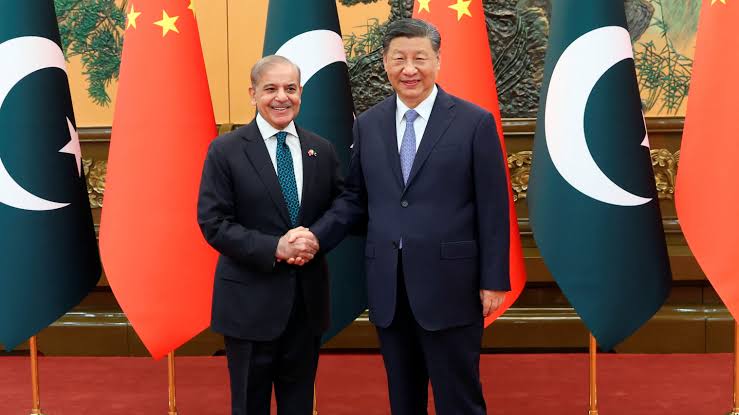
In a bid to negate India’s policy to isolate Islamabad on the issue of terrorism and spread their influence zones, China and Pakistan are reportedly actively working on a proposal to establish a new regional organisation that could potentially replace the now-defunct South Asian Association for Regional Cooperation (SAARC).
On the one hand, diplomats of the two countries have proposed such an organisation with different capitals in the South Asian region, on the other Beijing and Islamabad are holding trilaterals to prevail upon the third country of the significance and need for such an outfit that could reinvigorate economic and trade cooperation in the region.
China-Pak-Afghanistan Trilateral
A trilateral between China, Pakistan and Afghanistan was held post Operation Sindoor. The trilateral meeting took place days after the interim Taliban Government had come out openly in support of India post Pahalgam and New Delhi’s retaliatory military action against Pakistan.
The meeting between the foreign ministers of the three countries was also held against the backdrop of Islamabad’s persistent criticism of the interim Taliban Government for failing to crackdown on militant groups operating from Afghan soil waging a war against Pakistan.
The China-Pakistan Economic Corridor (CPEC) is set to be expanded to Afghanistan with the foreign ministers of the three countries agreeing on it as part of broader efforts to boost “trilateral” cooperation.
The announcement on expansion was made following a meeting among Chinese Foreign Minister Wang Yi, Pakistan’s Deputy Prime Minister and Foreign Minister Ishaq Dar and Afghanistan’s acting Foreign Minister Amir Khan Muttaqi in Beijing, a Pakistani readout said.
Another Trilateral Planned with Bhutan, Nepal, and Sri Lanka
India has been severely critical of the CPEC as it passes through Pakistan-occupied-Kashmir. New Delhi is also opposed to China’s Belt and Road initiative as the project includes the CPEC.
The three countries had a trilateral foreign ministers’ mechanism for a long time, which has not been convened for some time amid growing differences between Islamabad and Kabul over the forcible repatriation of thousands of Afghan refugees by Pakistan.
Meanwhile, Pakistan and Afghanistan have decided to open their diplomatic missions in each other’s capitals.
A recent trilateral meeting between Pakistan, China and Bangladesh in Kunming, China, was part of those diplomatic manoeuvres, they said, adding that its goal was to invite other South Asian countries, which were part of SAARC, to join the new grouping.
Diplomatic sources said that this new organisation could potentially replace the regional bloc SAARC, which comprises India, Afghanistan, Bangladesh, Bhutan, Maldives, Nepal, Pakistan, and Sri Lanka
.
Well placed sources reveal that India would be invited to the new proposed forum, while countries like Sri Lanka, Maldives, and Afghanistan are expected to be part of the grouping. The main purpose of the new organisation is to seek greater regional engagement through enhanced trade and connectivity.
Threat to SAARC
If the proposal is materialised, it would replace the SAARC, which has been suspended for a long time due to the India-Pakistan conflict. Its biennial summits have not taken place since the last one in Kathmandu in 2014.
The 2016 SAARC Summit was to be held in Islamabad. But after the terrorist attack on an Indian Army camp in Uri in Jammu and Kashmir on September 18 that year, India expressed its inability to participate in the summit due to “prevailing circumstances”.
The summit was called off after Bangladesh, Bhutan and Afghanistan also declined to participate in the Islamabad meet.
Revival of SAARC: The Way Forward
The demise of SAARC, or its current state of inactivity, is generally considered detrimental to India's interests, despite India's significant influence within the region. While India could potentially benefit from regional cooperation through SAARC, the organisation's failures, particularly the mistrust and political tensions among member states, have hindered its progress.
All said and done, the SAARC could have provided a platform for India to strengthen its regional influence and counter China's growing presence in South Asia. SAARC could have been a useful forum for addressing shared challenges like terrorism, climate change, and poverty, which require regional cooperation. A strong and active SAARC could have presented a united front on various regional issues.
SAARC provided a platform for India to project itself as a responsible and cooperative regional leader. Its failure reflects poorly on India's ability to foster regional partnerships. While India has explored other platforms like BIMSTEC, SAARC's potential for deeper regional integration remains unmatched.
(Author is a senior journalist and political commentator. Views are personal.)






[[comment.comment_text]]