A Booker for Banu: Heart Lamp Illuminates the Conscience

 1 year, 3 months ago
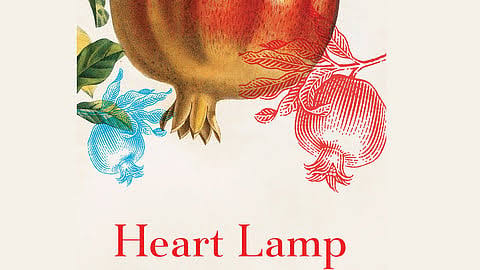
The power of literature is timeless and sans geography, a point pressed home by the Heart Lamp originally written in kannada by Banu Mushtaq and translated into English by Deepa Basisth. Stories are universal, transcendental,and human experiences with all their tapestries abound in the echoes of human afflictions, which are narratives conceived in anguish and delivered in sensitive, sensational and shocking metanarratives.
Banu Mushtaq, the obscure till the point, whipped into international prominence through winning the Booker prize for the collection of her Short stories translated into English by Deepa Bashisth for the year 2025. Banu Mushtaq writes women's suffocation, their subjugation,their roles,their daily drama of torture in a patriarchal construct condemned to live on margins of a society that regaled their lazy hungers of skin and beyond it, everything was dark,invisible, pathetic and dimmed under the duress of a marginalized existence. There are twelve stories in the collection Heart Lamp that were born in the shadows of Bandaya movement led by D. R. Nagaraj in 1970's who launched a veritable tirade against social injustices,caste based ostracism,injury inflicted through the inheritance of troubles by the arrogant,merciless ambassadors of human apoplexies heaped on the hapless in his Flaming Feet and other essays.
Banu Mushtaq's stories are rooted into the murkier face of society where women lived without identities, without a semblance of human dignity, and oppressed without being sure of their own existence. She writes the despair of tottering women in a southern part of India who died every day to survive. Their stubborn resistance in the wake of adverse conditions tell stories of endurance, fortitude, humiliation, and insurrection, which cannon into making human condition like a long, dark night. Banu Mushtaq has precision in her imagination,a radical rupture in her life that led her once to end her own life. Kannada literature now stands taller by winning the Booker. We must appreciate the great ability of literature as an equalizer, as the cordon of dark clouds can pierce through to brighten blighted existence.
Along with Geetanjali Shree, Banu Mushtaq is the second one to win the coveted Booker prize.
Banu Mushtaq's stories have an identical pattern as they are mostly restricted to Muslim women and their afflictions, suffering, and oppression in a hostile patriarchal structure in Southern part of the country which leaves no space for women existence. Stories like Black Cobras, Stone slabs for Shaista Mahal, Fire rain, and A decision of the heart stick to narratives evolved in the process of construction of stories where wailing women is a common sight as Muslim women are victims both of the circumstances and indifferent society that leave them to fend for themselves. A hapless woman with seven kids here and an oppressed woman with five kids there hassled, horrified up against perfidious husbands who are free Romoes involved in multiple relationship yet there is nothing the Muslim society can do to salvage their wounds.
Banu Mushtaq, it seems, revolves around a localized society where the poverty of the Muslim women drive them to cries in a lonely hour of existence. They have no hopes, not even a word of consolation from even those parents who have seen them struggling. This is a limitation of her stories that she doesn't have even one story where a poor woman has a settled family, and this is possibly because she interacted with a limited world where women of only one class had the same predicament or may be it carries within its ambit her own sufferings as she said somewhere that she wanted to end her life in rage against depression and that impact is apparent here and she brutally confessed to it in recent interview to the BBC. She is present in her stories in many places as an activist, an advocate, and a writer of conflicts where family feud prospers, where a poor Muslim woman who is practically a widow within marriage.
Mushtaq, as she said during the celebration ceremony that no story is small that indeed has been turned into a universal statement as her stories abound in local experiences universalized through universal familial echoes, mores, love, tension and conflicts in conjugal alliances. She chose a language that was different from her mother tongue 'Dakhni' a blend of Urdu and Persian to tell stories that have echoes of her own dilemmas, ire and fire while being in a conjugal alliance not without its share of daily hassels in a cultural milieu with a conservative Muslim structure where patriarchy has its own contradictions where purdah restricts freedom on imagination to think differently and where wives are mired in kitchen flames and produce children at the will of the phallic construct.
Banu Mushtaq breaks all taboos as her stories tell hypocrisies, contradictions, concussions, and conflicts in the relationship between wife and husband, and there too politics has its own space as reflected in Stone Slabs for Shaista Mahal where a man can never be trusted and all the love showered on wife is just a matter of convenience as the character of Iftekhar who crafted lofty phrases for his wife Shaista but after her death he only took forty days to marry again.A woman is innocent to believe that she is loved by her husband. Shaista was turned into a child producing machine, and the fog of love expressed without mincing words disappeared in a tiny moment of disbelief.
In Fire Rain the character of Muttawalli typifies a Muslim clergy who has say in everything in the Muslim society, weilds influence with following but deep down a political man, a reprobate apparently doling out justice but transgresses rights of his own sister. Nisar's recovery of body from Shamshan to the cemetery is a political move to strengthen his clout in society, while his own family is not without fissures.
The story Black Cobra is an allusion to the patriarchal abuses heaped on a hapless woman, Ashraf, abandoned by her husband yakub for delivering three daughters on the trot . The lonely hapless woman whose newborn Munni was turned into a skeleton of a child, an underfed body struggling for breathe as she struggles to survive. Yakub, the husband of Ashraf, marries for the second time completely unmindful of suffering women in Ashraf and his three kids. Ashraf symbolizes afflictions a patriarchal set up whose stings are inescapable. She runs from pillar to post seeking justice from a society blind to the woes of a discarded woman. Ashraf works as a maid in Zuleikha's home driven by hunger and destitution while her husband has the support of Mutawalli of the Masjid who was supposed to redress Ashraf's wails but he finds no sin in the acts of yakub. Harried Ashraf finally goes to the mosque to meet Muttawalli who is a devil in flesh as he writes off Ashraf's suffering and supports yakub. Here, the character of Muttawalli represents the phallic rot. The story is a serious jibe at the twisted face of Islam under whose cover men take liberties and women are subjected to extreme torture. Banu Mushtaq in Black Cobras has painted a grim picture of the suffering Muslim women while men rejoice under a misrepresented Islam.
A Decision of the Heart in fact is the decision of the circumstances given the sustained confrontation between Akhila and Mehboob Bi and in between the two Yusuf, the son of Mehboob Bi suffers the agony of walking on a balancing beam . He couldn't have left his widowed mother nor could ignore his wife Akhila, who was uncompromising on any concession to Mehboob Bi. The story has its moments of ugliness, sentimentality, and melodramatic scenes. Akhila's vituperative language was too testy and irascible for Yusuf and the conflict between wife Akhila and husband Yusuf was largely because of Akhila's intemperate behavior whose language had the stench of hate that stretched yousuf too much. Yusuf finally decided to marry off his widowed mother as the final solution to the conflict between the two. When Akhila came to know about it she had moments of repentance, but perhaps that was too late as Mehboob Bi finally agreed to the proposal of her marriage as the best way to find peace for her son. Banu Mushtaq writes here the sentiment of a mother as can burn herself but can not see her son facing the wrath of fire. The story upholds the message of a mother's love.
Heart Lamp is akin to that of Black Cobras, where Ashraf is condemned to poverty up against an indifferent husband yaqoob who is chasing another woman. Here again, the fate of Mehrun hangs in balance as her husband Inayat is into a relationship with a nurse . Mehrun wanted to pursue her education further, but the conservative Muslim patriarchy coerced her into marriage . The story attacks the Muslim indifference to education and remains hostile to women's cause.she gets no support from any quarter, and she is advised to cope up with her sufferings
Inflation nobody bothers is a free Romeo. The story seems to have autobiographical undercurrents as Banu Mushtaq herself said that she attempted suicide but the timely intervention of her husband saved her life. Other stories like Red Lungi,High Heeled Shoe, Soft whispers,Taste of Heaven, The Shroud, The Arabic Teacher and Gobhi Manchuri and Be A Woman once Lord are extensions of what has already been said in stories discussed above. Some stories like Red Lungi, Soft Whispers only extend the narratives conceived in a moment of anger.
Heart Lamp The collection of stories primarily hit out against injustice to women and the mindless Muslim power center's who flourish in hypocrisy and hold women subservient to their whims. Banu Mushtaq's literary horizon does not go beyond a certain Muslim society, which is a limitation of her art.
(Author is a faculty member of the English Department at the College of Commerce, Arts & Science, Patna.)




[[comment.comment_text]]