The Politics of Redistribution

 5 months, 3 weeks ago
In India’s political discourse today, few ideas command as much surface-level agreement as the demand for greater representation—whether for women, marginalized communities, or growing populations. Yet, beneath this apparent consensus lies a quieter, more complicated reality. As the country moves toward 2026, two major structural questions—women’s reservation in legislatures and the long-delayed delimitation exercise—are converging in ways that are beginning to test not just policy frameworks, but the very trust that holds India’s federal system together.
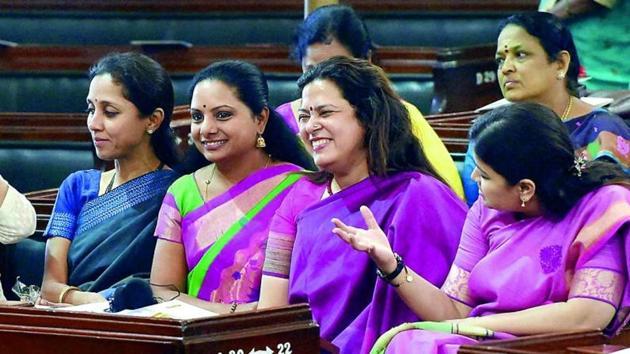
At first glance, the case for reserving seats for women in Parliament and state assemblies appears both logical and overdue. Women make up nearly half of India’s population, yet their presence in legislative bodies remains disproportionately low. The proposal to reserve one-third of seats for women is often described as a corrective measure—an attempt to rebalance a system that has historically excluded women from decision-making spaces. For many, even this measure seems modest; if representation is meant to mirror population, then parity, not partial inclusion, should be the goal.
However, in India, even the most straightforward reforms rarely exist in isolation. The implementation of women’s reservation is closely tied to the process of delimitation—the redrawing of constituency boundaries and the reallocation of seats based on population data. This connection, while administrative in nature, has far-reaching political implications.
To understand the current tension, it is important to revisit how India arrived at this moment. The last major delimitation exercise, based on the 2001 Census, focused on redrawing constituency boundaries to ensure relative equality in population across seats. It also designated certain constituencies as reserved for Scheduled Castes, without increasing the overall number of seats in the Lok Sabha. However, the allocation of seats among states has remained frozen since the 1970s, following a constitutional decision aimed at encouraging population control. States that successfully reduced population growth were effectively protected from losing political representation.
This freeze is set to end after the first Census conducted post-2026. When it does, India will face a fundamental question: should representation be strictly proportional to population, or should it account for the efforts of states that have managed demographic growth more effectively?
This is where the debate begins to shift from principle to perception. States in southern and western India—such as Tamil Nadu, Kerala, and Karnataka—have, over the decades, achieved lower population growth rates through sustained investments in education, healthcare, and social development. In contrast, several northern states, including Uttar Pradesh and Bihar, continue to have higher population growth rates. If seats in the Lok Sabha are redistributed purely on the basis of current population figures, the latter group of states stands to gain greater representation, while the former could see their relative influence decline.
From a purely numerical standpoint, such a redistribution may appear justified. After all, democracy is built on the idea of equal representation for equal numbers of people. But from a federal perspective, the issue is more complex. States that have effectively managed population growth argue that they should not be penalized for their success. For them, delimitation—especially when linked to other reforms like women’s reservation—raises concerns about fairness and balance.
It is this intersection that has created unease. The women’s reservation proposal, which might otherwise have been widely celebrated, is now being viewed through the lens of delimitation. Questions are being raised about whether the timing of these reforms is coincidental or strategic, and whether the process adequately reflects the voices of all states.
At its core, this is a question of trust. India’s federal system is not just a constitutional arrangement; it is a negotiated balance of power, built on the assumption that all regions have a stake in national decision-making. When major reforms are perceived to shift this balance—especially without extensive consultation—it can lead to apprehension, even if the reforms themselves are well-intentioned.
The situation is further complicated by demands for internal reservations within the women’s quota. Various groups have called for sub-quotas to ensure that representation is not limited to women from socially or economically dominant sections. This reflects a deeper reality: in India, representation is rarely a single-axis issue. Gender, caste, class, and region intersect in ways that make policy design inherently complex.
What emerges, then, is not a rejection of reform, but a demand for a more careful approach. There is little disagreement on the need to increase women’s representation. Similarly, there is broad recognition that delimitation, delayed for decades, cannot be postponed indefinitely. The challenge lies in sequencing these reforms and designing them in a way that minimizes conflict and maximizes consensus.
One possible path forward is to decouple women’s reservation from delimitation, at least in the initial phase. Implementing the quota within the existing framework of constituencies could allow the reform to proceed without triggering immediate concerns about inter-state redistribution. This would also provide time for a more comprehensive and consultative approach to delimitation, one that considers not just population, but also factors such as development outcomes and governance performance.
Equally important is the need for transparency. The criteria for seat allocation, the methodology of delimitation, and the timeline for implementation must be clearly articulated. States need to be assured that their concerns are being heard and addressed, not sidelined. Institutional mechanisms—such as an independent and representative commission—can play a crucial role in building this confidence.
Beyond the specifics of these reforms, the current moment raises a broader question about the direction of India’s federalism. There is a growing perception that decision-making is becoming increasingly centralized, with limited space for state-level input. Whether this perception is accurate or not, it has real consequences. Trust, once eroded, is difficult to rebuild, and without trust, even the most well-designed policies can face resistance.
India’s strength has always lain in its ability to accommodate diversity—of language, culture, economy, and politics—within a single constitutional framework. This requires not just institutional mechanisms, but a political culture that values dialogue and compromise. As the country approaches a pivotal year, the choices it makes will determine whether this culture is reinforced or weakened.
The debate over women’s reservation and delimitation is, in many ways, a test case. It asks whether India can expand representation without unsettling its federal balance, and whether it can pursue equity without compromising unity. These are not easy questions, and there are no simple answers. But the process by which they are addressed will matter as much as the outcomes.
In the end, representation is not just about numbers—it is about legitimacy. A system that is seen as fair commands respect; one that is seen as skewed invites skepticism. As India prepares to redraw its political map, it must ensure that the lines it draws do not deepen divides, but instead bring its diverse regions closer to a shared democratic vision.
Author, formerly Director of IDP3, is a Manager and Trustee of SKD Educational Foundation.)




[[comment.comment_text]]