Textbooks, Truth, and Judicial Morality

 7 months, 1 week ago
Jaki ki raj me rahiyo wahi wali kijo
Oant billariya le gye hanji hanji kijo
This couplet, whose origins remain uncertain, resonates with uncanny precision when placed against the present crisis of education and governance in India. It speaks of conformity, of following the ruler’s will, even when absurd or unjust. Today, in the Supreme Court of India, the Chief Justice himself has admitted that he received messages warning him about corruption seeping into the judiciary, particularly in the context of NCERT textbooks. The question that must be raised is not only about the syllabus but about the deeper crisis: why has the government chosen to blame the judiciary at such a fundamental level, when students are taught to admire the system and take pride in being Indian?
The youth of the country already know the corruption and illiteracy in politics. Yet no example has been set in textbooks that distinguishes between genuine freedom fighters and opportunists who sought pensions from the British while claiming to struggle for independence. The Ballia revolt, for instance, cut off all communication lines in defiance of colonial authority, but history books rarely acknowledge that not all who were jailed were freedom fighters—some faced criminal charges. This selective narration mirrors today’s selective silences. If the system’s custodians cannot confront uncomfortable truths, why do they hold their chairs? Officers who rule by fear rather than conviction become slaves of power, not guardians of the Constitution.
History reminds us of the Nanda dynasty in Magadh, where kings interviewed scholars to understand the roots of life. One scholar explained: dharma is the root of kama, kama the root of artha, artha the root of gyan, and gyan the root of institutions—institutions that depended on the kingdom’s support. Centuries later, Aryavarta concluded in India, and Safdar Hashmi wrote: “Padhna likhna sekho o mehnat karen wale”—learn to read and write, O workers. He could not have foreseen a time when textbooks would be designed to express political will, embedding corruption into the very foundation of education.
Critics argue that after controlling the executive and legislature, the ruling government now seeks to curve the judiciary, using education as a weapon. They forget that Justice Y.K. Verma was produced by the system itself—a system that includes sycophants, flatterers, and those willing to “kiss the rod” rather than defend constitutional rights. Education is not a peripheral matter; it shapes daily life, builds character, and creates citizens. The National Education Policy 2020 envisioned producing global citizens, but its failure to achieve this goal has left India struggling to produce even national citizens who question authority.
The fear of producing citizens lies at the heart of this crisis. A true citizen does not quietly accept everything; he questions, challenges, and demands accountability. That is why the Chief Justice’s statement—that he will not allow corruption to infiltrate textbooks—is so significant. It is not merely about NCERT; it is about the integrity of the system itself. Yet the silence of NCERT’s director, who has neither excused his workload nor signed off on the process, reveals that this is not an isolated incident. In 2017, NCERT published a Hindi book containing a chapter written by former MP Anand Mohan Singh from jail. That choice alone was enough to show how the institution has strayed from its path, educating children with narratives that blur the line between justice and politics.
The debate must be national, because education is the seed of citizenship. As philosopher John Dewey once said, “Democracy has to be born anew every generation, and education is its midwife.” If textbooks are corrupted, democracy itself is endangered. Similarly, Plato warned in The Republic: “The direction in which education starts a man will determine his future life.” If the direction is bent by political will, the future of the nation bends with it.
Morality Beyond Power:
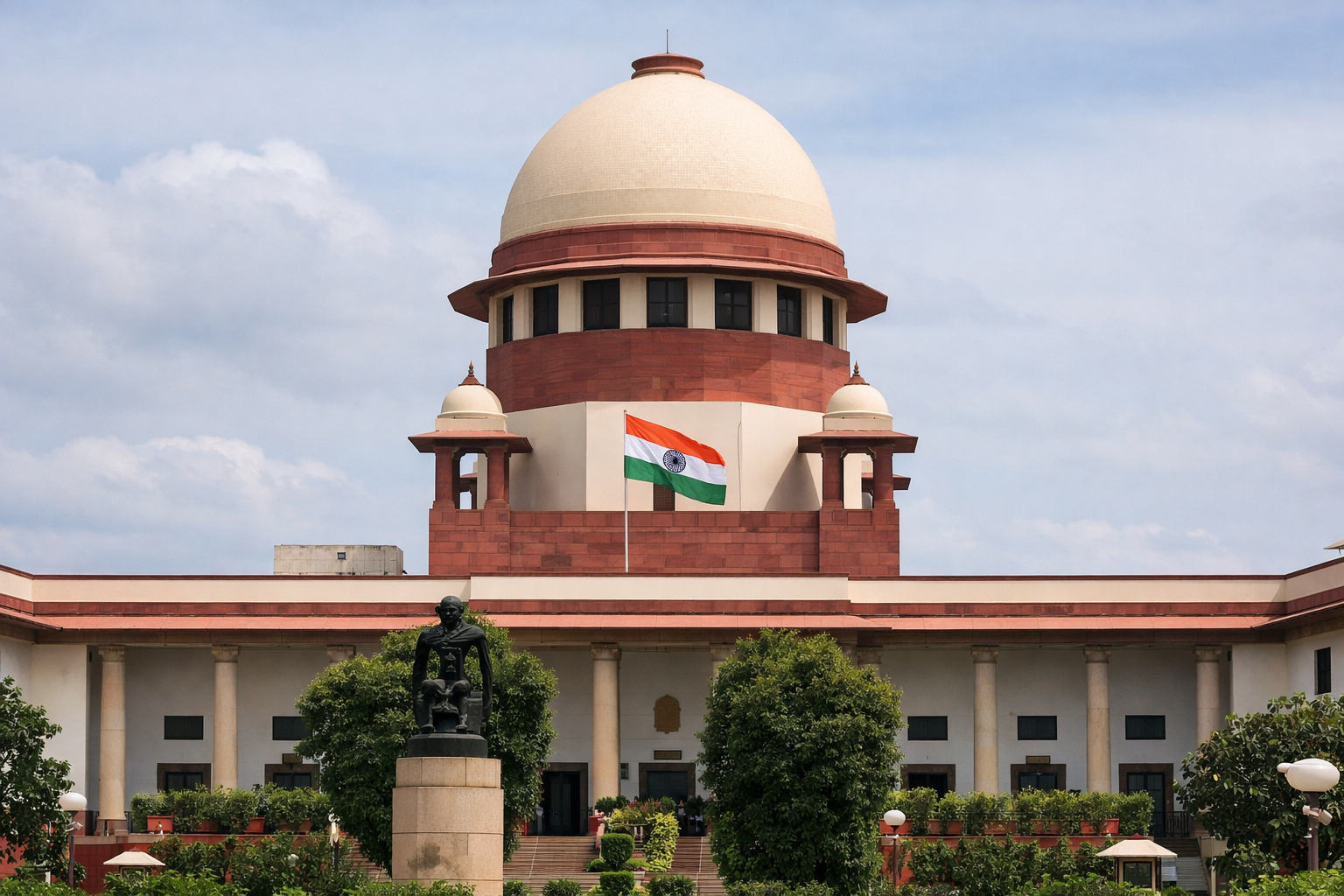
The tension between India’s judiciary and political authority has sharpened in recent years, culminating in the Supreme Court’s stern rebuke of the NCERT textbook controversy in February 2026. The Centre’s unconditional apology was not enough; the Court observed that accountability must be fixed, and contempt proceedings could follow. The incident revealed a deeper malaise: attempts to undermine judicial credibility through institutional channels, even in the guise of educational material .
This is not an isolated episode. Since 2019, when the abrogation of Jammu & Kashmir’s statehood was challenged, the relief was denied on the ground of delay. In Sachin Pilot’s matter, too, the Court’s cautious stance echoed. More recently, when Assam Chief Minister Himanta Biswa Sarma’s case was raised, the apex court directed petitioners to approach the Guwahati High Court under Article 226. These decisions raise a profound constitutional question: if Article 32 is, as B.R. Ambedkar declared, the “soul and spirit of the Constitution” because it empowers the last citizen to seek protection of fundamental rights, then why is recourse increasingly shifted to High Courts? The dilution of Article 32’s immediacy risks weakening the very safeguard Ambedkar envisioned.
History offers reminders of accountability enforced. Leaders like Balasaheb Thackeray, Uma Bharti, and Sadhvi Rithambara faced consequences for hate speech, including electoral bans and resignations. Yet today, similar transgressions often escape proportionate scrutiny. The unpassed Judicial Accountability Bill further reflects a reluctance to strengthen institutional checks, leaving space for executive overreach. Vice President Jagdeep Dhankhar’s public remarks on judicial functioning, delivered even from constitutional platforms, exemplify how authority has tested boundaries once considered sacrosanct.
Ambedkar’s warning resonates here: constitutional morality is not about technical compliance but about reverence for liberty, equality, and fraternity. It demands conscious adherence by both citizens and leaders. Political will, however massive, is transient; constitutional morality endures. When leaders attempt to crown themselves above institutions, they erode the balance of powers that sustains democracy. The judiciary, despite its imperfections, remains the sentinel of rights. Its silence or hesitation in the face of repeated attacks risks emboldening authoritarian impulses.
The NCERT episode is symbolic. The process of syllabus formation—expert committees, tailored content, director’s approval—exists to ensure integrity. If such processes were bypassed, accountability must extend to the entire chain. If followed, then responsibility lies with those who sanctioned defamatory content. Either way, the judiciary’s insistence on liability is a reaffirmation of its role as guardian of constitutional morality.
India’s democratic fabric has survived crises because of this morality. Ambedkar’s vision was clear: without cultivated respect for constitutional principles, democracy degenerates into authoritarianism. The recent clashes between the judiciary and executive are not merely institutional disputes; they are tests of whether India will uphold the paramount reverence Ambedkar demanded. Political power may wax and wane, but constitutional morality must remain the nation’s guiding light.
NCERT Issue: An Opportunity to Supreme Court
Probity in public life and restraint in public institutions are the core moral fabric for running a progressive society. The Constitution of India testifies to this philosophy as the checks and balance writs large in the constitutional scheme. No organ of the State – Parliament, Executive, and Judiciary can ever claim its superiority over the other. It is also clear from the Preamble of the Constitution that both the authors and the readers of the Constitution are the People of India, categorically admitting the fact that the people, whether a voter or not, have the supreme authority and their interest is paramount.
The recent issue pertaining to the public in the NCERT book on corruption in the judiciary,
intended to be read by the new generation of the country, has drawn attention from every segment. The approach of the Apex Court in the matter is appreciable because it thinks that the minds of children are likely to be polluted against institution of judiciary which is still enjoys the faith and belief of the people. The judges of the Supreme Court of India and the High Courts have best legal brain and acumen. Time came on some occasions when the constitution and the democracy was threatened with some ulterior design but it was the Indian judiciary stood up and saved the assault on the Constitution.
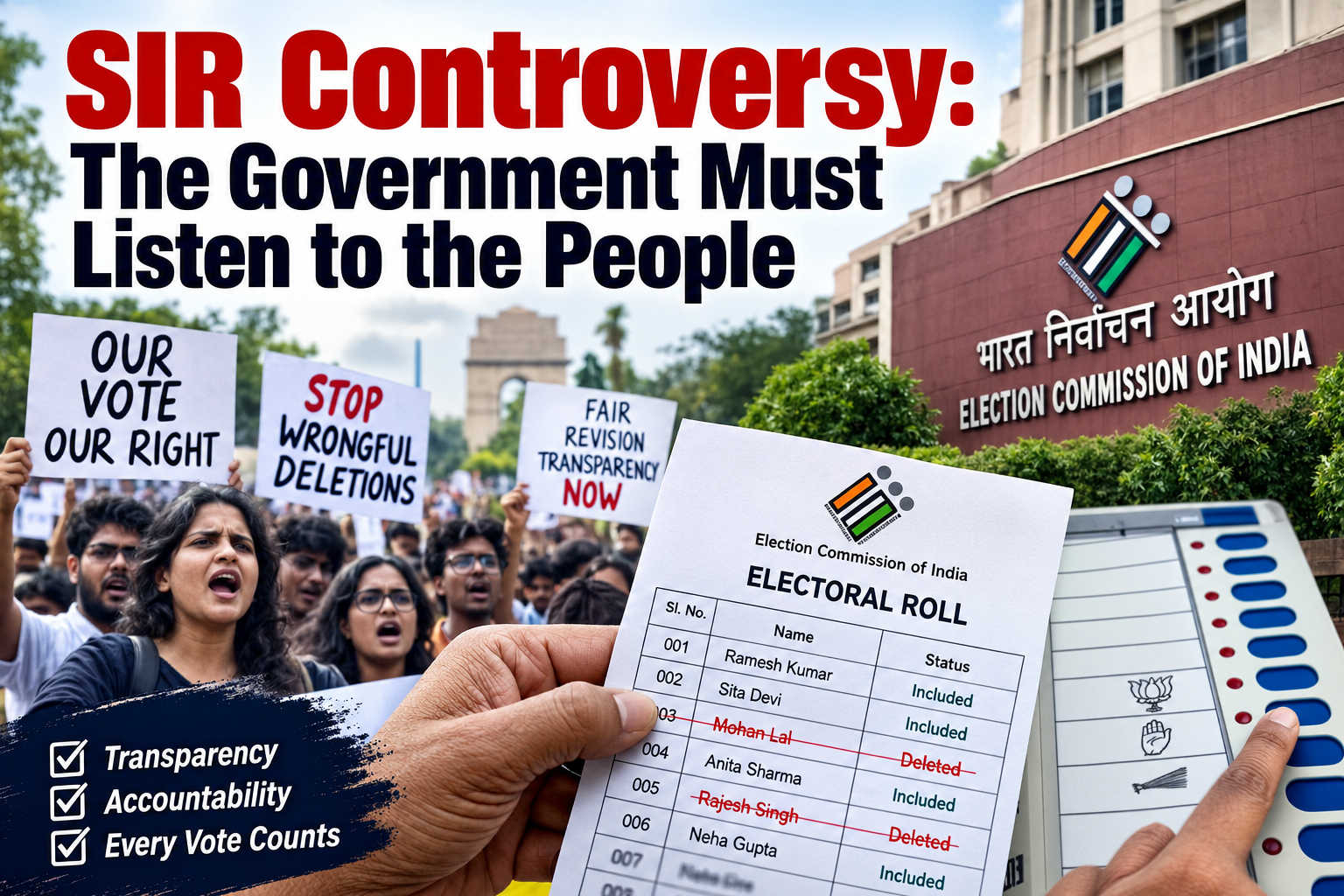
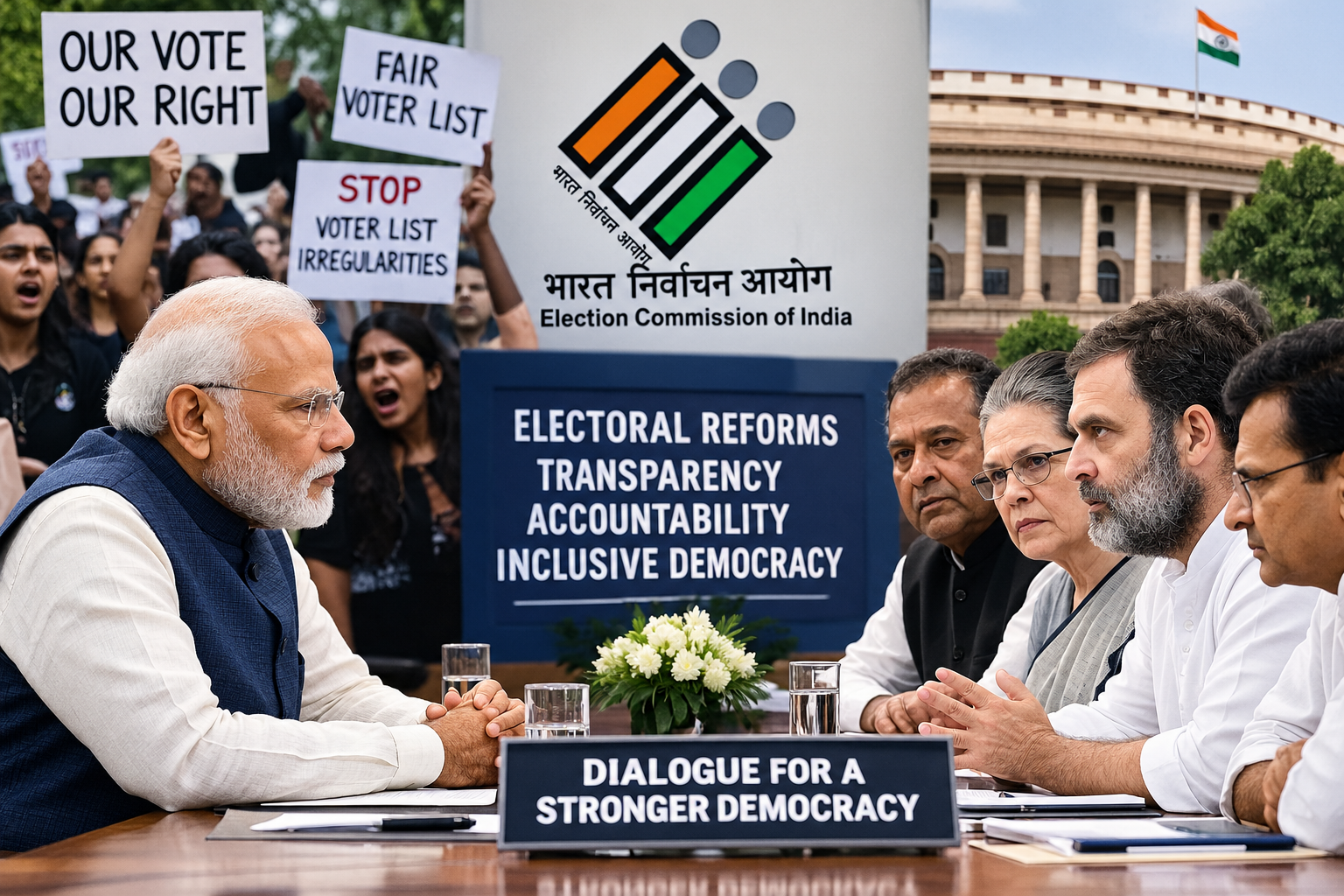
A few years back some judges of the Supreme Court came out of the court and gave an impression that the democracy and the judiciary is under severe strain and, perhaps, that moment was the most appropriate to blow the whistle against such forces. Since then many occasions came before the Apex Court where either the democracy or the individual freedom and liberty were weakened but the Court preferred not to interfere despite the fact that it is regarded as the guardian of the Constitution and Article 32 enforcing the fundamental rights has been called to be the ‘spirit and soul’. There was a time when the Court attempted to democratize the Election Commission of India by having more Election Commissioners because it was apprehended that one Election Commissioner would become autocratic. The constitutional validity of the Election Commission of India (Appointment Conditions of Commissioner) Act, 2023, enacted against the spirit of Supreme Court judgment in Anoop Kumar Baranwal case (2023), was challenged in Dr. Jaya Kumari v UOI (2023) on the ground that it contravenes the basic feature of free and fair election besides affecting the independence of the Election Commission. This case beside Special Intensive Revision (SIR) is pending. Similarly, when the Legislators were hijacked, the Court did not interfere on the grounds of the separation of powers.
Now the ball is in the Court to set things right. The NCERT has given an opportunity to the Apex Court to restore public confidence in the Constitution. The country has,
Perhaps, arrived at the juncture where the people are eagerly looking towards the judiciary that their freedom and liberty would not be arbitrarily curtailed and but also the Court would discharge its constitutional obligation by suo moto reviewing its earlier judgments which have impaired the democratic bedrock and would create atmosphere conducive to the protection of life, liberty and freedom of individuals and also set a higher moral standard among the public institutions.
After its 2019 majority, the government’s unquoted claim to alter the Constitution raised alarms of authoritarian drift. Judicial realism, introduced by Oliver Wendell Holmes Jr. and Justice Benjamin Cardozo, reminds us: “The law is what judges declare.” Thus, India’s judiciary must remain vigilant to safeguard constitutional spirit.
Prof. M.P.Singh, BHU
The Constitution as Conscience
The judiciary often faces moments of disillusion when citizens who look to it for protection feel betrayed. Yet history shows that when conscience awakens, courts revolt against attempts to curb their independence. Those who advocate truth must themselves remain untainted, for exposure of hypocrisy is inevitable.
As Acharya D.D. Basu observed that the Indian Constitution is not merely a legal text but a philosophical scripture—akin to the Bible, the Geeta, or the Ramayana. It embodies the will of the nation, guiding justice from the “black court” to the most sacred seat of judgment. For 140 crore Indians, it remains the ultimate refuge, a book of hope and protection.
The warning of Martin Niemöller, the German pastor who resisted Hitler, echoes here: indifference to injustice erodes freedom step by step. “First they came for the socialists, and I did not speak out… Then they came for me—and there was no one left to speak for me.” His words remind us that silence in the face of encroachment is complicity.
India’s democracy must remember: constitutional morality is not passive reverence but active vigilance. Leaders may wield power, but the Constitution—our collective scripture—must remain the unshaken guardian of liberty, equality, and fraternity.






[[comment.comment_text]]