Rural Sanitation and Health: Where India Still Lags—and the People Who Are Changing the Story

 9 months ago
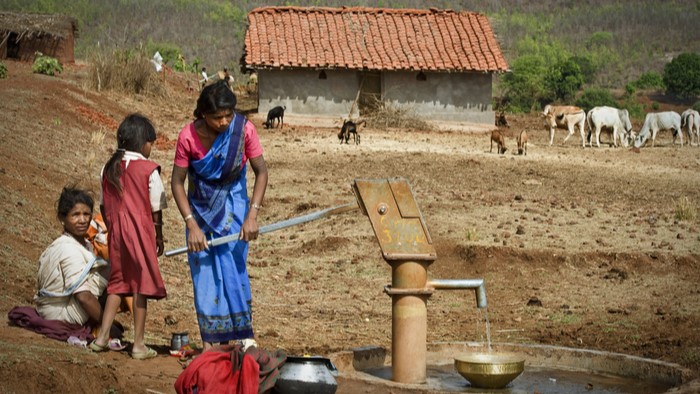
India’s development narrative often celebrates highways, digital platforms, and headline economic growth. Yet, beyond urban skylines and policy dashboards lies rural India, where sanitation and health remain the most stubborn fault lines of development. Over the past decade, the country has made undeniable progress in expanding sanitation infrastructure and widening the reach of public health programmes. Toilets have been built in large numbers; primary health facilities dot the countryside; community health workers have become household names. And yet, the lived reality across thousands of villages tells a more complicated story—one of uneven access, fragile systems, behavioural barriers, and a quiet resilience carried by ordinary people who persistently bridge the gap between policy intent and everyday life.
This article examines rural sanitation and health as a single, interlinked challenge. It argues that India’s lag is not merely a matter of missing infrastructure but of continuity, quality, and trust. It also highlights the individuals and communities who are driving change from the ground up—often with limited resources but deep local legitimacy—demonstrating that durable progress is possible when systems align with social realities.
Progress with gaps: the sanitation story beyond construction
The expansion of rural sanitation infrastructure stands as one of the most visible public policy achievements of recent years. Millions of toilets were constructed in villages across states, and official declarations celebrated dramatic reductions in open defecation. For many households, especially women, the presence of a toilet within the premises marked a shift in dignity, safety, and convenience. However, infrastructure expansion alone has not resolved the sanitation challenge. In numerous villages, toilets exist but are not consistently used; in others, they are used but poorly maintained; and in still others, water scarcity, broken pits, or lack of waste disposal systems render them ineffective.
Sanitation is not a static asset but a service that requires regular inputs—water, cleaning materials, repairs, and waste management. Rural households often struggle with these ongoing requirements. In water-stressed regions, toilets are seen as impractical during dry months. In flood-prone areas, poorly designed pits contaminate groundwater. Where solid and liquid waste management systems are absent, sanitation gains are easily reversed, with drains clogged and open dumping re-emerging as default practices.
The deeper issue is behavioural change. For generations, open defecation was normalized by custom, convenience, and necessity. Reversing such practices requires sustained community engagement, not just one-time campaigns. Behavioural change is a social process, influenced by peer norms, local leadership, and perceived benefits. Where sanitation messaging has been participatory—led by village volunteers, women’s groups, or schoolchildren—usage rates are higher and more durable. Where it has been purely administrative, toilets risk becoming underused structures rather than agents of public health.
Health outcomes shaped by sanitation realities
Rural health outcomes cannot be understood without examining sanitation and water quality. Unsafe drinking water, poor waste disposal, and inadequate hygiene practices are directly linked to communicable diseases such as diarrhoea, typhoid, cholera, and parasitic infections. These illnesses disproportionately affect children, weakening nutrition absorption and contributing to stunting and anaemia. For pregnant women and the elderly, sanitation-related infections can be life-threatening.
The economic consequences are equally severe. Illness leads to lost workdays, reduced productivity, and higher out-of-pocket medical expenses. In rural households with irregular incomes, a single episode of illness can push families into debt. Thus, sanitation is not merely a public health concern but a foundational economic issue. Every improvement in hygiene and waste management reduces preventable disease, eases pressure on health facilities, and improves household resilience.
Despite this, sanitation and health programmes often operate in silos. Toilets are built without parallel investments in water supply; health centres treat recurrent infections without addressing environmental causes; nutrition schemes operate without adequate sanitation support. This fragmentation weakens outcomes and dilutes accountability. An integrated approach—where sanitation, water, nutrition, and primary healthcare reinforce one another—is essential for sustained rural health improvements.
The rural health system: presence without adequacy
India’s rural health infrastructure is extensive on paper. Primary Health Centres (PHCs), sub-centres, and community health facilities form a tiered network intended to deliver preventive and curative care close to villages. Over time, the scope of services has expanded to include maternal and child health, immunisation, disease surveillance, and basic diagnostics. However, the effectiveness of this network varies sharply across regions.
One persistent challenge is human resources. Many rural facilities face chronic shortages of doctors, nurses, and technicians. Where positions are filled, staff turnover is high, driven by difficult working conditions, limited professional growth, and inadequate housing or schooling options for families. As a result, facilities may exist but function intermittently, eroding public trust. Patients often travel long distances to district hospitals or turn to private providers, even for basic ailments.
Supply-side constraints compound the problem. Essential medicines may be unavailable; diagnostic equipment may be outdated or non-functional; referral systems for emergencies can be unreliable. Ambulance services have improved in coverage, but response times and last-mile connectivity remain inconsistent. These gaps mean that rural residents frequently encounter delays or discontinuities in care, particularly during medical emergencies.
Importantly, trust plays a decisive role. Where public facilities are perceived as unreliable, households seek private care despite higher costs, sometimes falling prey to over-treatment or exploitation. Restoring trust requires not only infrastructure and staffing but consistent service quality and respectful patient engagement.
Behaviour, belief, and the limits of policy messaging
Public health outcomes are shaped as much by belief systems as by facilities. In many rural settings, health-seeking behaviour is influenced by tradition, local healers, and social norms. While traditional knowledge can coexist with modern medicine, delays in seeking appropriate care often worsen outcomes. Similarly, sanitation practices are tied to notions of purity, privacy, and convenience, which vary across regions and communities.
Top-down messaging struggles to navigate these nuances. Posters and slogans can raise awareness but rarely change deeply embedded habits. Behavioural change is more effective when it is dialogic—when communities discuss, question, and adapt practices collectively. This is where local actors become indispensable, translating public health goals into culturally resonant actions.
Schools have proven to be powerful catalysts in this regard. Children absorb hygiene practices quickly and carry them into their homes, influencing parents and siblings. Where schools maintain clean toilets, handwashing stations, and hygiene education, the impact often extends beyond the classroom. Similarly, community meetings led by trusted local figures—teachers, health workers, or elected representatives—create spaces for sustained engagement rather than one-off instruction.
The quiet backbone: community health and sanitation workers
At the heart of rural sanitation and health efforts are frontline workers—often women—who operate at the interface of policy and practice. Community health workers, nutrition workers, and sanitation volunteers perform tasks that range from immunisation outreach and maternal counselling to hygiene promotion and disease surveillance. Their work is demanding, mobile, and emotionally taxing, yet frequently under-recognised.
These workers succeed where formal systems falter because they are embedded in the community. They understand local dialects, social hierarchies, and household dynamics. They know which families need repeated follow-ups, which myths need gentle correction, and which interventions require patience rather than authority. During health crises, including the pandemic, they became first responders, information conduits, and trust-builders.
However, their effectiveness is constrained by structural limitations. Inadequate remuneration, delayed payments, heavy workloads, and limited career pathways undermine morale. Training is often uneven, leaving workers to learn on the job without sufficient technical support. Strengthening rural health outcomes requires not just expanding infrastructure but investing in these human systems—ensuring fair compensation, continuous training, and institutional respect.
Women as agents of sanitation change
Women experience the costs of poor sanitation most acutely. Lack of toilets affects safety, privacy, and dignity; inadequate water supply multiplies daily labour; sanitation-related illness increases caregiving burdens. Unsurprisingly, women have also emerged as some of the most effective agents of change.
In many villages, women’s self-help groups have taken ownership of sanitation initiatives. They monitor toilet usage, collect small maintenance contributions, manage waste segregation, and mediate behavioural change discussions. When women lead, sanitation shifts from being a government directive to a community norm. Their leadership also links sanitation with broader issues—nutrition, child health, and household finance—creating a holistic approach to wellbeing.
These initiatives demonstrate a critical insight: sanitation improves most sustainably when it is embedded in local governance and collective responsibility. External funding or campaigns may catalyse action, but long-term success depends on community stewardship, particularly by those most invested in outcomes.
Local innovation: small solutions with large impact
Across rural India, local innovators—teachers, youth groups, farmers, and small entrepreneurs—have devised practical solutions to sanitation and health challenges. Low-cost handwashing stations made from locally available materials; rainwater harvesting systems that ensure water availability for toilets; composting units that convert organic waste into fertiliser; and mobile health camps that bridge access gaps during seasonal migration—all illustrate the power of context-specific innovation.
What distinguishes these efforts is adaptability. They respond to local constraints rather than imposing generic models. They also demonstrate that innovation need not be technologically complex; it must be socially acceptable and operationally simple. Scaling such solutions requires platforms that identify, validate, and disseminate local best practices rather than replacing them with standardised templates.
Policy recalibration: what must change
India’s rural sanitation and health agenda stands at a crossroads. Infrastructure expansion has laid a foundation, but future gains depend on recalibration. Several shifts are essential.
First, sanitation must be treated as an ongoing public service rather than a one-time achievement. Maintenance, water supply, and waste management should be budgeted and monitored with the same seriousness as construction targets. Second, health facilities must be strengthened through human resource incentives—housing, education support, career progression—to make rural postings attractive and stable.
Third, decentralised governance needs empowerment. Panchayats and local committees should have the financial and administrative authority to manage sanitation and health services, with clear accountability mechanisms. Fourth, integration is key: sanitation, water, nutrition, and health programmes should operate through coordinated planning and shared indicators.
Finally, community participation must move from consultation to co-creation. Policies designed with local actors are more likely to be used, maintained, and trusted. This requires patience, flexibility, and a willingness to adapt national frameworks to local realities.
Measuring what matters
Success in rural sanitation and health should be measured not only by infrastructure counts but by outcomes that reflect everyday life. Consistent toilet usage, reduced incidence of waterborne disease, lower out-of-pocket health expenditure, improved child nutrition, and higher trust in public health facilities are indicators that capture real progress. Data systems should be complemented by qualitative feedback, ensuring that numbers align with lived experience.
An unfinished agenda sustained by people
Rural sanitation and health remain among India’s most complex development challenges precisely because they sit at the intersection of infrastructure, behaviour, governance, and trust. Progress has been real, but uneven; achievements are visible, but fragile. The path forward lies not in abandoning past efforts but in deepening them—moving from construction to care, from targets to trust.
The most compelling evidence of what works comes not from policy documents but from villages where sanitation habits have changed, health centres are trusted, and community workers are supported. These successes are often quiet, driven by individuals whose names rarely appear in headlines. Yet they remind us of a fundamental truth: development is ultimately sustained by people.
If rural India becomes healthier and cleaner, it will not be solely because of schemes or slogans, but because communities were empowered, systems were aligned, and the everyday labour of change was recognised and supported. Only then will India’s development story rest on a foundation that is both inclusive and enduring.











[[comment.comment_text]]