The Cold Night Dharna and the Politics of Opposition

 9 months, 3 weeks ago
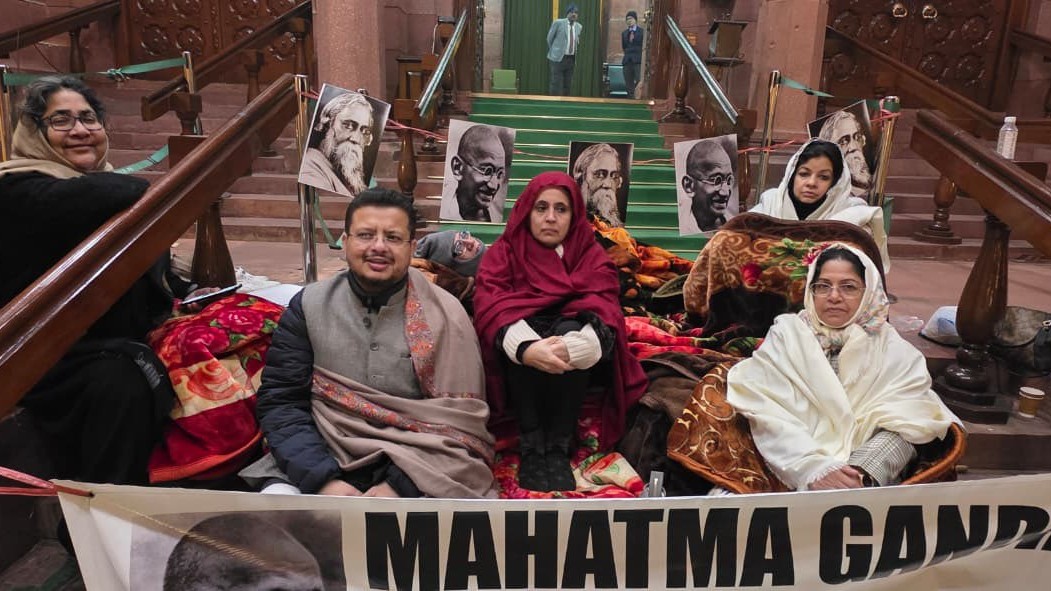
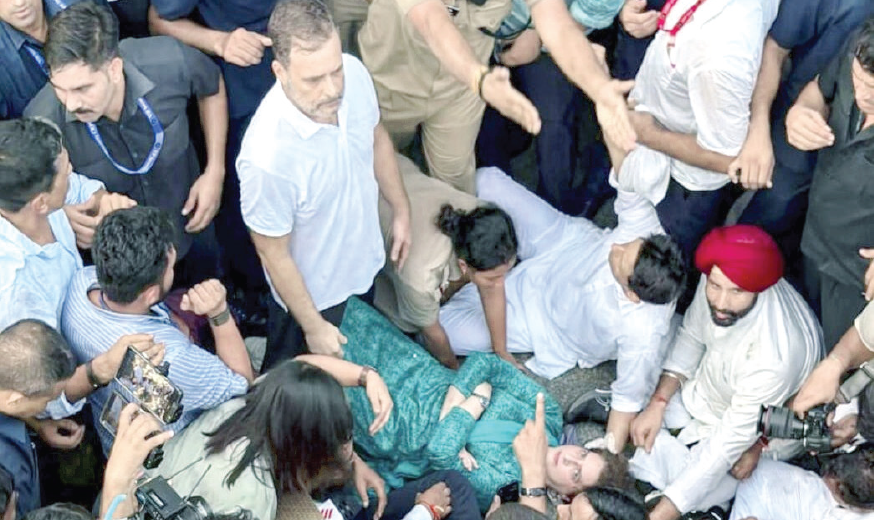
The winter session of Parliament has ended, but not without chaos, heated debates, and a dramatic overnight dharna that has jolted the political landscape. At the center of this storm lies the passage of the VB–G RAM G Bill, which replaces the Mahatma Gandhi National Rural Employment Guarantee Act (MGNREGA). The Trinamool Congress (TMC), led by Mamata Banerjee, staged a whole-night sit-in inside the Parliament complex, with maximum participation from its MPs. The question that arises is whether this was merely a protest against the bill or a calculated political message as Bengal prepares for elections.
The government’s decision to replace MGNREGA with the VB–G RAM G Bill has been described by opposition leaders as an “insult to the poor” and an affront to Mahatma Gandhi’s legacy. The TMC’s overnight dharna was not only a rejection of the bill but also a symbolic act meant to project itself as the real opposition.
Mamata Banerjee has consistently positioned herself as a national challenger, and this dharna was a stage to amplify that claim. The ruling party in Bengal, already worried about the BJP’s growing presence, saw in this protest both a risk and a message. The risk was that the dharna could be dismissed as theatrics; the message was that Mamata was willing to lead the resistance, even if the bill could not be withdrawn.
The INDIA bloc, comprising Congress, TMC, and other opposition parties, joined the protest, but the dynamics within the bloc were telling. Congress MPs, including Priyanka Gandhi Vadra, staged their own demonstrations against the renaming of MGNREGA The Morung Express. Yet, the overnight dharna was dominated by TMC, which ensured that its representatives were visible and vocal. This raises the analytical question: did the dharna strengthen the INDIA bloc, or did it highlight the competing agendas of its members? Each party seeks to prove itself as the chief opposition to the ruling government, and the dharna became a contest of visibility rather than unity.
From a data perspective, MGNREGA has been one of India’s largest social welfare programs, providing employment to over 150 million households since its inception in 2005. In Bengal alone, millions of rural families depend on the scheme for survival. The replacement bill, critics argue, dilutes the guarantee of work and shifts the focus from rights-based employment to government-controlled schemes. For Mamata Banerjee, whose political base includes rural Bengal, opposing this bill is not only ideological but electoral. By staging the dharna, she signals to her voters that she is defending their livelihood.
The cold night in Delhi was therefore more than a protest; it was a performance of strength. Mamata’s message was clear: she is the real opposition, willing to resist even when the outcome is predetermined. The government will not withdraw the bill, but the dharna creates a narrative of defiance. In politics, narratives matter as much as legislation. The dharna allowed Mamata to project herself as a fighter, contrasting with the Congress’s more procedural opposition.
Yet, the analytical question remains: does such resistance translate into electoral gains? In Bengal, where elections are approaching, Mamata’s strategy is to consolidate her image as the protector of rural rights. The BJP, on the other hand, will argue that the new bill modernizes rural employment and aligns with the vision of “Viksit Bharat.” The dharna thus becomes a symbolic clash between two narratives: one of resistance rooted in Gandhian legacy, and one of reform framed as modernization.
The INDIA bloc’s unity is also tested in such moments. While the dharna showcased opposition solidarity, it also revealed fissures. Each party wants to claim leadership of the opposition space. Mamata’s overnight protest was a way of asserting that leadership, especially in the context of Bengal elections. Congress, though present, did not dominate the scene. Other regional parties participated but with limited visibility. The dharna thus strengthened Mamata’s claim but did not necessarily strengthen the bloc as a whole.
In conclusion, the overnight dharna was both a protest and a political message. It was a rejection of the VB–G RAM G Bill, but more importantly, it was Mamata Banerjee’s assertion that she is the real opposition. The cold night in Delhi symbolized the heat of electoral politics in Bengal. The bill will remain law, but the dharna will remain a narrative. Whether it strengthens the INDIA bloc or exposes its competing agendas is a question that will unfold in the coming months. What is certain is that Mamata has used the dharna to project strength, to send a message to her voters, and to remind the nation that opposition is not only about procedure but about presence.
(Author is a senior trilingual journalist and a regular TEW columnist. Views are personal.)


[[comment.comment_text]]