Lohia’s Legacy, Delhi’s Resistance

 2 hours ago
One of the biggest paradoxes of democracy is that individuals in positions of authority frequently denigrate opposition as chaos while praising supportive voices as a popular mandate. However, democracy is strengthened by listening to criticism, facing difficult issues, and upholding constitutional boundaries in addition to electoral wins and parliamentary majorities. Not every challenge to the status quo poses a threat to democracy; occasionally, opposition serves as a reminder to the ruling class of its obligations.
Ram Manohar Lohia turned opposition into a constitutional struggle, dissent into ideas, and ideas into mass movements in independent India. For him, resistance meant holding those in positions of authority responsible rather than just opposing them. His strength came from his unwavering resolve to confront injustice, the strength of his ideas, and the fearlessness of his convictions rather than organisational might or political resources.
Lohia's historic court cases, such as Ram Manohar Lohia v. Superintendent, Central Prison, Fatehgarh (1954), Lohia v. V. S. Sundaram (1955), Superintendent, Central Prison v. Ram Manohar Lohia (1960), and Dr Ram Manohar Lohia v. State of Bihar (1965), brought constitutional restrictions on state power, freedom of speech, and individual liberty. In particular, the 1965 ruling made clear the difference between "public order" and "law and order". Lohia thought that opposition needed to go beyond the streets and into the legal system. His lasting message is that accountability of power is the essential cornerstone of democracy and dissent is a citizen's right.
Lohia: Resistance, Dissent and Constitutional Rights
The real litmus test for democracy is not how easily individuals in positions of authority listen to their followers, but rather how equitably they allow their detractors to voice their opinions.
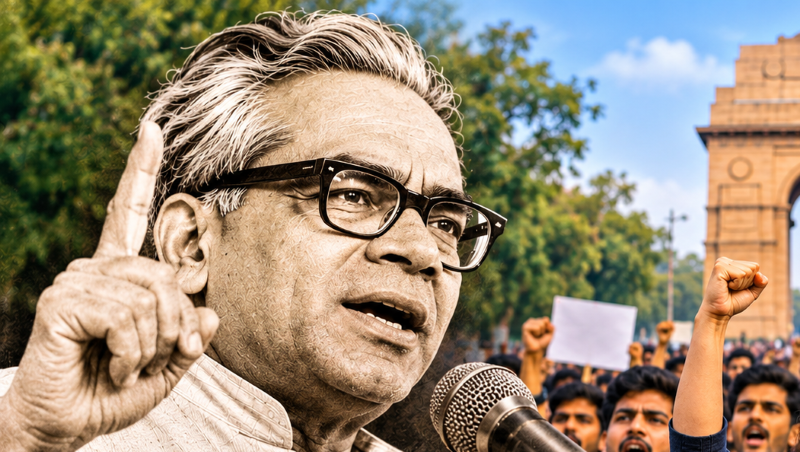
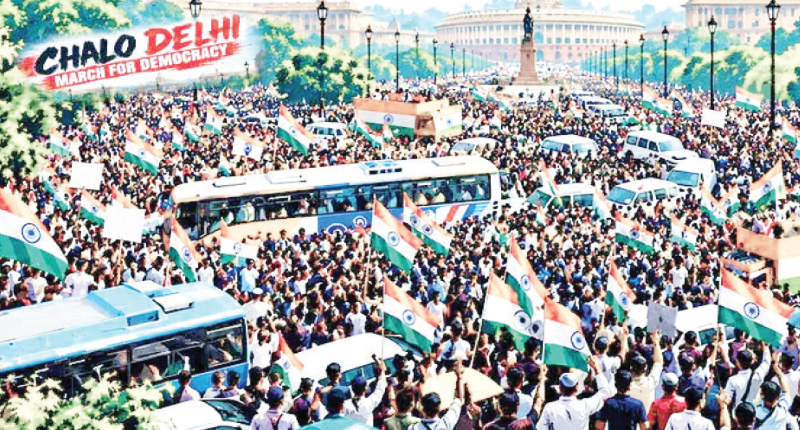
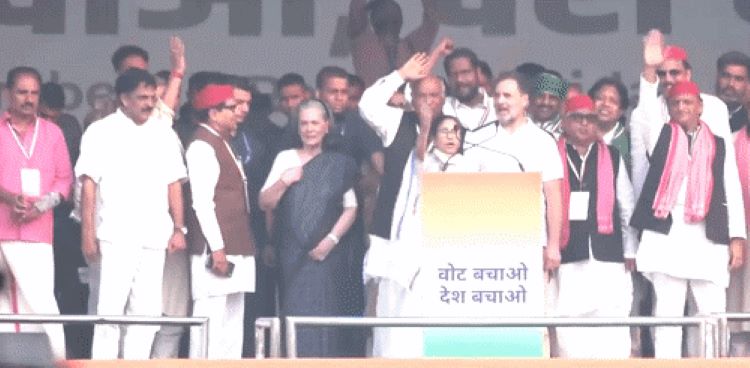
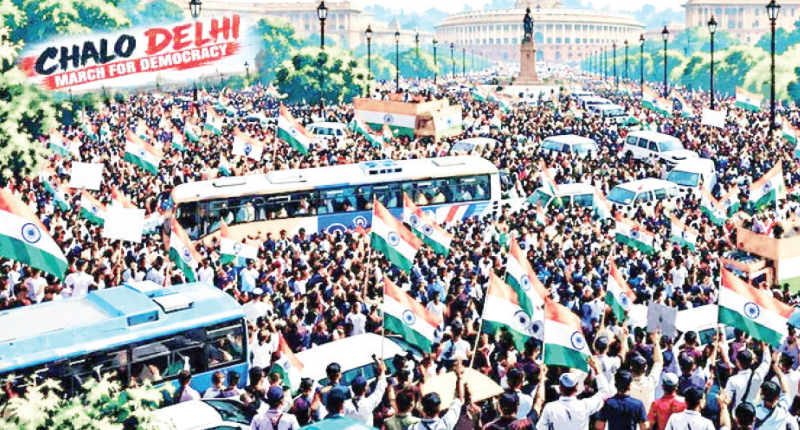
Ram Manohar Lohia's democratic perspective must be applied to the voices rising on Delhi's streets, from Rahul Gandhi's planned march to the demonstrations spearheaded by the Cockroach Janata Party and student associations. Young demonstrators are opposing the system through unorthodox political expressions, while the established Opposition challenges electoral openness and the Election Commission's responsibility. The true issues are not just who protests but also whether their demands are reasonable and if those in positions of authority are prepared to comply.
Following independence, Lohia questioned authority through writings, thoughts, protests, and constitutional disputes. His strength was found in his ideological convictions and his capacity to turn dissent into political force, even in the absence of a large cadre or well-funded political apparatus.
A crucial distinction between law and order and public order was made in the 1965 Supreme Court ruling in Dr. Ram Manohar Lohia v. State of Bihar. Its constitutional relevance endures: neither the right to protest outside the confines of the law nor state power are unrestricted.
In Lohia's legacy, neither opposition nor power are immune from criticism. It requires both to be constitutionally accountable. This is the grammar of democratic resistance, which is being put to the test once more on Delhi's streets: from ideas to dissent, from streets to mass rallies, and finally to the courtroom.
From Streets to Courts: The Test of Dissent
Lohia's fight casts doubt on the notion that a movement's effectiveness can be determined just by the number of its audience, its political clout, or its immediate results. A movement maintains its democratic relevance even if its goals are not fulfilled if it raises unanswered concerns and forces those in positions of authority to address them.
Resistance was never limited to the streets by Lohia. Preventive detention, individual liberty, and the constitutional bounds of state power came under court examination as a result of his legal struggles. Importantly, the Supreme Court established a crucial standard for restricting governmental power in Dr Ram Manohar Lohia v. Government of Bihar (1965) by drawing a crucial distinction between "Law and Order" and "Public Order".
In light of Rahul Gandhi's planned march in Delhi and the youth demonstrations organised by the Cockroach Movement, this legacy is still relevant today. Are citizens allowed to dissent and demand accountability? These are still the fundamental questions. Do administrative limitations pass the proportionality and necessity tests? And do demonstrators respect the law and other people's rights?
Both the state and dissent cannot claim protection from accountability in a democracy. The ultimate test for both is the Constitution. Lohia's lasting lesson is that.
The Streets: Democracy’s Other Forum
The judiciary protects the Constitution, Parliament represents the will of the people, and the streets serve as a forum for residents who believe their opinions are not being heard in the halls of power. As a result, it is insufficient to address every dissenting opinion solely in Parliament or in court. Mass movements serve as a living link between elected institutions and civil society and are not the opponents of representative democracy.
Nonetheless, the freedom to demonstrate does not give one the right to infringe upon the rights of others. The right to peaceful assembly is just as fundamental as traffic, public safety, and the freedom of common people. Similarly, it would be inappropriate to exploit a protest's inconvenience as an excuse to ignore the core issues that prompted people to take to the streets.
Lohia's politics tell us that the goal of resistance is to force people in positions of authority to defend their choices and take responsibility for their actions, rather than just to make them uncomfortable. In the same way that governments must show tolerance for dissent, movements must continue to be responsible for their goals, strategies, and leadership. Those in positions of authority may find it easy to avoid conversation, but having conversations is a democratic duty.
Dissent: Democracy’s Test of Power
For Lohia, dissent was a democratic tool to challenge authority and demand accountability, not only a form of resistance. Modern movements need to transcend fleeting indignation by basing their demonstrations on concepts, logical arguments, a different vision, and responsible leadership.
However, the government is also subject to this test. The power to rule is granted by an electoral majority, not the right to stifle dissent. Just as demonstrators must respect the rule of law, the government must stay within constitutional bounds.
Ultimately, democracy is determined by two factors: the government's willingness to listen and the ability of movements to communicate their objectives with thoughtfulness. A democracy shows its power by establishing the constitutional space to hear, discuss, and respond to dissent rather than by eradicating it.
Lohia’s Test of Power and Protest
Rammanohar Lohia would have questioned the administration, the opposition, and the demonstrators if he were still alive today. Are complaints about elections being looked into fairly? Does the government uphold the right to nonviolent protest? Do administrative limitations pass the proportionality and legality tests? Are demonstrators basing their rage on facts, logic, and positive alternatives?
While the Cockroach Janata Party campaign represents a new form of youth resistance, Rahul Gandhi's intended march raises concerns about election openness and the accountability of the opposition. Although their settings may be different, they both highlight the central question of democracy: Does a citizen need permission from the government to challenge those in authority?
Lohia's political thought serves as a reminder that dissent is essential to democratic consciousness and not only a constitutional right. However, resistance must also respect the law, the liberties of others, and moral limits.
In the end, democracy is determined by how impartially power listens, not by how boldly citizens challenge authority. That is why Lohia's legacy is still relevant today.
Lohia’s Enduring Legacy
The legacy of Rammanohar Lohia is not solely owned by any political party or philosophy. It symbolises a democratic consciousness that acknowledges citizens as active participants with the right to challenge authority rather than as passive observers. Lohia took the fight for constitutional rights to the courts, gave opposition an intellectual voice, and turned it into a large-scale social movement. For him, the goal of resistance was to hold those in positions of authority responsible rather than only to overthrow regimes.
The current era provides a chance to consider the ongoing significance of this democratic heritage, from Rahul Gandhi's march in Delhi to the students taking to the streets under the banner of the Cockroach campaign. The question is not just whether individuals can protest but also whether the government is open to hearing their concerns, if institutions are dedicated to conducting unbiased investigations into complaints, and whether protest movements are similarly dedicated to respecting constitutional limitations. The halls of power, the streets, and the Constitution are the three arenas where Lohia's lesson on the grammar of dissent is currently being put to the test.
Democracy Must Hear the Streets
A democracy's maturity is determined by how its ruling class reacts to the voices that emerge from it, not by how quiet its streets are. Protest is a sign of democratic vitality, not a sign of democratic weakness. Beyond the pages of the Constitution, democracy comes to life when voters challenge government decisions, the opposition calls for accountability, and young people stand up for their rights.
The students' mobilisation under the Cockroach movement and Rahul Gandhi's march in Delhi are two different manifestations of dissent—one from a younger generation looking for its own political voice and the other from an established political opposition. Dissent cannot be disregarded just because it opposes people in positions of authority, but its demands and strategies merit independent examination.
Protest movements must respect the law and other people's rights, and the opposition must provide proof to support its claims. Similarly, the government cannot unreasonably restrict nonviolent protest under the guise of public order.
Rammanohar Lohia's political legacy is summed up as follows: opposition starts with ideas, gains momentum from the streets, and, when required, uses constitutional institutions to pursue justice.
The ultimate test of democracy is not how loudly the powerful talk, but rather how impartially they respond to criticism. No party, leader, or generation has the right to challenge authority, even though governments and leaders may change. It is the long-lasting basis of democracy.
(The author, a Doctorate in Laws, is a senior lawyer and civil society activist.)




[[comment.comment_text]]