Judicial Independence Without Accountability Is Incomplete

 1 month, 1 week ago
India needs urgent judicial reforms before public frustration turns into a crisis of confidence. The judiciary is one of the most important pillars of India’s constitutional democracy. It protects the Constitution, safeguards fundamental rights and provides ordinary citizens with a remedy against the powerful, including the State. For that very reason, judicial independence must be protected.
But independence cannot mean immunity from accountability.
Judicial independence without accountability is incomplete; accountability without independence is dangerous. This principle should guide India’s next generation of judicial reforms.
Growing public concern over delays, repeated adjournments, enormous pendency, high litigation costs and the opacity of some judicial processes cannot simply be dismissed. Allegations of corruption or favouritism must neither be presumed true nor casually ignored. Public confidence is the foundation of any justice system.
The objective of reform must therefore be to make the judiciary more independent, transparent, accountable and efficient—not weaker.
1. Accountability Must Strengthen, Not Undermine, Judicial Independence
Recent reports of concerns over the integrity of a senior judicial office-holder, together with the controversy surrounding Justice Yashwant Varma, have brought judicial accountability into sharp public focus.
Following a fire at his official residence in March 2025, burnt and partially burnt currency was reportedly found in a storeroom. An inquiry followed, and Justice Varma resigned in April 2026. A three-member inquiry committee subsequently found the charges against him proved.
Whatever the final assessment of an individual case, the episode raises a fundamental institutional question: Does India have a sufficiently swift, credible and legally protected mechanism for dealing with serious allegations against judges?
Constitutional safeguards protecting judges are essential. No government should be able to intimidate or punish a judge merely for delivering an inconvenient judgment. But serious allegations of misconduct also require a credible process.
The choice should not be limited to doing nothing or resorting to impeachment. India needs proportionate mechanisms for receiving complaints, investigating credible allegations and, where necessary, taking interim administrative measures while due process continues.
No judge should be presumed guilty because of an allegation. Equally, a credible allegation supported by evidence should not disappear into an indefinite process.
The principle should be simple:
No person is above the law, but every person is entitled to due process.
This must apply equally to citizens, politicians, government officials, lawyers and judges.
India also needs a permanent and credible judicial ethics mechanism, independent of the executive and protected from political misuse. It should be empowered to screen frivolous complaints, investigate credible ones, protect genuine whistle-blowers and recommend proportionate action, while ensuring safeguards against malicious allegations.
Accountability, properly designed, protects honest judges. It does not weaken them.
Justice Delayed Is Justice Denied—and Capacity Must Grow
For the ordinary citizen, the greatest weakness of the judicial system is often not the law but time. Civil and criminal cases can continue for years because of non-appearance, repeated adjournments, incomplete documentation or procedural delays. The phrase “next date” has become synonymous with the experience of many litigants.
This must change.
Every case should have a digital Case Clock, recording its journey from filing to final judgment. Every adjournment should indicate who sought it, why it was granted and how many previous adjournments had occurred. Repeated and unjustified adjournments should attract meaningful costs. Where a party deliberately avoids proceedings, courts should have effective powers, within the law, to prevent the entire process from being paralysed.
Justice must have a timetable.
At the same time, India cannot expect judges to deliver timely justice without providing adequate judicial capacity. The number of judges should be periodically assessed against population, litigation volume, case complexity and pendency.
More judges alone will not solve the problem, but too few judges make delay inevitable. India needs more courtrooms, registrars, research staff, stenographers, court managers, digital infrastructure and supporting personnel. The district and subordinate courts deserve particular attention. For most Indians, they—not the Supreme Court—are the face of justice.
Technology and AI Can Transform the Delivery of Justice
India has an extraordinary opportunity to use technology to modernise the judiciary. A secure national Judicial AI Platform could contain the Constitution, legislation, rules, regulations, Supreme Court and High Court judgments, precedents and other authoritative legal material.
Faced with thousands of pages, an AI-assisted system could help a judge identify relevant laws, precedents, conflicting judgments, important facts, evidence, procedural history and limitation issues. It could prepare a comprehensive Judicial Decision Brief and even a draft judgment for the judge’s consideration. This could save enormous judicial time.
But AI must assist judges, not replace them. Artificial intelligence can make mistakes, reproduce biases or misinterpret legal material. Every authority and material fact identified by AI must therefore be independently verified. The final decision must remain the responsibility of a human judge.
The Government should also deploy similar technology in its litigation departments. Before filing an appeal involving hundreds of crores of rupees, an AI-assisted system could examine the legal position, precedents, evidence, limitation and financial implications.
This could help the Government decide whether to appeal, settle or accept a judgment—and potentially reduce unnecessary litigation.
Technology should also give citizens greater visibility into their own cases. A modern judicial application should enable litigants, subject to appropriate safeguards, to see case status, hearing dates, previous orders, documents filed and reasons for adjournments.
A generation raised on smartphones and digital public services will naturally ask: Where is my case? Why was it postponed? What happened at the hearing? How long will it take? These are not unreasonable demands.
Appointments and Public Money Require Greater Transparency
Judicial appointments, particularly to the higher judiciary, deserve greater institutional transparency. Judicial independence must remain paramount, but independence does not require complete opacity. Candidates should be evaluated against clearly articulated criteria such as integrity, legal competence, constitutional understanding, quality of judgments, independence, professional experience, temperament and conflicts of interest.
The collegium system has evolved over time, and the Supreme Court has taken steps towards greater transparency, including publication of collegium resolutions and judges’ asset disclosures. The next step should be greater clarity about the principles and criteria governing selection while protecting genuinely confidential information.
India need not copy another country, but useful lessons are available. England and Wales, for example, use an independent Judicial Appointments Commission with emphasis on merit and good character. India could develop its own constitutionally appropriate model, potentially drawing on principles associated with institutions such as the UPSC.
The objective should be neither executive control nor an entirely closed system of judicial succession.
It should be merit, integrity, independence and transparency.
Judicial reform must also protect public money. The Government is among India’s largest litigants, with cases involving taxation, land, infrastructure, contracts, mining, procurement, public-sector undertakings and arbitration often involving hundreds or thousands of crores.
An adverse judicial judgment does not mean that a judge was wrong. Courts must remain free to rule against the State.
But every major financial loss to the public exchequer should trigger an institutional review: Was the evidence properly presented? Were documents available? Was the case competently handled? Were there procedural failures? Was an appeal filed on time? Was the legal advice adequate?
If the law was simply against the Government, the loss is part of the judicial process.
But if public money was lost because of administrative negligence, poor preparation or avoidable procedural failure, responsibility must be established. This would protect public resources without interfering with judicial independence.
Build a Judiciary That Gen Z Can Trust
India’s younger generation has grown up in a world of instant information, digital payments and online public services. It is unlikely to accept endless adjournments, paper-driven bureaucracy, opaque procedures and unexplained delays as unavoidable features of justice.
Judicial reform must therefore extend from the Supreme Court to the grassroots.
India should seriously revisit the possibility of an All India Judicial Service, while retaining meaningful avenues for experienced members of the Bar to enter the higher judiciary laterally to a defined extent.
At the same time, judicial performance must be assessed intelligently. Judges cannot be treated like corporate executives, and justice cannot be reduced to disposal statistics. Yet persistent and unexplained delay cannot be ignored either.
Assessment should consider case complexity, age of pending cases, reserved judgments, adjournments, procedural compliance, quality of judgments and administrative performance.
Speed must serve justice, not replace it.
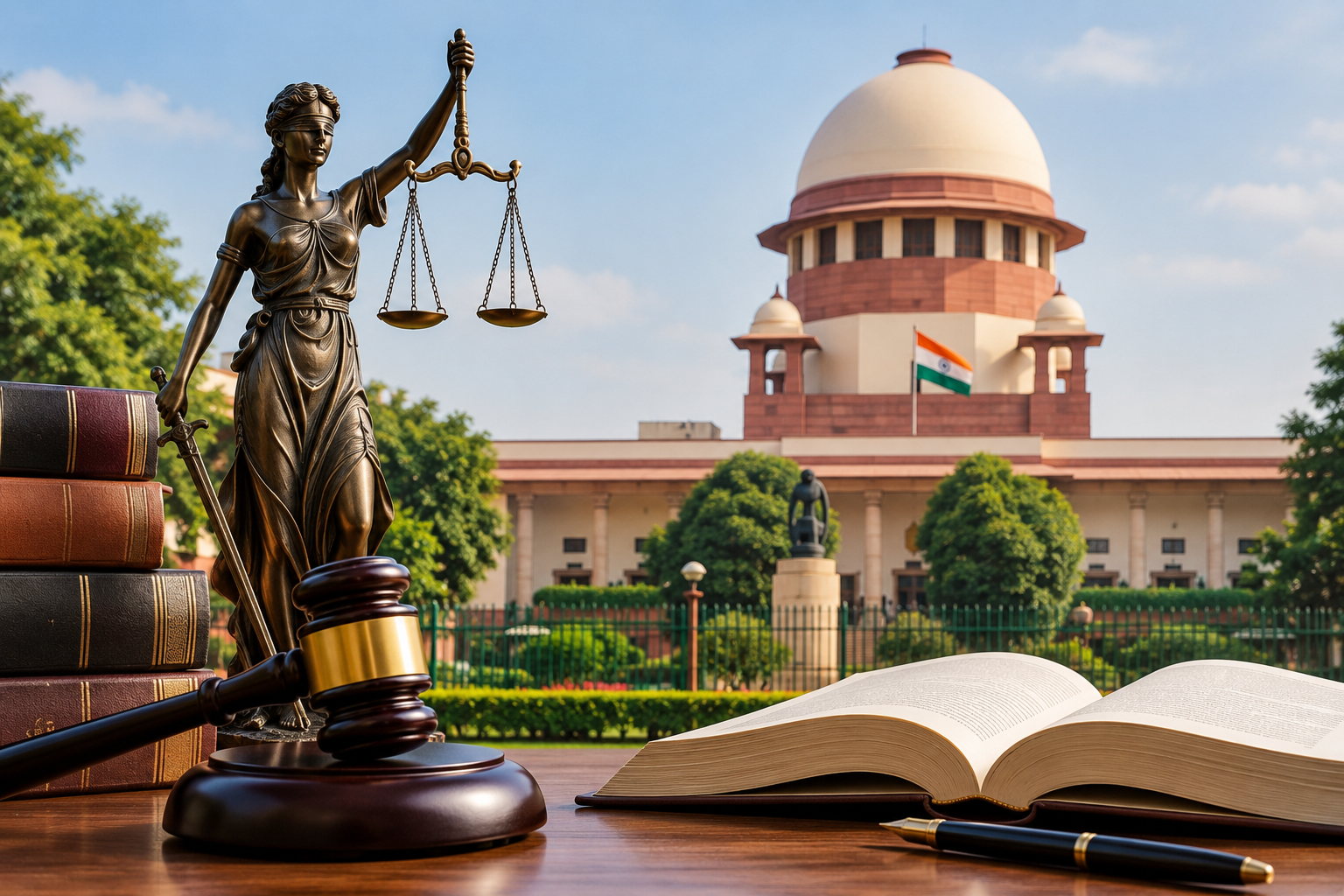
The traditional symbol of justice—a blindfolded woman holding scales and a sword—offers an enduring lesson. The blindfold represents impartiality; the scales, equality; and the sword, the authority of law.
India must ensure that the blindfold never becomes blindness to misconduct, the scales never become tilted by influence and the sword never becomes paralysed by procedure.
A judge should not see the wealth, political influence or social status of the person before the court. The only question should be:
What do the Constitution and the law require, based on the evidence?
India’s judiciary has played an extraordinary role in preserving constitutional democracy. That legacy must be protected. But protecting the judiciary does not mean protecting every existing procedure.
The system must evolve with the country. India should not wait until young citizens lose faith in institutions and take to the streets demanding reform. The time to reform is before the crisis, not after it.
A strong judiciary is not one that is beyond scrutiny. It is one whose independence is unquestionable, whose integrity is trusted, whose decisions are timely and whose accountability is credible.
The ultimate objective is clear:
An independent judiciary that fears neither the Government nor the powerful; an accountable judiciary answerable to the Constitution and the law; and a modern judiciary capable of delivering justice within the lifetime of the citizen who seeks it.
That is the judiciary India should build for Gen Z—and for generations yet to come.
(Mr Punati Sridhar, a former IFS officer, has served as the Head of Forest Force, Karnataka. He currently chairs the Bamboo Society of India.)







[[comment.comment_text]]