Steel Tracks, Moving Lives: The Unfolding Story of Indian Railways

 5 months, 3 weeks ago
The story of Indian Railways cannot be confined to the mechanics of engines and tracks. It is, more fundamentally, the story of how a nation learned to move—physically, economically, and socially. Over nearly two centuries, the railways have evolved into one of India’s most enduring institutions, shaping not just transportation but the rhythm of everyday life. From facilitating trade and migration to connecting distant regions and cultures, Indian Railways has quietly functioned as the country’s lifeline, binding together a vast and diverse population.
What distinguishes Indian Railways is not merely its scale, but its remarkable ability to adapt without losing its social character. Even as it embraces modern technologies and ambitious infrastructure projects, it continues to remain accessible to millions who depend on it daily. This dual identity—modern yet inclusive—has allowed it to remain relevant across generations, mirroring the evolution of India itself.
The journey began on April 16, 1853, when the first passenger train ran from Bombay to Thane, covering a distance of just 34 kilometres. While modest in scale, the moment carried transformative significance. For a country where travel had long been slow and uncertain, the railway introduced a new sense of predictability and speed. It altered not only how people moved, but how they thought about distance and opportunity. What was once considered far became accessible, and with that shift came new possibilities for trade, employment, and social interaction.
In the decades that followed, railway lines expanded rapidly across the subcontinent. This expansion was not simply an infrastructural development; it was a structural transformation of the economy. Agricultural regions found new markets, industries gained access to raw materials, and administrative systems became more efficient. The railways effectively became the arteries of economic activity, enabling a level of integration that had previously been unimaginable.
This growth, however, was achieved in the face of considerable challenges. India’s diverse geography required innovative engineering solutions, leading to the adoption of multiple track gauges that could navigate different terrains. From plains to mountains, the railways demonstrated an ability to adapt to local conditions. Projects such as the Darjeeling Himalayan Railway exemplified this ingenuity, proving that even the most difficult landscapes could be connected.
At the same time, India began developing its own technological capabilities. The production of the first steam locomotive within the country in 1895 marked an early step towards self-reliance. It signaled a gradual shift from dependence on imported technology to the development of indigenous expertise—an evolution that would become increasingly important in the decades ahead.
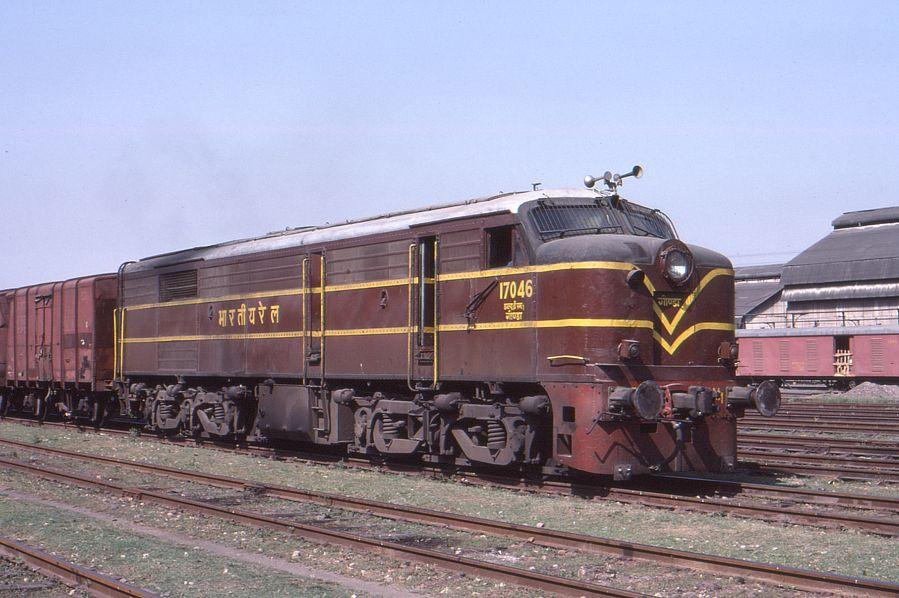
By the time India gained independence in 1947, the railway network was extensive but fragmented. Integrating this system became a priority, both for administrative efficiency and national unity. The reorganisation of Indian Railways into zones in 1952 marked a turning point, enabling better coordination and management across regions. Alongside structural reforms, technological changes began to reshape operations. The gradual transition from steam to diesel and electric locomotives improved efficiency and reliability, laying the foundation for a more modern system.
The latter half of the twentieth century saw a steady strengthening of infrastructure. Tracks, bridges, and stations were upgraded, and the focus shifted from mere expansion to improving quality and performance. Indian Railways emerged as a robust system capable of supporting a growing economy, playing a critical role in both industrial development and social mobility.
The transformation in the twenty-first century has been particularly significant, marked by a clear emphasis on modernization and sustainability. One of the most notable achievements has been the near-complete electrification of the network. From a relatively modest base in 2014, electrification has expanded to cover almost the entire system by March 2026. This shift has reduced dependence on fossil fuels, lowered operational costs, and aligned railway operations with environmental priorities. Electric trains, with their higher efficiency and reliability, have enhanced overall performance while contributing to reduced carbon emissions.
Parallel to electrification, large-scale track renewal has improved safety and enabled higher speeds. Significant portions of the network can now support speeds exceeding 110 kilometres per hour, reflecting a substantial upgrade in capacity. These changes are part of a broader strategy aimed at creating a railway system that is not only extensive but also efficient and future-ready.
At the same time, passenger expectations have undergone a noticeable shift. As incomes have risen and lifestyles have changed, rail travel is increasingly seen as an experience rather than merely a necessity. The introduction of modern trains such as the Vande Bharat Express reflects this transition, offering enhanced comfort, speed, and technological sophistication. Yet, even as premium services expand, Indian Railways has maintained its commitment to affordability. Initiatives like the Amrit Bharat Express ensure that modernization does not exclude those who rely on economical travel options. This balance between innovation and inclusivity remains central to its identity.
Another defining feature of recent years has been the integration of digital technology. Indian Railways is steadily transforming into a smart network, where operations are increasingly driven by data and automation. Online ticketing, real-time tracking, and digital payment systems have improved passenger convenience, while advanced safety mechanisms such as the Kavach system are enhancing operational security. Artificial intelligence-based surveillance and modern communication networks are further strengthening efficiency, marking a shift from a traditional transport system to a technologically sophisticated ecosystem.
Looking ahead, the focus is gradually shifting towards high-speed rail, representing the next phase of evolution. Projects like the Mumbai–Ahmedabad High-Speed Rail corridor are not just about faster travel; they signal a broader vision of economic integration and infrastructural advancement. By significantly reducing travel time between major cities, high-speed rail has the potential to reshape patterns of business, tourism, and regional development.
Beyond infrastructure and technology, the economic significance of Indian Railways remains immense. It is one of the largest employers in the country and a critical facilitator of trade. The movement of freight—from coal and steel to agricultural produce—supports industries and sustains supply chains. At the same time, passenger services provide affordable mobility, enabling millions to access opportunities that would otherwise remain out of reach.
The scale of operations is extraordinary, with thousands of trains running daily and billions of passengers travelling each year. Managing such a vast system requires constant innovation and administrative precision. It is both a logistical challenge and a testament to institutional resilience.
Ultimately, the journey of Indian Railways is a story of continuity within change. From its colonial origins to its current role as a modern, electrified, and increasingly digital network, it has consistently adapted to the needs of the nation. Each phase of its evolution has built upon the previous one, creating a system that is both deeply rooted in history and firmly oriented towards the future.
As India continues to grow and transform, its railways will remain central to that process. They will continue to connect people, enable economic activity, and shape the movement of a nation that is constantly in transition. Indian Railways is not just a mode of transport—it is a living system, carrying the momentum of India’s past while steadily moving towards its future.








[[comment.comment_text]]