Battle for the Ballot: The Ramlila Rally and the Fracture Lines of India’s Opposition
 an hour ago
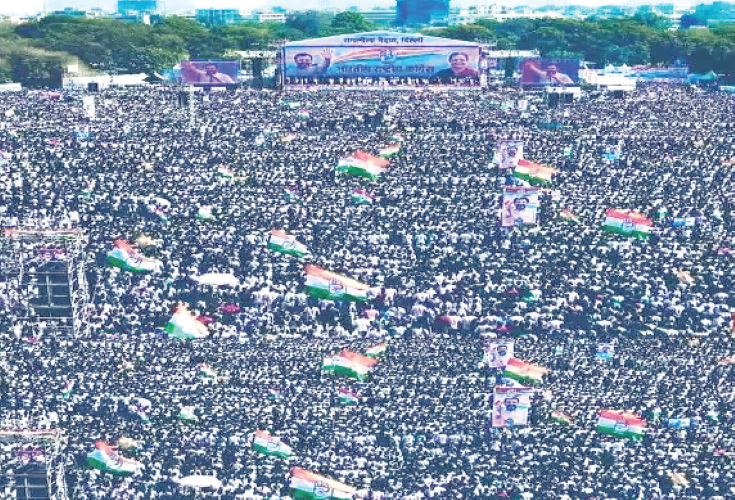
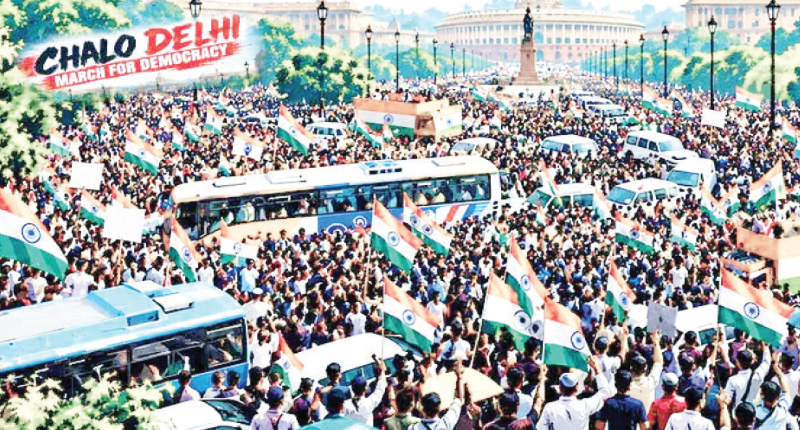
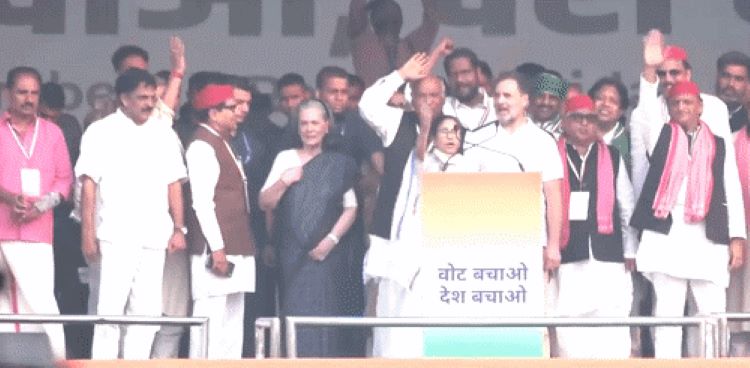
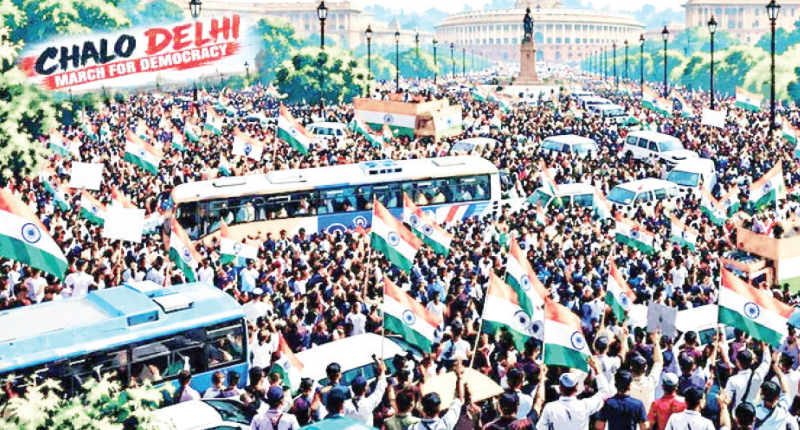
On November 1, 2026, Delhi’s historic Ramlila Maidan once again transformed into the epicentre of Indian political contestation. Tens of thousands of cadre, workers, and citizens converged under the banner of the Indian National Developmental Inclusive Alliance (INDIA) for the "Vote Bachao, Desh Bachao" mega rally. Framed as a critical stand against constitutional backsliding, the demonstration sought to turn technical disputes over electoral administration into a national political crusade.
The rally marked a sharp escalation in the coalition’s confrontation with the Election Commission of India (ECI). Yet, beneath the high-volume rhetoric and crowded stands, the event exposed a dual reality: an opposition capable of mobilizing public angst on democratic integrity, even as internal ideological rifts and strategic absences highlight the fragility of the anti-establishment front.
Escalating Institutional Confrontation: The Electoral Roll Row
At the core of the demonstration is the ongoing controversy surrounding the Special Intensive Revision (SIR) of electoral rolls. Spearheaded by Congress leaders Rahul Gandhi and Mallikarjun Kharge, the opposition’s primary demand remains the immediate suspension of the SIR process and the resignation of Chief Election Commissioner Gyanesh Kumar.
Addressing the crowd, Rahul Gandhi and Mallikarjun Kharge framed the revision exercise not as routine administrative maintenance, but as systematic "vote chori" (vote theft) designed to disenfranchise marginalized voters and political opponents. Kharge formally reiterated a series of major charges against the CEC, alleging unauthorized voter deletions, structural centralization via the ECINET system, and a systemic breach of constitutional neutrality.
Consequently, the rally adopted a clear resolution demanding the immediate resignation of Chief Election Commissioner Gyanesh Kumar, the halt of the Special Intensive Revision exercise, and the complete restoration of all deleted voters to the official rolls. Extending their rhetoric beyond poll body officials, opposition leaders asserted that political executive leaders including Prime Minister Narendra Modi and Union Home Minister Amit Shah would eventually face accountability for alleged electoral distortions. The institutional standoff has expanded into judicial terrain.
With a petition led by opposition leaders challenging the poll panel’s revision directives, the Supreme Court of India recently issued formal notices to the ECI and Election Commissioners. By taking their grievances concurrently to the court and to Ramlila Maidan, the coalition seeks to build leverage through combined legal challenge and public mobilization.
Expanding the Canvas: Broadening Economic and Social Concerns
While electoral integrity served as the centerpiece, speakers deliberately broadened the rally's scope to resonate with wider socio-economic grievances. Representatives across participating regional parties brought forward pressing concerns regarding persistent unemployment, inflationary pressures, agricultural distress, women's safety, and social equity.
Farmers' unions, civil society groups, and student organizations joined the gathering, reflecting an attempt to channel broader societal anxieties into electoral momentum. By tying administrative disputes over voter rolls directly to governance failures, the alliance attempted to articulate a comprehensive narrative: that institutional erosion directly impairs public welfare.
Notable Absences and Coalition Fractures
Despite the large turnout at Ramlila Maidan, the event was equally defined by who was absent. High-profile omissions highlighted persistent friction within the broader opposition ecosystem. Most conspicuously, the Aam Aadmi Party (AAP) chose to skip the event despite being the host city’s primary governance force, underscoring deep-seated local rivalries with the Congress party across Delhi and Punjab. Similarly, the Dravida Munnetra Kazhagam (DMK) kept its distance from the physical rally in New Delhi, pointing to regional tactical differences regarding central protest formats.
Other key political players also maintained a clear boundary from the coalition's platform. The Bahujan Samaj Party (BSP) reaffirmed its stance of strict formal neutrality by declining to participate in Congress-led initiatives, while the All India Majlis-e-Ittehadul Muslimeen (AIMIM) remained outside the alliance framework due to sharp ideological divergences.
Additionally, the Cockroach Janta Party (CJP) stayed away amidst distinct political friction and localized organizational dynamics. While core constituents like the All India Trinamool Congress (AITC), Shiv Sena (UBT), Jharkhand Mukti Morcha (JMM), Rashtriya Janata Dal (RJD), and the Left parties showed strong platform presence, these notable absences underline the continuing challenge for the INDIA alliance in translating collective opposition into a unified nationwide structure.
Political Ramifications and the Road Ahead
The ruling Bharatiya Janata Party (BJP) dismissed the rally as a political distraction. Party spokespersons disputed turnout figures and questioned the timing of the disruption during a major festive season, alleging that the opposition was attempting to construct preemptive excuses for potential future electoral setbacks.
Nevertheless, the Ramlila Maidan gathering signals an intense phase of national politics. By directly targeting the leadership of the Election Commission and elevating voter-list revisions into a populist cause, the INDIA bloc has drawn its battle lines clearly. Whether this strategy creates a sustained political movement will depend on the coalition’s ability to resolve its internal contradictions and sustain momentum beyond the historic grounds of New Delhi.
(Author is a former member of the history faculty at St. Xavier’s College, Mumbai.)


[[comment.comment_text]]