India at the Threshold of an AI Moment: From Emerging Participant to Global Contender

 9 months ago
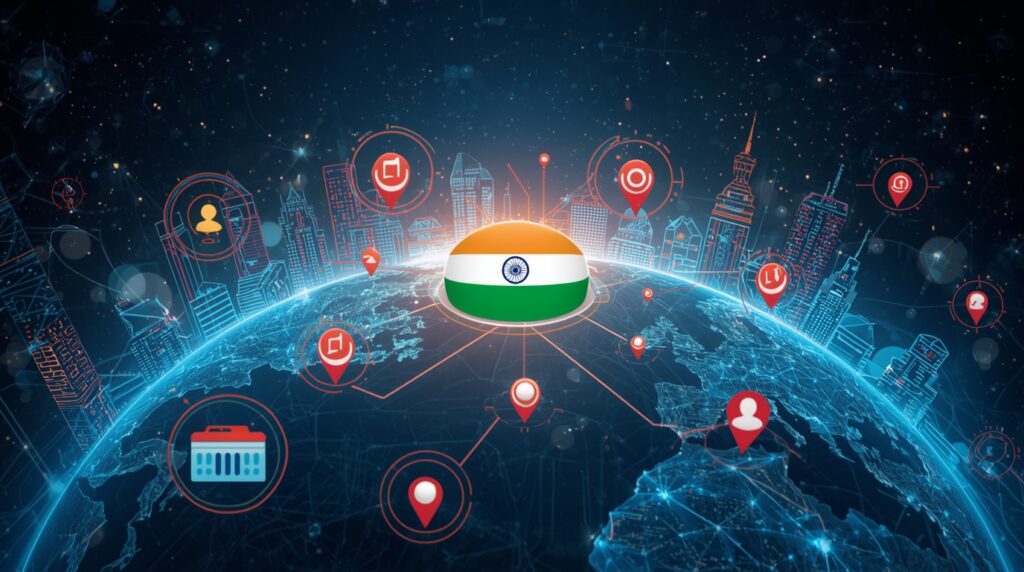
At the beginning of 2026, India has entered a decisive phase in its technological journey, with artificial intelligence emerging as a defining force shaping the country’s future. This transformation is not the result of a single policy decision, institution, or corporate breakthrough. Instead, it reflects the cumulative strength of India’s intellectual capital, the entrepreneurial energy of its youth, and the gradual crystallisation of a national vision that sees technology as both an economic driver and a social enabler. In a global AI race where India was, until a few years ago, largely perceived as a back-office contributor or an observer, the country is now asserting itself as a credible and competitive global player.
This shift is not merely rhetorical; it is supported by measurable global indicators. India’s leap from seventh to third position in the Global AI Vibrancy rankings published by Stanford University is a powerful signal of change. Positioned just behind the United States and China, India’s ranking reflects a growing recognition of its research output, startup dynamism, and talent base. It suggests that Indian capabilities in artificial intelligence are no longer viewed as auxiliary to Western or Chinese innovation ecosystems, but as an independent force capable of shaping global trajectories.
Globally, it is well understood that the United States and China enjoy significant structural advantages in artificial intelligence. They command enormous financial resources, possess deep research infrastructure, and operate at industrial scales that few countries can match. Yet India has carved out a distinct identity that does not rely on overwhelming capital or state-led industrial dominance. Instead, India’s strength lies in its problem-solving orientation, its ability to operate at scale in complex social environments, and its capacity to adapt advanced technologies to real-world needs. This is particularly important in a country defined by linguistic diversity, socio-economic variation, and vast population size, where technological solutions must work not in laboratories alone but in everyday life.
India’s consistent presence among the world’s top five destinations for startup funding, coupled with a steady rise in AI-related academic publications, highlights a dual momentum in knowledge creation and commercial innovation. The confidence of global technology leaders such as Microsoft, Google, and Amazon, along with venture capital firms like Accel, is evident in their growing investments in Indian AI startups. These investments are not driven by cost arbitrage alone; they reflect a strategic assessment that India is likely to play a central role in the future of artificial intelligence, particularly in areas related to scale, affordability, and inclusive deployment.
The rise of India as an AI contender is, above all, a startup-led story. More than 150 generative AI startups are currently active in the country, having attracted over $1.5 billion in investment since 2020. These figures point to a structural transformation rather than a temporary technological boom. Indian AI startups are working across critical sectors such as education, healthcare, agriculture, language technologies, e-commerce, media, gaming, and industrial analytics. These are sectors where the ability to deploy solutions at scale, adapt to local conditions, and deliver affordable outcomes is as important as technical sophistication.
Several Indian startups illustrate this broader trend. Sarvam AI is developing large language models specifically designed for Indian languages, a crucial step in ensuring that AI tools are accessible to citizens beyond English-speaking elites. Voice-focused companies such as Gnani.ai and Soket AI are simplifying digital interactions by making them more natural and conversational, thereby lowering barriers to adoption. In the domain of generative content and immersive experiences, Avataar.ai and Gan AI are redefining how businesses and consumers engage with digital media and virtual environments. The emergence of Krutrim as India’s first AI unicorn represents a symbolic and substantive milestone, demonstrating that Indian AI innovation can meet global benchmarks of scale, valuation, and commercial viability.
An equally important dimension of India’s AI ascent is the evolving role of the state. Rather than positioning itself as a controller of innovation, the government has increasingly adopted the role of an enabler. The IndiaAI Mission reflects this philosophy. From more than 500 proposals, the selection of 12 startups to develop foundational AI models indicates a deliberate effort to build indigenous technological capabilities rather than remain dependent on imported systems. This approach recognises that strategic autonomy in artificial intelligence will be as important in the future as energy or defence self-reliance.
This vision was further reinforced during a roundtable meeting convened by Narendra Modi in January 2026, where AI startup founders shared their experiences and highlighted the supportive environment emerging in India. The Prime Minister’s assertion that startups are “co-creators of India’s future” carries strategic significance. It signals a shift in how innovation is viewed within the national development framework, placing entrepreneurs and technologists at the centre of India’s growth narrative.
Notably, India’s AI strategy places strong emphasis on ethical considerations. Repeated stress on transparency, fairness, accountability, and data privacy suggests that technology is not seen merely as an instrument of efficiency or power, but as a system that must earn public trust. In a global environment where concerns about surveillance, algorithmic bias, and data exploitation are growing, India’s commitment to affordable and inclusive AI offers an alternative and potentially influential model. It presents a vision of technological progress that is aligned with democratic values rather than in tension with them.
One of the most distinctive strengths of India’s AI journey is its grounding in local realities. AI systems being developed with Indian languages, cultural contexts, and social needs in mind are helping to build genuine technological self-reliance. Initiatives such as BharatGen are ensuring that AI models trained on Indian data can address domestic requirements rather than rely on systems optimised for very different societies. This localisation does not limit India’s global relevance; instead, it enhances it by enabling the country to offer scalable solutions applicable to other multilingual and developing regions.
Ultimately, the rise of artificial intelligence in India is a story that extends beyond technology itself. It is a narrative of a young nation’s confidence in its intellectual capabilities, of entrepreneurs designing global solutions rooted in local contexts, and of a state that seeks to balance innovation with responsibility. When India speaks of AI today, it is not merely discussing algorithms, compute power, or data sets. It is speaking of inclusion, trust, and societal transformation. This synthesis of technological ambition and human values is what sets India apart and holds the promise of establishing it as a global AI power in the years to come.
(Author is resident editor of EW Jharkhand edition)








[[comment.comment_text]]