Great Nicobar and the Wisdom of Limits

 1 month, 1 week ago
India’s proposed maritime gateway may advance legitimate economic and security interests. But unless ecological risk, seismic vulnerability and the rights of the Shompen are treated as constitutional constraints—not administrative inconveniences—the project could turn national ambition into irreversible loss.
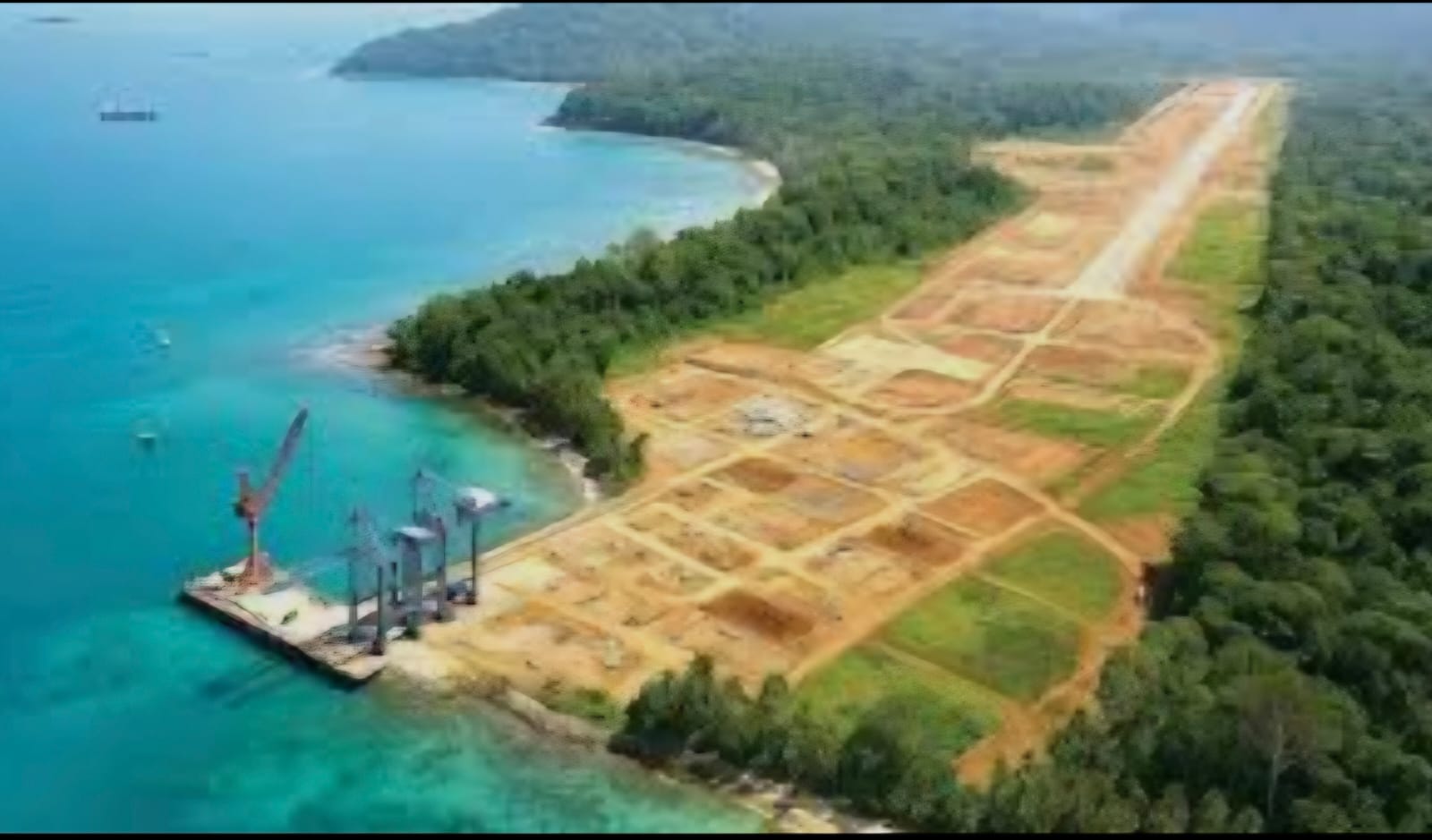
Some infrastructure projects do more than alter a landscape; they reveal how a nation understands progress. Great Nicobar has become such a test. At India’s southern maritime frontier, near the approaches to the Malacca Strait, the proposed ₹92,000-crore transformation of a sparsely populated and ecologically exceptional island promises a transhipment port, an international airport, a power complex and a new township. Its strategic logic is substantial. So are the risks it asks the island—and its least powerful inhabitants—to bear.
The debate acquired fresh urgency after the UN Committee on the Elimination of Racial Discrimination urged India to suspend implementation until a full and independent assessment of the project’s environmental, economic, social, cultural and spiritual consequences is completed. New Delhi has rejected the wider observations as politically motivated. Yet the central issue cannot be settled merely by invoking either international authority or sovereign prerogative. It demands the harder question: can India secure a legitimate strategic objective without imposing irreversible ecological and human costs?
The project is conceived as a cornerstone of India’s Holistic Development of Islands programme. Spread across roughly 166 square kilometres, it envisages an international container transhipment terminal at Galathea Bay, a greenfield airport, a power plant and an urban-industrial settlement. Nearly 130 square kilometres of forest land would be diverted. On an island with a present population of only a little over 8,000, plans for a settlement eventually accommodating several hundred thousand people would amount not to ordinary urban expansion but to a remaking of its demographic character.
The government’s case is not trivial. Great Nicobar’s proximity to one of the world’s busiest shipping corridors gives it unusual strategic value. A domestic transhipment hub could reduce dependence on foreign ports, strengthen India’s role in eastern Indian Ocean commerce and reinforce its Indo-Pacific posture at a time of intensifying geopolitical competition. The National Green Tribunal, while upholding the project’s environmental clearance in February 2026, also cited its strategic importance and directed strict compliance with clearance conditions. Any serious critique must therefore acknowledge that India has genuine commercial and security interests at stake.
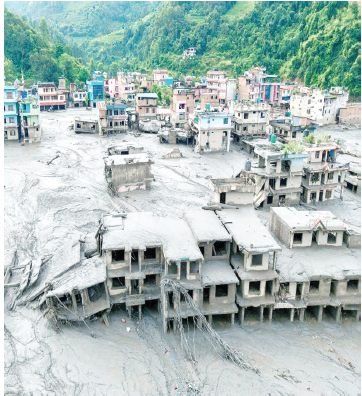
But strategic geography does not exist independently of ecological geography. Great Nicobar lies in a seismically active region and was profoundly altered by the 2004 Indian Ocean tsunami, which caused land subsidence and permanent changes to parts of its coastline. That history is not an incidental footnote; it is a warning embedded in the terrain. A mega-port, airport, power installation, industrial zone and large urban population must be evaluated not merely against normal operating conditions but against earthquakes, tsunamis, coastal erosion, sea-level rise and increasingly volatile tropical weather over the project’s full life.
Climate change has rendered obsolete the older assumption that nature is a passive backdrop and engineering the principal actor. Infrastructure is resilient only when the ecological systems around it remain functional. A power plant damaged by an earthquake would not be a self-contained engineering failure; an industrial accident after a tsunami could contaminate a marine ecosystem, disable strategic supply chains and create a humanitarian emergency. In such a setting, precaution is not an impediment to development. It is a condition of competent planning.
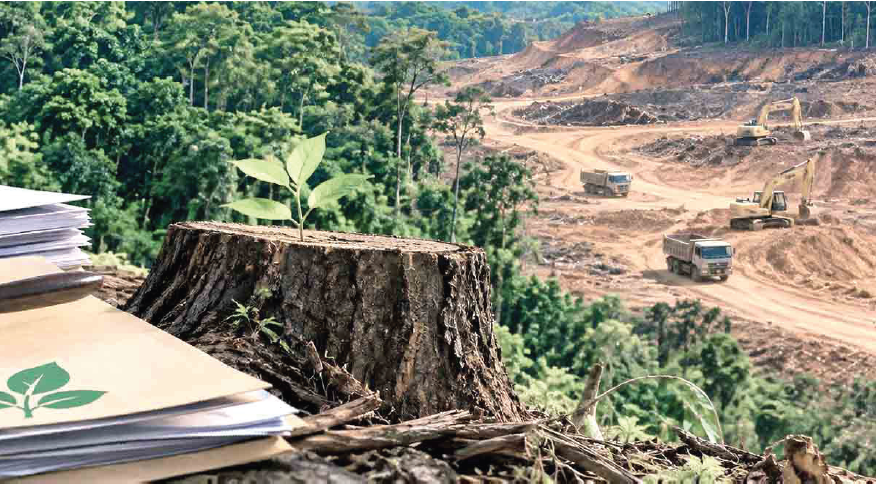
The forests at risk are equally central to the argument. Much of Great Nicobar forms part of a globally significant biosphere reserve containing tropical rainforest, coral reefs and species found nowhere else. A mature rainforest cannot be replaced by an equivalent number of saplings planted elsewhere. It is a web of soils, microorganisms, waterways, plants and animals accumulated over centuries. Its value lies in the relationships among these elements: the storage of carbon, regulation of water, stabilisation of soil, moderation of local climate and sheltering of biodiversity. Compensatory afforestation may satisfy an accounting requirement; it cannot reproduce an ancient island ecosystem.
The ecological concern extends from the forest to the sea. Galathea Bay, where the port is planned, is an important nesting ground for the giant leatherback turtle. Recent reports of unusually high nesting activity make the coastline’s biological significance harder, not easier, to dismiss. Dredging, reclamation, breakwaters, vessel movement and artificial lighting could alter the physical character of the bay and disturb access to nesting beaches. Proposed safeguards—seasonal construction restrictions, reduced lighting and turtle-guidance devices—deserve scientific scrutiny, but mitigation must not become a bureaucratic vocabulary for accepting damage whose scale and consequences remain uncertain.
Coral reefs pose a similar difficulty. Transplantation is often presented as a remedy for reef loss, yet a living reef is not a collection of detachable objects. It is a complex habitat built over long periods and connected to currents, sediments, fisheries and coastal protection. Nature does not reliably adapt itself to engineering timetables. The relevant question is therefore not whether mitigation measures appear in an environmental impact assessment, but whether they are supported by adequate, site-specific evidence and can preserve the ecological functions that construction would disrupt.
That distinction matters because the project’s environmental assessment has itself been contested. Critics have questioned the adequacy of baseline biodiversity studies, disaster-risk modelling and the treatment of protected coastal areas. Supporters point to statutory clearances, long-term monitoring commitments and the NGT’s refusal to interfere. The existence of regulatory approval, however, should not terminate public scrutiny. For a project spanning rainforest, tribal reserve, coastline and a tsunami-prone marine zone, procedural compliance is the beginning of accountability, not its end.
The most profound issue concerns the Shompen, a Particularly Vulnerable Tribal Group whose communities have maintained a distinctive relationship with the island’s forests and, in some cases, live in voluntary isolation. Their predicament poses an extraordinary democratic question: how does a state obtain consent from people whom it must not expose to potentially harmful outside contact? The impossibility of conventional consultation cannot be treated as a loophole. It deepens the state’s duty of care. The less a community can engage with formal institutions, and the more severe the possible consequences of intervention, the stronger the obligation to act with restraint.
The Shompen’s isolation is not an absence of rights. Their forests are not simply reserve land on an administrative map; they are the ecological basis of food, mobility, memory and culture. A vast influx of outsiders could bring disease, habitat fragmentation, cultural disruption and pressures that no welfare plan can fully anticipate. When an island of roughly 8,000 residents is envisioned as a settlement for hundreds of thousands, the change is not merely quantitative. It shifts the balance of power so decisively that the original inhabitants risk becoming marginal within their own homeland.
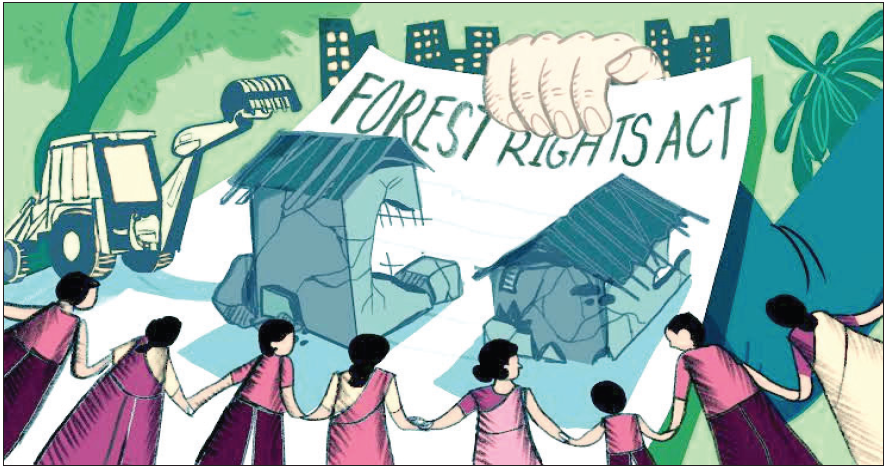
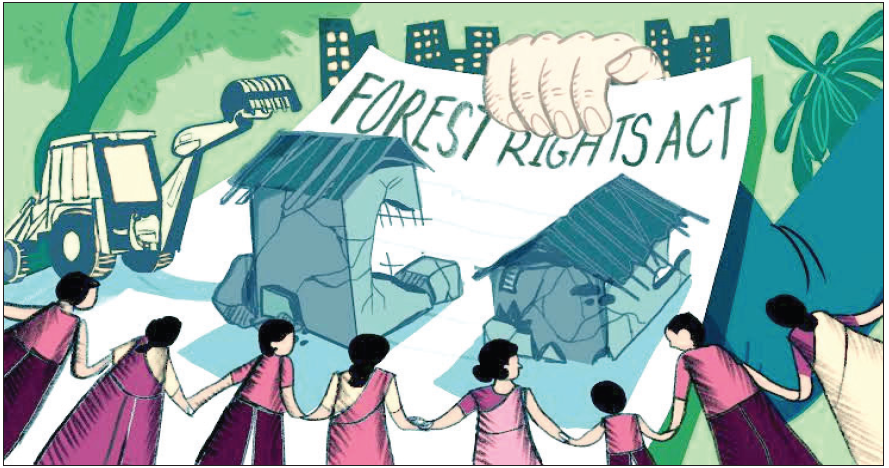
The controversy also tests India’s forest-rights framework. The Forest Rights Act recognises individual and community claims and gives the Gram Sabha an important role. The principle is sound; the difficulty lies in meaningful implementation. Consent is not a signature, a certificate or a meeting held after the direction of policy has already been fixed. It has substance only when affected communities receive intelligible information, possess genuine institutional space and retain the freedom to say no. Where voluntary isolation makes that process impossible, the presumption should favour protection from irreversible change.
International warnings about the project must be handled with both seriousness and proportion. In 2024, a group of genocide scholars warned of catastrophic consequences for the Shompen if the project proceeded. Such language should never be deployed casually; nor should it be dismissed merely because it unsettles a developmental narrative. A port can be redesigned, scaled down or built elsewhere. Capital can be redeployed. But if a people’s habitat, health or cultural continuity is destroyed, no subsequent expenditure can restore what has vanished. That is the meaning of irreversibility.
None of this requires India to abandon its strategic interests. It requires the government to demonstrate that the chosen scale, location and design are genuinely necessary. Could the port’s footprint be reduced? Could demographic expansion be sharply limited? Could alternative sites, phased development or distributed infrastructure achieve the essential objective with less damage? Have seismic and climate risks been independently modelled across the project’s full operating life? Have the legal and ethical claims of the Shompen and Nicobarese been resolved before construction makes the debate academic? These are not arguments against development; they are the tests of responsible development.
Modern economics is adept at assigning value to what can be exchanged in markets and far less capable of valuing what cannot be replaced.
The true cost of Great Nicobar cannot be calculated simply by adding construction expenditure and projected revenue. It must include the carbon and water services of the forest, the protective value of reefs and mangroves, the probability of disaster, the liabilities of maintaining a remote city and the social cost of transforming Indigenous territory. What appears profitable on a balance sheet may become ruinously expensive when ecological services disappear or hazards materialise decades later.
India’s ambition to become a major economic and maritime power is neither illegitimate nor undesirable. The country needs ports, energy, connectivity, investment and strategic infrastructure. But national power is not measured only by the capacity to build at unprecedented scale. It is also measured by the capacity to distinguish the necessary from the excessive, the remediable from the irreversible and national interest from administrative convenience. Restraint, in this context, is not timidity. It is statecraft.
The UN committee’s intervention need not be accepted as infallible to be useful. India is entitled to challenge sweeping assertions and defend decisions taken within its constitutional order. Yet criticism acquires value when it forces a nation to examine the assumptions beneath its own ambitions. Great Nicobar deserves such re-examination: of the forest and coast, the earthquake fault lines and turtle beaches, the demographic arithmetic and, above all, the future of the Shompen.
A credible way forward would combine independent scientific review, publication of non-sensitive evidence, transparent disaster-risk analysis, rigorous enforcement of clearance conditions and a willingness to redesign the project if the data requires it. Strategic confidentiality cannot become a blanket shield against environmental accountability. Nor should environmental concern be used to deny the state every legitimate security option. The task is reconciliation: infrastructure sufficient for national purposes, ecological limits grounded in science and protections strong enough to preserve Indigenous life.
The deepest question raised by Great Nicobar is not whether India should develop, but what kind of development a confident republic should consider worthy of itself. Climate change has shown that nature is not an infinite warehouse of resources. The history of Indigenous dispossession has shown that communities cannot be reduced to obstacles standing in the path of plans designed elsewhere. Great Nicobar brings these lessons together because its most consequential costs would fall on those with the least political power: a fragile ecosystem, a small Indigenous population and generations not yet present to contest the bargain.
India may yet build a maritime gateway of consequence and strengthen its position in the Indo-Pacific. But Great Nicobar should not become a monument to the exhausted idea that progress is proved by conquest. It could instead become evidence of a more mature republic—one that subjects ambition to science, power to law and strategy to human dignity.
Great Nicobar cannot be treated as expendable terrain simply because the state has the power, the money and the machinery to transform it. If the government cannot demonstrate—openly, independently and beyond bureaucratic assertion—that this project will not destroy an irreplaceable ecosystem or imperil the Shompen, it must halt, reassess and redesign it. Anything less would not be development; it would be an irreversible act of ecological and constitutional recklessness, carried out in the name of national interest but paid for by a forest, a people and future generations who were never given a meaningful voice.
(Author, a well-recognised senior journalist, is a regular columnist with TEW.)




[[comment.comment_text]]