A Pause or A Lull Before the Storm?

 6 months ago
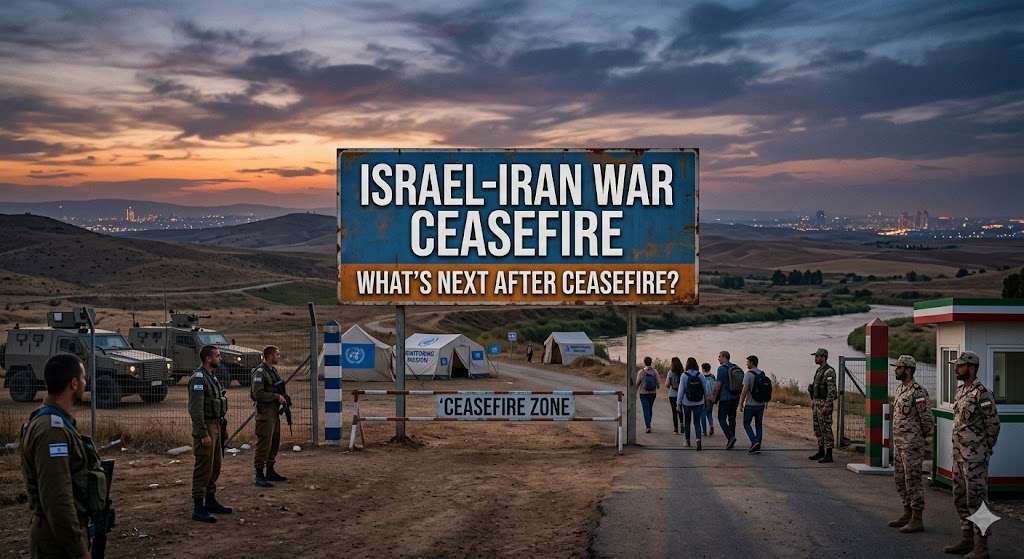
The guns have fallen silent, but the air remains thick with the scent of cordite and the heavy weight of mutual suspicion. On the night of April 7, 2026, the world exhaled a collective sigh of relief as a two-week ceasefire between the United States and Iran took hold, narrowly averting a catastrophic escalation that threatened to dismantle regional stability and global energy markets. Yet, as both Washington and Tehran rush to claim victory, the fundamental question remains: is this the beginning of a durable peace, or merely a tactical breather before a more devastating tempests?
The Broker in the Middle
In a geopolitical landscape defined by polarization, the emergence of *Pakistan* as the primary mediator is perhaps the most striking development of this 38-day conflict. While traditional Western diplomacy faltered, Islamabad leveraged its unique position—sharing a 900-kilometer border with Iran while maintaining deep-rooted, albeit complex, ties with Washington.
On *Truth Social*, President Donald Trump explicitly credited Pakistani Prime Minister Shehbaz Sharif and Field Marshal Asim Munir for their intervention. Trump noted that he agreed to suspend his planned "Power Plant and Bridge Day"—a threat to annihilate Iranian infrastructure—only after Islamabad presented a "workable basis" for negotiations. Simultaneously, Iranian Foreign Minister *Seyyed Abbas Araghchi* took to social media to thank Pakistan for its mediation, confirming that Tehran’s 10-point proposal had reached the Oval Office via the Pakistani channel. This diplomatic triumph for Islamabad has effectively reshaped the regional "high table," leaving neighbouring powers like India to navigate a newfound sense of strategic isolation.
Victory by Definition
The ceasefire’s longevity is threatened by the vastly different interpretations of "victory" being broadcast by both capitals.
The Trump Narrative:
For the White House, the victory is operational. By forcing a conditional opening of the *Strait of Hormuz*, Trump claims to have broken a blockade that was strangling the global economy. To his base, the suspension of strikes is a show of "strength through restraint," having brought Iran to the table under the threat of "complete demolition."
The Tehran Narrative: For the Islamic Republic, survival is synonymous with success. After 38 days of high-intensity bombardment, the state apparatus remains functional. Minister Araghchi’s rhetoric emphasizes that Iran has not surrendered its sovereignty; rather, it has forced the U.S. to consider a 10-point plan that includes the withdrawal of American combat forces and the recognition of Iran’s nuclear enrichment rights.
The 10-Point Friction
The "workable basis" Trump alluded to is a minefield of non-starters. Iran’s 10-point proposal is not a white flag; it is a transformative manifesto. It demands:
1. Total Sanctions Relief:The lifting of all primary and secondary sanctions.
2. Nuclear Legitimacy:
Formal acceptance of uranium enrichment.
3. Regional Hegemony: Continued Iranian control over the Strait of Hormuz and the withdrawal of U.S. forces.
4. Reparations: Payment for war damages and the cessation of hostilities against the "Islamic Resistance" in Lebanon.
While the U.S. has accepted these points "in principle" to secure the ceasefire, the distance between "principle" and "policy" is vast. It is difficult to envision any U.S. administration, let alone one led by Trump, agreeing to pay war damages to an adversary or withdrawing from regional bases under duress.
A Fragile Respite
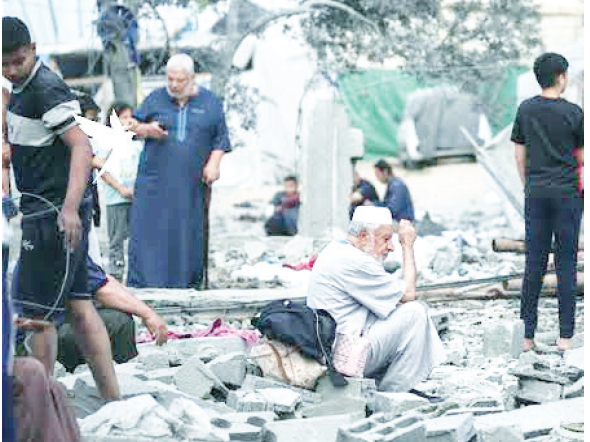
The statistics of the past 38 days are grim: at least 20 American soldiers dead, over 1,500 Iranians killed—including 164 schoolgirls—and a global economy reeling from trade disruptions. The 14-day window beginning April 10 in Islamabad is a race against time.
The ceasefire is currently tethered to a single, fragile thread: the Strait of Hormuz
Iran has agreed to "allow passage" under military coordination, but this is a conditional gesture. If negotiations in Islamabad stall over the more contentious demands—such as the status of Hezbollah in Lebanon or the IAEA resolutions—the "lull" will almost certainly end.
For now, the world watches Islamabad. The ceasefire has provided a respite from the immediate threat of a third World War, but without a fundamental shift in the zero-sum logic governing U.S.-Iran relations, this pause may simply be the eye of the storm—a brief moment of calm before the winds of war return with renewed fury.
(Author is a former member of the history faculty at St. Xavier’s College, Mumbai.)




[[comment.comment_text]]