Like a Water Droplet on a Lotus Leaf

 2 hours ago
Why India’s Fourth Pillar Needs a Stronger Constitutional Foundation to Reclaim Its Purity
The Anatomy of a Broken Metaphor
For generations, the media has proudly described itself as the Fourth Pillar of democracy, placing itself alongside the Legislature, the Executive and the Judiciary. The expression reflects journalism’s vital role in informing citizens, scrutinising authority and safeguarding democratic accountability. Yet, behind this celebrated description lies a fundamental contradiction: while the other organs of the state derive their authority, responsibilities and limitations from constitutional and statutory provisions, the media’s professional accountability remains fragmented and inadequately enforceable.
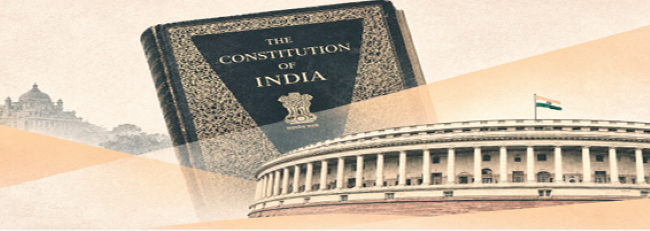
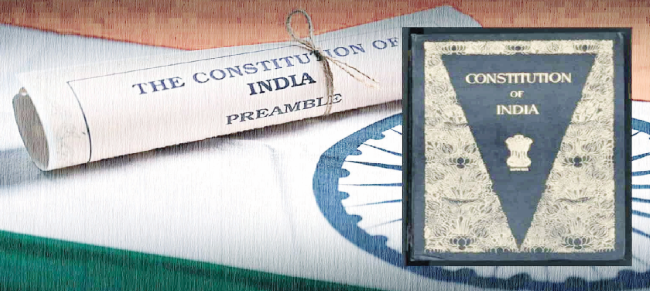
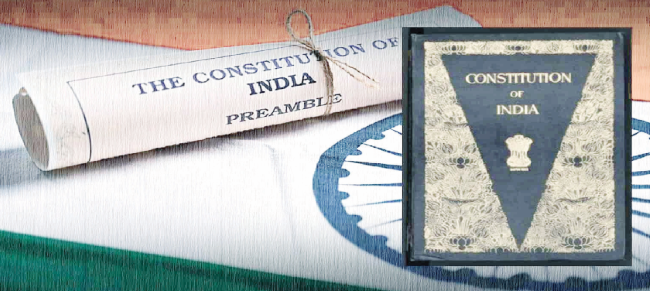
The Constitution of India recognises freedom of the press through Article 19(1)(a), which guarantees freedom of speech and expression. However, unlike the other institutions of democracy, the press has no distinct constitutional framework defining its institutional responsibilities and professional obligations. Its independence is protected, but its accountability remains largely dependent on self-regulation and limited statutory arrangements.
The consequences are increasingly visible in India’s contemporary media landscape. Switch on a prime-time television debate, visit a news portal or scroll through social media, and citizens are frequently confronted not with an objective account of events but with competing narratives, sensationalism and manufactured outrage. Facts increasingly compete with political loyalties, corporate interests and the commercial pursuit of audience engagement.
An illuminating metaphor for the ideal of journalism can be found in India’s philosophical tradition. The lotus, or Kamal, grows in muddy waters but remains remarkably untouched by its surroundings. A droplet of clean rainwater resting on its leaf retains its shape, clarity and purity, refusing to mingle with the murky water beneath it.
Journalism should aspire to precisely this quality. A reporter must enter the turbulent waters of political conflict, corporate interests, social disorder and human suffering. Yet the information delivered to the public must remain free from personal prejudice, ideological manipulation and commercial interference. The journalist may investigate the mud, but the news must not become muddy.
Restoring this ideal requires more than appeals to professional morality. It calls for a serious examination of the institutional foundations of India’s Fourth Estate.
The Asymmetry of Accountability
The first step is to understand the difference between constitutional freedom and professional accountability.
The Executive operates within an elaborate framework of constitutional and statutory obligations. Articles 309 and 311 provide the constitutional basis for regulating public services and protecting civil servants against arbitrary dismissal or removal. Conduct rules prescribe standards relating to integrity, impartiality, conflicts of interest and professional behaviour. Violations can attract disciplinary proceedings, suspension, dismissal and, where appropriate, criminal prosecution.
The legal profession is similarly governed by the Advocates Act, 1961. The Bar Council of India and State Bar Councils possess statutory authority to examine professional misconduct and impose disciplinary penalties, including suspension or removal from the rolls.
Journalism, however, follows a substantially different arrangement. Its independence is essential to democracy, and government control through licensing or political supervision would threaten the freedom that the press exists to defend. Nevertheless, independence cannot mean the complete absence of enforceable professional responsibility.
The Press Council of India, established under the Press Council Act, 1978, is intended to preserve press freedom and maintain journalistic standards. It can investigate complaints and issue warnings, admonitions or censures. However, its punitive powers are limited, and its jurisdiction does not comprehensively cover television and the expanding digital news ecosystem.
Consequently, India has a media institution with enormous influence over public opinion, elections, reputations and institutional credibility, but without a uniform and sufficiently effective accountability framework across platforms.
The objective should not be to subordinate journalism to the state but to establish an independent system in which freedom and responsibility reinforce each other.
The Collapse of the Three Tiers of Journalism
One of the most damaging developments in contemporary journalism is the disappearance of clear distinctions between reporting, analysis and opinion. A healthy media ecosystem requires three identifiable forms of communication, each serving a different democratic purpose.
The first is factual reporting. This is the foundation of journalism and the responsibility of the reporter on the ground. Its task is to establish what happened, who was involved, where and when the incident occurred, and how it unfolded. The emphasis must remain on verifiable information and factual accuracy.
Consider the collapse of a major infrastructure project. The initial report should establish the location, time, casualties, agencies involved and officially verified circumstances. It should not assign blame before the evidence has been examined or introduce speculation to attract attention.
The second is analytical journalism. Once the facts are established, the journalist must investigate the circumstances behind the incident. Why did the structure collapse? Were safety standards violated? Were previous warnings ignored? Did administrative negligence or defective construction contribute to the failure?
This form of journalism goes beyond recording events. It examines institutional failures, consults documentary evidence, questions public authorities and gives affected citizens a voice. It is essential to democratic accountability.
The third is opinion and ideological commentary. Here, the writer is entitled to interpret events through a political, economic, philosophical or social perspective. An opinion writer may advocate reforms, criticise government policy or defend a particular ideological position. Such freedom is fundamental to a pluralistic democracy.
The problem arises when these categories are mixed without disclosure. A reporter’s personal conclusions become embedded in headlines, analytical assumptions are presented as established facts, and political commentary is packaged as objective news.
Traditionally, responsible newspapers maintained a visible distinction between straight news, analytical features and editorial or opinion pages. This separation helped readers understand the nature of the material they were consuming.
Today, that editorial firewall is weakening. Instead of allowing citizens to arrive at their own judgments, sections of the media appear to decide the conclusion first and select information accordingly. The result is an erosion of the public’s ability to distinguish information from persuasion.
From Responsible Gatekeeping to Unaccountable Media Platforms
The deterioration of journalistic standards has not occurred overnight. It reflects a gradual shift from editorial responsibility towards commercialisation, political polarisation and the growing influence of electronic and digital platforms.
There was a time when international broadcasters such as the BBC enjoyed considerable credibility among Indian audiences. During the Emergency of 1975–77, when domestic media operated under severe restrictions, many Indians turned to international radio broadcasts for information. Journalists such as Mark Tully became associated with careful reporting, measured presentation and an emphasis on facts.
India’s own journalistic history offers equally important lessons. The Bofors investigation associated with journalist Chitra Subramaniam demonstrated the value of painstaking investigative work, documentary evidence and persistence in exposing alleged corruption at the highest levels. It also highlighted the pressures investigative journalists can face from powerful political and corporate interests.
Corporate ownership and commercial considerations have long influenced editorial priorities. When ownership interests, advertising revenues or political alignments determine what can be reported and how it is presented, editorial independence becomes vulnerable.
This credibility deficit is particularly damaging when the media raises serious questions concerning defence transactions, surveillance, citizenship legislation or the functioning of constitutional institutions. Even legitimate investigations can lose their persuasive force when audiences perceive the reporting as an extension of partisan politics.
This is the paradox of contemporary journalism: excessive politicisation can weaken even the most important public-interest investigations. Once audiences begin to distrust the messenger, the message itself risks being dismissed.
The digital revolution has further complicated the situation. YouTube channels, online discussion platforms and independent podcasts have democratised public discourse. They enable journalists, academics, retired judges, former civil servants and subject experts to reach audiences without depending on conventional media organisations.
This development is valuable and should not be discouraged. However, the absence of established editorial procedures on some platforms has also encouraged speculative commentary, unverified allegations and sensational discussions presented as informed debate.
The danger is particularly acute when allegations are made against individuals or institutions without adequate evidence, followed by no meaningful correction when those allegations prove unfounded. A discussion programme may move to another controversy the following day, while the reputational damage caused by the previous broadcast remains.
Digital journalism deserves the same freedom as conventional journalism, but freedom must be accompanied by transparency, verification and responsibility.
Building a Constitutional and Institutional Framework
How can India restore public confidence in journalism without creating a state-controlled media establishment?
The answer lies in distinguishing between the constitutional protection of press freedom and the regulation of professional malpractice. The government must never be allowed to determine what journalists may investigate or publish. Equally, media organisations cannot claim immunity from accountability merely because they exercise freedom of expression. A carefully designed institutional framework could address this imbalance.
First, press freedom should receive more explicit constitutional recognition.
Article 19(1)(a) already protects freedom of the press through the broader guarantee of freedom of speech and expression. Nevertheless, India should consider an explicit constitutional articulation of press freedom, recognising the institutional importance of independent journalism and providing appropriate safeguards for its functioning.
Such recognition could strengthen protections for confidential journalistic sources, investigative material and professional independence, subject to constitutionally valid limitations. It should also establish safeguards against arbitrary interference, intimidation and disproportionate searches or seizure of journalistic material.
The purpose must be to protect journalism from political coercion, not to create privileges that place journalists above the law.
Second, India needs a stronger and genuinely independent National Media Council.
The existing Press Council of India could be restructured or replaced by a National Media Council with jurisdiction extending across print, television and digital news organisations.
Its institutional independence would be crucial. Appointments should follow a transparent and pluralistic process involving representatives of the judiciary, the opposition, independent journalism and other relevant professional institutions. No single political authority should enjoy unilateral control over its composition.
The proposed council should formulate a common professional code covering factual verification, conflicts of interest, corrections, paid news, sensationalism and responsible reporting of ongoing judicial proceedings.
It should not license individual journalists or determine which opinions may be expressed. Its primary responsibility should be to hold publishers, broadcasters and organised news platforms accountable for demonstrable professional violations.
A graduated system of penalties could include formal findings of misconduct, mandatory corrections, public apologies and proportionate financial sanctions for serious or repeated violations. Any exceptional restriction on broadcasting or publication should be subject to stringent legal safeguards and judicial review. The objective is deterrence, not intimidation.
Third, the right to correction and reply must become effective.
An ordinary citizen whose reputation has been damaged by demonstrably false or misleading reporting often lacks the financial and legal resources to challenge a powerful media organisation. Defamation proceedings can be prolonged and expensive, leaving the individual without timely relief.
A statutory right to reply and correction could provide a practical remedy. Where a factual error is established, the media organisation should be required to publish a correction with prominence reasonably comparable to that of the original report.
For serious errors, a time-bound mechanism could require correction within 48 hours of verification, with an expedited review process where the matter is disputed. Failure to comply without reasonable justification could attract proportionate penalties. Such a mechanism would protect citizens without requiring every aggrieved individual to pursue years of litigation.
Fourth, editorial transparency must become a professional obligation.
Readers and viewers should be able to distinguish between news reporting, analysis, opinion, sponsored content and political commentary. Media organisations should disclose significant conflicts of interest, establish accessible grievance-redressal mechanisms and publish corrections transparently.
This distinction is particularly important in the digital age, where headlines, video thumbnails and short extracts often circulate independently of the original report. A transparent media environment would help citizens assess information rather than merely react to it.
Returning to the Purity of the Lotus Leaf
The crisis facing contemporary journalism is ultimately a crisis of credibility. It emerges when the pursuit of truth becomes entangled with the pursuit of political influence, corporate advantage and commercial popularity.
Journalism is not expected to be infallible. Reporters can make mistakes, investigations can lead to incomplete conclusions, and editorial judgments can legitimately differ. Nor should the press be discouraged from questioning governments, exposing corruption or investigating the functioning of constitutional institutions. Such scrutiny is indispensable to democracy.
What citizens have a right to expect, however, is that facts will not be deliberately distorted, allegations will not be presented as established truths, and personal or political prejudices will not masquerade as independent reporting. The Fourth Estate must understand that constitutional freedom is not merely a privilege to be exercised; it is a responsibility to be honoured.
The mud will always exist. Political competition will remain intense, corporate interests will continue to influence public life, and digital algorithms will keep rewarding sensationalism. Journalism cannot remain outside these realities. It must enter them, investigate them and expose them.
But it must not become indistinguishable from them.
That is the enduring lesson of the lotus leaf. Its strength lies not in avoiding the muddy waters but in retaining its purity despite growing in them. India’s media must rediscover the same institutional and moral discipline.
A constitutional foundation, an independent accountability mechanism and a clearly defined distinction between facts, analysis and opinion can help restore that discipline. The ultimate objective is neither a submissive press nor an unaccountable one, but a free, fearless and responsible Fourth Estate.
When information finally reaches the citizen, it should possess the clarity of a pristine water droplet resting on a lotus leaf—transparent, independent and untouched by the muddy waters from which it has emerged.
(K. N. Laxminarayan is a retired Deputy Conservator of Forests from Shimoga, Karnataka. During his career in the Indian Forest Service, he worked on environmental governance, ecosystem management and the reconciliation of public policy with grassroots environmental concerns. He also takes a keen interest in constitutional jurisprudence, institutional accountability and public-interest reforms.)






[[comment.comment_text]]