From Puppyhood to Paws Policies & Politics

 28 minutes ago
- The Many Worlds of Pushp Ranjan's "Mera Munnu"
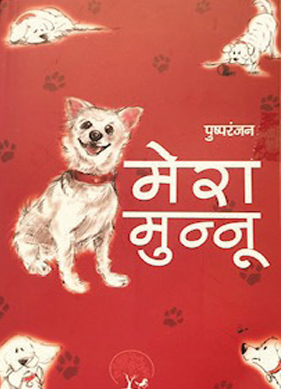
Author Pushp Ranjan’s book "Mera Munnu" (Hindi)", emerges as a multifaceted work in terms of its subject matter, structure, and presentation, attempting to blend the intimacy of a personal memoir with broader social, cultural, historical, and contemporary concerns. The emotional core of the book is woven around "Munnu," a tiny puppy brought home in January 2014, yet the author’s vision is not confined merely to the domestic life of a pet. Alongside the poignant story of Munnu’s daily routine, temperament, habits, his bond with family members and neighbors, the companionship he offered during the COVID era, and eventually his illness and farewell, the author weaves numerous global and Indian dimensions associated with dogs into a single volume. In this way, the work presents a blend of emotional memoir, feature reporting, cultural commentary, and contemporary discourse.
Looking at the core strengths and thematic scope of the book, its thematic diversity stands out as its most prominent feature. The opening chapters offer a natural portrayal of Munnu’s arrival, his puppyhood, naming, food habits, playtime, and the apartment society environment, intertwined with childhood reminiscences and memories of other animals raised in the family. Moving forward, the book explores the early history of the domestication of dogs, Arctic and sledding traditions, characteristics of the Samoyed breed, as well as indigenous Indian breeds and historical-literary references. Chapters on the world’s richest dogs, famous tales of loyal dogs, and various religious and folk traditions—including Hinduism, Buddhism, Islam, Christianity, ancient Egypt, Mesopotamia, and dog temples in India—further expand this cultural canvas. In contemporary contexts, the author also incorporates statistics on the pet economy, the illegal dog meat trade, the historical debate on non-violence and the culling of stray dogs through Mahatma Gandhi’s writings, the plight of dog hostels and veterinary clinics, the cruelty of dog fighting, political anecdotes, Supreme Court directives, challenges surrounding pet cremation in metropolitan cities, and a directory of prominent animal welfare organizations (NGOs).
A conversational and effortless prose style is one of the book’s strong points. The natural integration of commonly used Urdu and English words into colloquial Hindi brings liveliness and warmth to the memoirs. In particular, episodes depicting Munnu’s playfulness, his banter with family members, his companionship during COVID-19 and its aftermath, and his final illness touch the reader deeply. Furthermore, the inclusion of data, surveys, legal provisions, urban cremation facilities, and lists of NGOs lends the book the utility of an informative reference guide.
However, when evaluated critically, several structural and editorial limitations inherent in its expansive scope also become evident. First, there is an issue of generic balance. A book that begins as an intimate pet memoir gradually transforms into essays and informational compilations on history, theology, economics, crime reporting, and politics. In the effort to bind such diverse subjects into a single thread, the central autobiographical narrative loosens at several points, making the work appear more like an anthology of varied topics than a tightly knit memoir.
Second, the limitation in factual and analytical depth draws attention. While many chapters offer rapid compilations of statistics, incidents, and references from across different countries, there is a greater tendency toward stringing together details rather than offering deep analysis. Where sensitive or complex subjects arise—such as the debate on non-violence and culling in the context of Mahatma Gandhi’s writings, policy and judicial controversies over stray dogs, or political statements and episodes—the historical, legal, and ideological backgrounds could have been examined with greater balance and nuance.
Third, structural repetition and a lack of editorial tightness are felt in several places. Certain details regarding Munnu’s habits, society residents, and other animals are repeated many a times, making some sections appear lengthy and repetitive. Meanwhile, several sections on the pets of film personalities or politicians read like brief reports or compilations of external references, lacking deeper literary richness. At the level of language and printing as well, greater editorial refinement is needed in the transliteration of English words.
Overall "Mera Munnu" is an emotional, informative, and multidisciplinary endeavor that brings together love for animals and contemporary concerns. It is an uplifting, heartfelt, and richly informative work that celebrates the deep bond between humans and animals while thoughtfully engaging with contemporary social and cultural conversations. Through its warmth, sincerity, and wide-ranging curiosity, the book leaves readers with a lasting sense of empathy and appreciation for our four-legged companions. It stands as an engaging and meaningful contribution that will resonate strongly with pet lovers and curious readers alike.
(Author, a PhD from School of International Studies, JNU, is a senior TEW editorial adviser and columnist.)









[[comment.comment_text]]