Faiz and Sahir: Twin Flames of Urdu Poetry, Resistance, and Romance

 19 minutes ago
Two Poets, One Turbulent Century
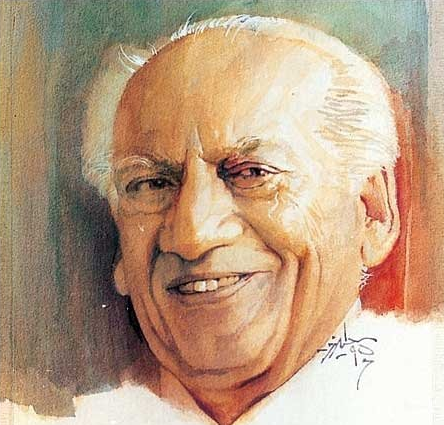
The 20th century produced two towering titans of Urdu literature whose words continue to echo across the subcontinent: Faiz Ahmad Faiz and Sahir Ludhianvi. Born a decade apart in undivided Punjab, both poets were shaped by colonial repression, the Progressive Writers’ Movement, and the cataclysmic tragedy of Partition.
While Faiz became the moral conscience of Pakistan—its poet of Marxist resistance and tender revolution—Sahir emerged as India’s uncompromising humanist, embedding socially conscious poetry in both literature and cinema. Together, they transformed personal longing into political awakening, and their verses remain rallying cries from Lahore to Shaheen Bagh.
Shared Roots in a Progressive Revolution
Faiz and Sahir rose through the Progressive Writers’ Association (PWA), whose early fire—lit in the 1930s by writers like Sajjad Zaheer, Mulk Raj Anand, and Premchand—aimed to confront colonial rule, class oppression, and social injustice.
Faiz, then a lecturer at Amritsar’s MAO College, absorbed Marxist thought alongside global anti-fascist movements. Sahir, a rebellious voice at Lahore’s Government College, edited magazines like Savera and published Talkhiyaan (1945), a biting critique of exploitation and feudal hypocrisy.
Both poets carried emotional wounds into their art. Faiz lost his father young and endured imprisonment during Pakistan’s Rawalpindi Conspiracy Case in 1951. Sahir survived a traumatic custody battle between his parents, living through material struggle and displacement after Partition. These personal fires merged with the political flames of the era, sharpening their resolve to speak for the oppressed.
Their anxieties and aspirations for a just world overlapped. Sahir’s vision of a “beautiful tomorrow” in Pyaasa met Faiz’s elegiac cry in Subh-e-Azadi, where dawn arrives tainted but still hopeful. Though atheists, both invoked spiritual idioms—Faiz’s Sufi-inflected metaphysics and Sahir’s bhajan-like cadences—to elevate human dignity beyond borders of creed.
Two Distinct Voices: Symbolism and Directness
Both poets fused classical ghazal eloquence with the nazm’s modern urgency, but their methods diverged.
Faiz: The Symbolist of Love and Revolution
Faiz wove classical imagery—mehboob, saba, raqeeb—into multi-layered metaphors of political defiance. His early romanticism in Naqsh-e-Faryadi blossomed into poetry where love became synonymous with liberation.
His celebrated Nuskha-e-Wafa captures an intimate longing steeped in timeless beauty:
“Raat yun dil mein teri khoi hui yaad aayi
Jaise virane mein chupke se bahaar aa jaye”
Last night, your forgotten memory entered my heart / As spring quietly descends upon a barren land.
But in Mujh Se Pehli Si Mohabbat, he pivots from romance to social suffering:
“Mujh se pehli si mohabbat mere mehboob na maang
Aur bhi dukh hain zamane mein mohabbat ke siwa”
Do not ask me for that first love—I cannot.
There are other sorrows in this world beyond love alone.
Sahir: The Truth-Teller of Pain and Protest
Sahir’s style was lucid, declarative, and often caustic. His verses carried the sting of personal heartbreak and the rage of a socialist confronting power. Unlike Faiz’s veiled metaphors, Sahir’s direct humanism spoke without ornamentation.
His critique of historical grandeur in Taj Mahal became an indictment of exploitation:
Kisi ko dafn karne ki tameel thi yahaan / Aur ek taj ko chhupane ka bahana mil gaya
This place was meant for burying someone—
And it became an excuse to conceal a crown.
While Faiz’s lines drift like revolutionary dreams, Sahir’s land as sharp blows—brief, truthful, unforgettable.
Romance, Disillusionment, and the Fire of Injustice
Love, for both poets, became a mirror reflecting societal inequalities rather than a refuge from them.
Faiz’s romantic melancholy gradually universalised into a collective suffering.
Sahir’s disappointments in love—most famously his unrequited affection for Amrita Pritam—deepened his tone of disillusion.
Both wielded poetry as political weaponry.
Faiz’s Hum Dekhenge remains the subcontinent’s anthem of resistance:
“Hum dekhenge
Lazim hai ke hum bhi dekhenge…”
We shall see—
Certainly we too shall see…
Its spiritual cadence—Bass naam rahega Allah ka—consoled a nation under dictatorship, turning faith itself into rebellion.
Sahir’s revolutionary voice, secular and militant, echoed similarly in Aavaaz-e-Adam:
“Dabegi kab talak aavaaz-e-Aadam hum bhi dekhenge
Rukenge kab talak jazbaat-e-barham hum bhi dekhenge”
How long will the human voice be crushed? We too shall see.
How long will rebellious passions be restrained? We too shall see.
Where Faiz’s revolution embodied divine and earthly justice, Sahir’s called for a class struggle purified of all metaphysical haze.
Life, Struggle, and the Medium of Their Message
Faiz’s life in Pakistan oscillated between teaching, journalism, trade unionism, and jail cells. Awarded the Lenin Peace Prize and nominated twice for the Nobel, he became a global symbol of anti-imperialism and poetic resistance.
Sahir, settling in Bombay (now Mumbai), transformed Hindi cinema through lyrics that exposed inequality, communalism, and war. His Pyaasa, Naya Daur, Dhool Ka Phool, and Kabhi Kabhie songs carried progressive messages to millions—an achievement unmatched by any Urdu poet.
Sahir critiqued war while admiring soldiers; Faiz confronted dictatorships head-on. Sahir democratized dissent through cinema; Faiz dignified revolution through metaphor.
One wrote from prison yards; the other from film studios. Yet their visions met: justice must triumph.
Enduring Legacies Across Borders
Faiz’s presence looms over Pakistan’s conscience. Bol—“Bol ke lab azad hain tere”—became the soundtrack of protest movements, from the CAA demonstrations in India to anti-military rallies in Lahore.
Sahir’s reach flourishes in India’s streets and cinema. His words animate farmer protests and student movements; his songs remain woven into the nation’s emotional memory.
Their translations—Victor Kiernan for Faiz, Akshay Manwani for Sahir—carry them further into global literary consciousness.
If Faiz is the philosopher-poet of revolution, Sahir is the uncompromising chronicler of human truth.
Why They Endure
Faiz and Sahir lit two adjoining torches in the long night of South Asia’s history.
One wrote of revolution as a garden of eternal spring;
the other described resistance as a battlefield of wounds and hope.
Together, they turned shayari into solidarity:
poetry that speaks truth to power, exposes injustice, consoles the oppressed, and envisions an equal world.
Their verses remind us—
aur bhi dukh hain—there are countless sorrows in this world.
But as long as poets sing of freedom,
the dawn, however stained, will continue to arrive.
(Author is a former member of the history faculty at St. Xavier’s College, Mumbai.)










[[comment.comment_text]]