RAC on the Horizon: Will Three Nuclear Powers Shape the New Global Balance?
 2 weeks, 6 days ago
India made an impressive display of its technological and diplomatic capabilities at the BRICS summit. Prime Minister Narendra Modi presented the Unified Payments Interface (UPI) on a global platform, earning appreciation from BRICS members. Russia, too, signalled its intention to take ties with India to a higher level. President Vladimir Putin offered cooperation in fast breeder reactors, nuclear power plants and technology transfer. At the same time, he spoke of the possibility of an "IRC" triangle involving India, Russia and China.
Yet another triangle raises a far more consequential question, the one poised to become 'RAC' the grouping of Russia, America, and China. The contradiction is striking. Russia regards India as a strategic partner, while simultaneously exploring a possible power configuration that does not include India. That tension could become central to understanding the emerging crisis in the global order.
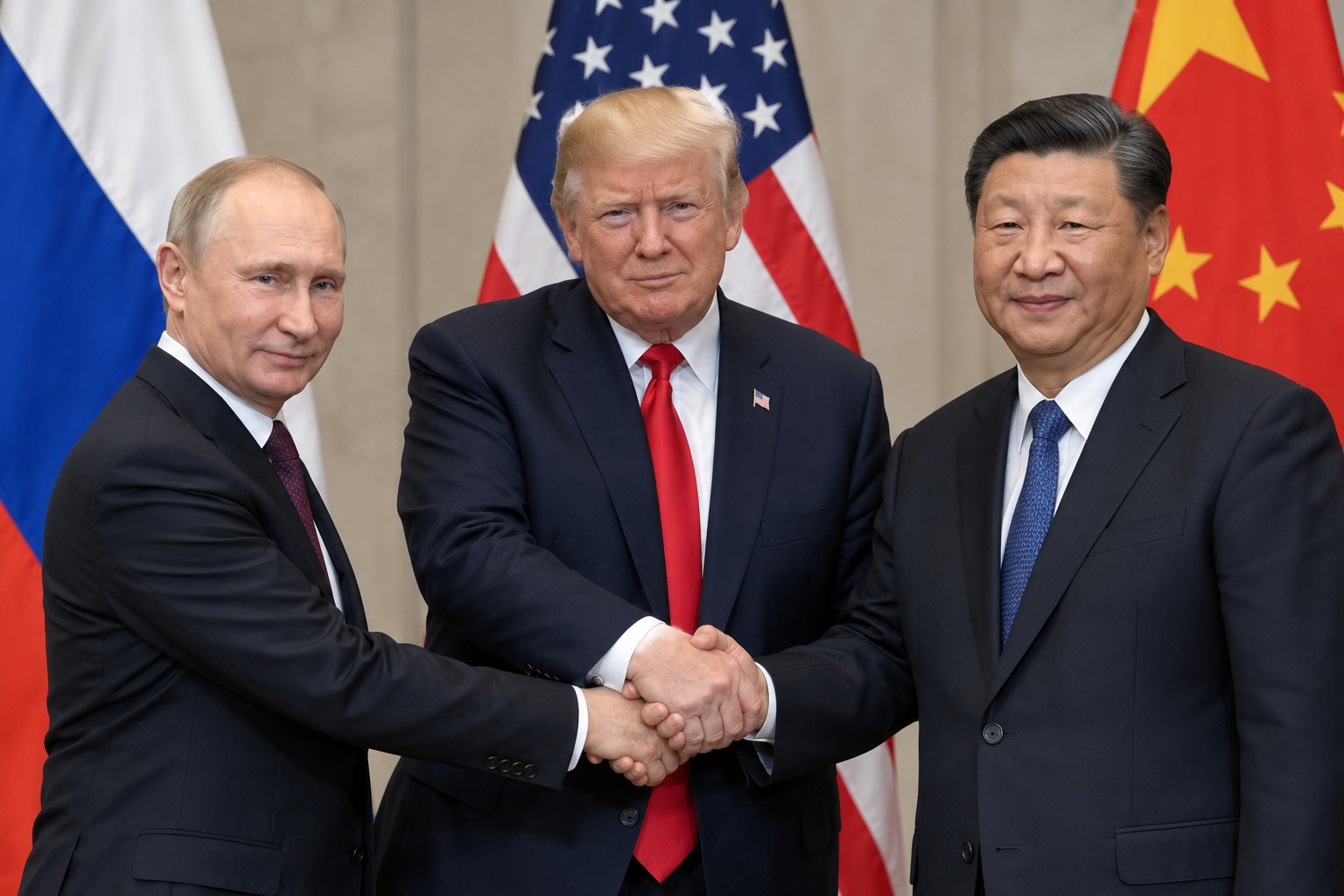
According to Kremlin, Putin, US President Donald Trump and Chinese President Xi Jinping may come together for a trilateral meeting during the Asia-Pacific Economic Cooperation summit scheduled for November. All three are leaders of superpowers (RAC) possessing enormous nuclear capabilities and considerable economic, military and technological weight. If such a meeting remains merely a forum for dialogue, it would be unremarkable. But if it evolves into a platform for negotiating the contours of global power, its consequences could extend far beyond the three countries, affecting the relevance of the United Nations, G7, G20 and BRICS.
The more disturbing possibility is that RAC could embody a return to spheres-of-influence politics. Could the 21st century world once again be divided among a few major powers? America could seek to consolidate its influence across North and South America, Greenland and the Atlantic; Russia could assert its role in Europe and Africa; and China could seek primacy across Asia and the wider Indo-Pacific, including Australia-Pacific strategic space.
I If such a vision becomes policy, it would represent not a new form of multilateralism but the return of power-driven imperialism. The proposed RAC meeting could, in the worst-case scenario, become an attempt to create a new "command centre" for the 21st century.
The imagery recalls the world of Mario Puzo's ‘The Godfather,’ where powerful dons divide territories to manage competition and impose their terms on others. The difference is profound that this time, the territory at stake would not be an underworld market, but the global order itself.
This raises the most important question for India. Where does New Delhi fit into such a configuration? India is the world's most populous country, one of the fastest-growing major economies and one of the largest consumer markets. Its strategic significance stretches from the Indian Ocean to Southeast Asia and the wider Global South. If three major nuclear powers were to sit behind closed doors and establish priorities for the international system, treating India merely as a "regional power" expected to adjust to their decisions would pose a serious strategic challenge.
India's worldview is also fundamentally different from that of the three powers. Prime Minister Modi has repeatedly argued that this is not an era of war. India's preferred vocabulary is dialogue, development, economic cooperation and strategic autonomy. The United States, Russia and China, however, have each used military power, coercion or strategic pressure as important instruments of foreign policy in different circumstances.
Russia remains deeply involved in the Ukraine war. American policy in recent years has also been associated with military intervention, sanctions and pressure politics. China provides military support to Pakistan while maintaining pressure on India through the unresolved boundary dispute. Its position on Taiwan has become increasingly assertive. In conflicts involving Iran and West Asia, too, the three powers have pursued distinct strategic interests. It is therefore difficult to assume that any emerging understanding among them would be motivated solely by the pursuit of global peace.
The most consequential dimension of RAC, however, may lie beyond military power, in technology and economic control. Semiconductors, advanced microchips, artificial intelligence, quantum systems and rare-earth processing will increasingly determine the foundations of global power. The United States has considerable strength in advanced computing; China dominates large parts of manufacturing and rare-earth processing; and Russia possesses major leverage in energy and commodities. Any understanding among the three in these sectors could reshape global supply chains.
This is where the spectre of a "corporate cartel" emerges, where a world in which powerful states, instead of competing openly, negotiate who controls which technology, resources or markets. Such an arrangement could severely constrain the economic autonomy of developing countries.
There is another paradox. The US and China are economic superpowers, while Russia's economy is comparatively smaller. Yet Moscow possesses enormous nuclear capability, energy resources and military strength. For Putin, RAC could therefore offer a mechanism to compensate for Russia's relative economic weakness through strategic power, while preserving Moscow's relevance amid US-China rivalry.
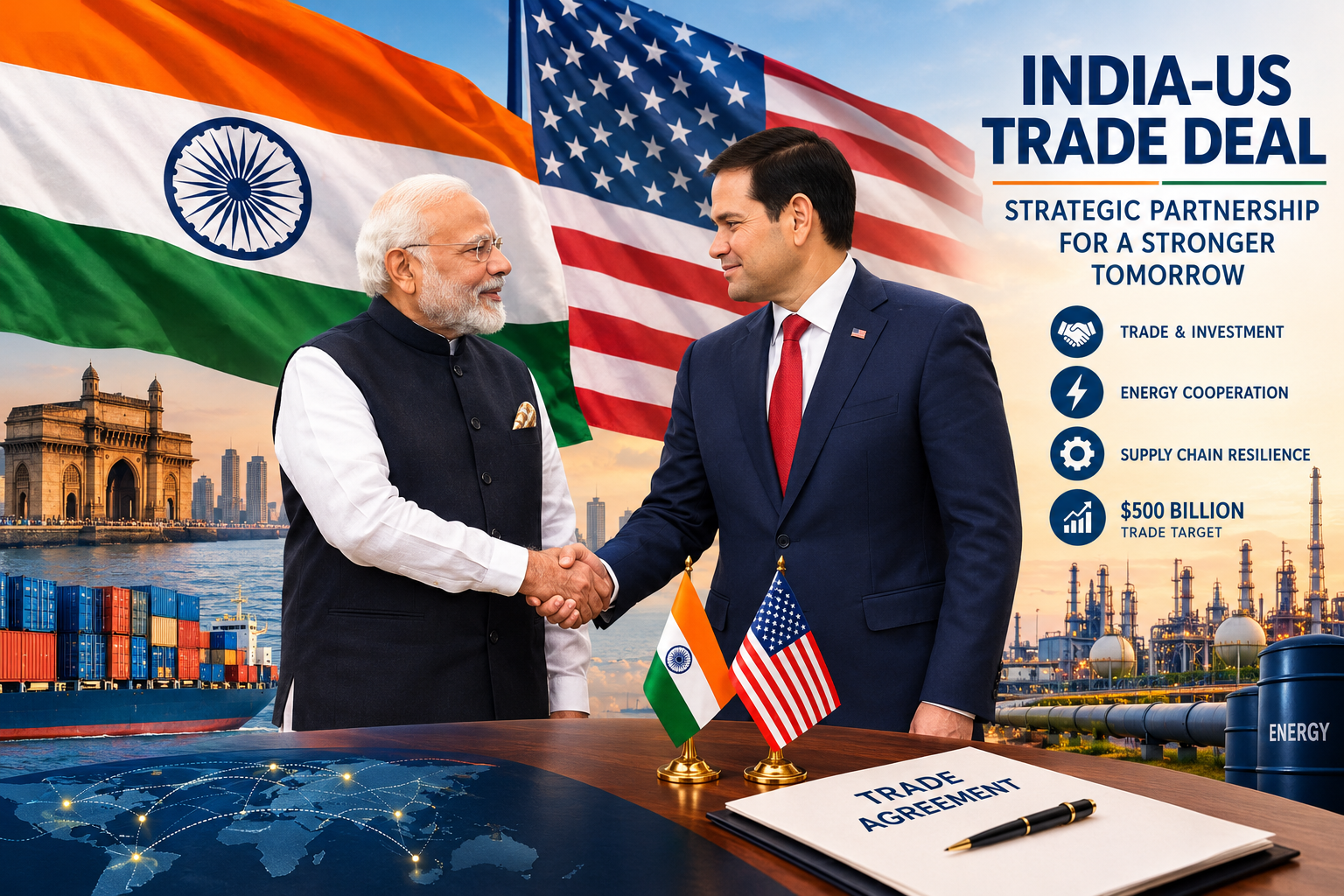
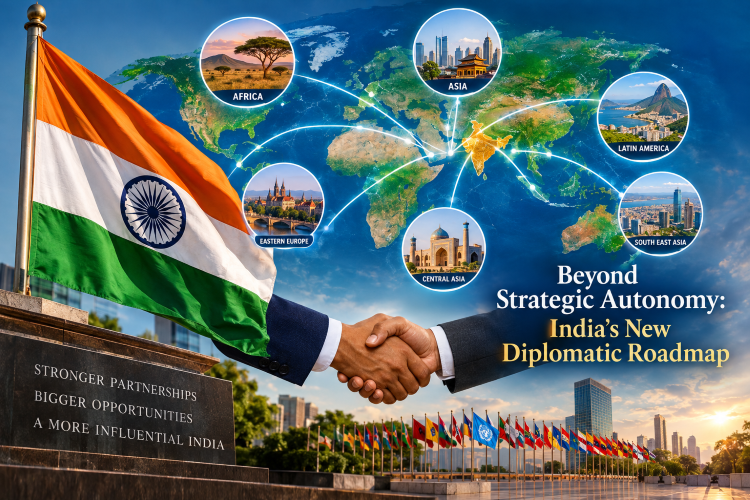
India's answer cannot be membership of another exclusive bloc. Its greatest asset is precisely its strategic autonomy, multilateral activism and ability to maintain relationships with multiple centres of power simultaneously. Its role in BRICS, defence and energy cooperation with Russia, technological and economic partnerships with the US, and growing leadership in the Global South together constitute a formidable diplomatic capital.
The proposed RAC meeting in November, therefore, should not be viewed merely as a meeting of three leaders. It could become a test of what kind of international order the 21st century will produce: one governed by genuinely multilateral institutions, or one in which a handful of nuclear powers divide the world into spheres of influence.
If there is a serious attempt to divide the world into three strategic domains, it will not be a new architecture of peace. It will be a blueprint for a new imperialism of power. India's challenge is to ensure that it does not become a spectator to that process. From showcasing UPI at BRICS to championing the concerns of the Global South, India has demonstrated that it possesses the capacity to help build alternative structures of global influence.
The task now is to convert that capacity into a coherent diplomatic strategy. The defining question of the coming world order may not simply be who the superpowers are. It will be whether a few superpowers are allowed to determine the direction of the world, or whether emerging powers such as India can work with others to make that order more balanced, representative and genuinely multipolar.



[[comment.comment_text]]