Trump’s American Unilateralism Is Unravelling Global Consensus on the Climate Crisis

 9 months ago
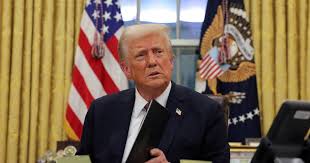
The post–Second World War global order was built on a fragile but consequential assumption: that international disputes—whether over territory, trade, or shared global challenges—could be managed through institutions, rules, and negotiated consensus rather than brute power. That order, shaped largely by the US-led West, may never have been perfect, but it created norms that restrained excesses and provided smaller nations a measure of predictability. Today, under the second coming of Donald Trump—often described as “Trump 2.0”—that foundational consensus is visibly eroding. Nowhere is this more evident than on the climate crisis, where unilateralism threatens to undo decades of incremental global gains.
At the heart of this shift lies a worldview that sees multilateralism not as a stabilising force but as a constraint on American sovereignty. Donald Trump has long framed international agreements as transactional bargains in which the United States is invariably short-changed. Climate accords, trade rules, and even security alliances are reduced to deals that can be abandoned if they no longer serve immediate national interests as defined by his administration. This approach represents not just a policy divergence, but a philosophical rupture with the idea that global public goods—like climate stability—require collective stewardship.
The climate crisis is a uniquely revealing test case. Climate change, by definition, does not respect national borders. Its mitigation depends on coordinated action, shared responsibility, and trust that major emitters will not free-ride on the sacrifices of others. The earlier US withdrawal from the Paris Agreement under Trump’s first term sent a powerful signal that the world’s largest historical emitter was unwilling to bind itself to such collective discipline. Trump 2.0, with a more explicit disdain for international norms, risks going further—actively weakening global climate architecture by questioning not just commitments, but the legitimacy of the process itself.
This unilateralism has consequences that extend far beyond US emissions trajectories. When the world’s premier power rejects multilateral solutions, it legitimises similar behaviour elsewhere. Countries with expansionist or extractive agendas are quick to take the cue. If Washington insists that national interest overrides global responsibility, why should emerging powers restrain themselves? The result is a cascading erosion of trust, where climate pledges become optional and enforcement mechanisms hollow.
Trump’s posture on global trade reinforces this pattern. Trade disputes that were once mediated through institutions like the World Trade Organization are increasingly framed as zero-sum contests to be won through tariffs, coercion, and bilateral pressure. The logic is consistent: rules are secondary to power, and consensus is an obstacle rather than an objective. In such an environment, climate commitments—often seen by sceptical governments as constraints on growth—become easy casualties.
Perhaps the most telling insight into this worldview came from Trump himself. In an interview with the New York Times, he remarked that the only real limits on his power arose from his own morality and mind, not from international law. The statement was revealing in its candour. It underscored a belief that global rules have no intrinsic authority over sovereign power, and that personal judgment can substitute for institutional restraint. For a domestic audience, this may sound like strength. For a world grappling with climate breakdown, it is a chilling proposition.
The implications for the old world order are stark. The post-war system was premised on the idea that even the strongest states would accept self-imposed limits for the sake of stability. American leadership, for all its contradictions, often involved underwriting global institutions and norms precisely because doing so served long-term strategic interests. Trump’s unilateralism inverts that logic. Leadership is redefined as dominance, and cooperation as weakness.
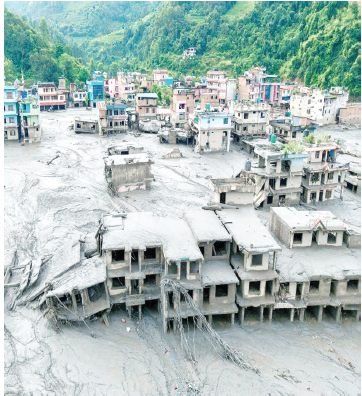
What emerges in its place is a bleak vision of global governance. Climate negotiations become arenas of mistrust rather than problem-solving. Vulnerable nations—those facing rising seas, extreme heat, and collapsing ecosystems—find themselves abandoned by the very system that promised collective action. Meanwhile, geopolitical rivalries intensify, as states hedge against a future where no rules can be relied upon.
In this sense, Trump 2.0 is not merely undoing consensus; it is accelerating a deeper structural shift. The withering of the old order does not automatically produce a more just or multipolar alternative. Instead, it risks a fragmented world where power dictates outcomes and shared crises remain unresolved. On the climate front, the cost of such fragmentation will not be measured in diplomatic communiqués, but in lives, livelihoods, and irreversible ecological loss.
The irony is that American unilateralism, presented as a defence of national interest, may ultimately undermine it. Climate instability, trade disruption, and geopolitical chaos do not stop at borders. By stepping away from consensus and collective responsibility, the United States risks losing not only moral authority, but also the very stability that once underpinned its global influence.
(Author, a senior trilingual journalist, is an editorial adviser to TEW.)







[[comment.comment_text]]