The Gulf Crucible: Escalation, Leverage, and the Impasse

 2 months, 3 weeks ago
The high-stakes military standoff between the United States and Iran has entered a precarious operational pause. With Washington holding its fire for two consecutive days and back-channel diplomatic exchanges underway in Oman, a fragile hush has fallen over the Persian Gulf.
Waterways in Peril: The Mounting Costs of a Strategic Stalemate
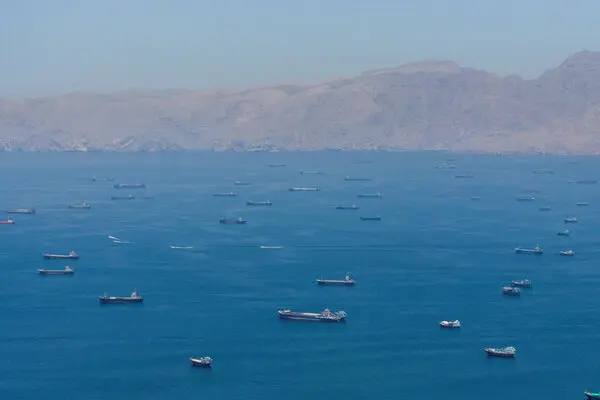
Yet beneath this tactical ceasefire lies a stark geopolitical reality: despite three successive cycles of military engagement, the United States has failed to achieve its primary strategic objectives. Chief among these was forcing open the Strait of Hormuz, a critical maritime artery that remains effectively under Iranian control, stalling international energy shipments and exposing deep vulnerabilities in global supply chains.
The crisis is no longer confined to a single waterway. In a coordinated display of asymmetric reach, Houthi forces operating out of Yemen have shuttered the Bab-el-Mandeb Strait to Saudi oil tankers, choking off another vital artery for regional energy exports. As supply lines tighten, crude oil prices have surged past the critical $100 per barrel benchmark.
This dramatic spike has triggered immediate alarm in Washington, where rising fuel costs directly threaten domestic stock markets and broader economic stability. Historically, when energy prices cross this psychological threshold, the U.S. administration pivots toward temporary diplomatic pauses in an effort to stabilize energy markets before resume operations.
Vulnerable Shields: Foreign Bases and Rising Domestic Backlash
While the humanitarian and financial toll on Iran is severe, its domestic infrastructure battered and its economy under immense strain, Tehran has demonstrated a persistent capability to inflict targeted damage on U.S. military infrastructure and regional partners. Iranian strikes have increasingly zeroed in on strategic installations, including recent hits on water desalination plants and critical oil facilities in Kuwait. Tehran maintains these actions were direct retaliation for strikes launched from facilities on Kuwaiti soil, highlighting how quickly local economic infrastructure can become collateral damage in a regional conflict.
This reliance on external defense points to a fundamental weakness among the Gulf Cooperation Council states. Despite hundreds of billions of dollars spent on advanced American weapons systems, nations like Kuwait, Saudi Arabia, and the United Arab Emirates remain structurally reliant on foreign personnel, private contractors, and Western defense shields. These expensive armaments have proven largely ineffective at intercepting low-cost, high-volume drone and missile salvos. Rather than providing absolute security, the presence of foreign bases has turned host nations into prime targets during regional escalations.
The presence of U.S. military assets is also fueling domestic unrest within the host countries themselves. Public sentiment across the Arab world is turning sharply anti-American. In Kuwait and Jordan, street demonstrations have erupted with protesters demanding the immediate shutdown and removal of U.S. military bases. This rising domestic political pressure presents a serious challenge for regional monarchies, which find themselves caught between an angry populace opposed to foreign intervention and an absolute reliance on American military backing to guarantee their own regime survival.
Red Lines at the Negotiating Table: Tehran’s Non-Negotiables
Diplomatically, Tehran has laid down uncompromising conditions for any permanent resolution, refusing to settle for a mere cessation of strikes. Iranian negotiators are demanding the immediate release of between $100 billion and $200 billion in frozen assets currently locked in American, European, and Gulf financial institutions due to international sanctions. Furthermore, Tehran insists that lasting peace is impossible without a complete and permanent lifting of economic sanctions, rejecting temporary waivers or minor economic concessions as insufficient.
On its nuclear and defensive capabilities, Tehran remains equally rigid. Iranian officials maintain that while they are willing to limit uranium enrichment to the standard 5% threshold permitted for civil nuclear energy under IAEA oversight—and offer to dilute their existing 60% enriched stockpiles—their overall ballistic missile and defensive drone development programs are non-negotiable.
Furthermore, Iran has explicitly rejected any diplomatic framework that conditions a ceasefire on abandoning its regional security network, including long-standing alliances with Hezbollah and Hamas.
Crucially, Iran is framing the conflict within a broader regional context, insisting that any lasting security arrangement must address interconnected disputes across the Middle East.
Tehran’s comprehensive list of demands includes a complete withdrawal of Israeli forces from southern Lebanon, a cessation of coalition strikes against Houthi-controlled territory in Yemen, and a durable settlement for the Palestinian conflict. By linking the security of the Persian Gulf to these wider issues, Iran is attempting to reshape the regional balance of power in its favor.
Fiscal Strain and Changing Dynamics: The High Price of Hegemony
The U.S. administration faces mounting domestic pressure to resolve the crisis. The American public is increasingly weary of prolonged middle eastern entanglements, and approval ratings for the current administration continue to decline. Economically, the conflict comes at a precarious time for Washington, which is managing a national debt approaching $40 trillion. Historically, the U.S. relied on selling low-yield Treasury bonds to global buyers to fund geopolitical operations, but diminished international demand for these securities has tightened federal cash flow, forcing Washington to seek alternative financing methods.
To offset the staggering financial cost of its military presence, Washington has exerted intense pressure on its Gulf allies to purchase massive shipments of American hardware and directly subsidize operational expenses. The administration has even suggested that Gulf nations bear the financial burden of future regional reconstruction efforts, arguing that U.S. forces are actively defending Gulf sovereignty. This aggressive transactional approach has strained relations with local monarchies, who feel increasingly squeezed between American financial demands and Iranian military pressure.
Despite intense military and economic pressure, Washington’s broader ambition of forcing regime change in Tehran or taking control of Iranian oil fields has proved unachievable. Instead, the regional power dynamic is shifting toward a multi-polar reality. Tehran continues to champion a regional security framework run exclusively by local Persian Gulf states, explicitly demanding the total withdrawal of foreign military forces from the region. While Gulf monarchies remain too economically and politically bound to Washington to sever ties, the limits of Western security guarantees are becoming increasingly clear.
The current pause in hostilities offers a fleeting opportunity for diplomacy, but the underlying tensions remain unresolved. With over 20 percent of the world’s petroleum supply passing through the Strait of Hormuz, the stability of the global economy hinges on what happens next. If current negotiations fail to yield a permanent political compromise, the conflict risks escalating into widespread instability across the Arab world, with catastrophic consequences for global energy supplies and international financial markets.
(The author, a former JNU researcher, is a well-recognised commentator on politics and society in West Asia.)









[[comment.comment_text]]