When the Umpire Overreaches: Institutional Integrity Under Siege

 2 weeks, 6 days ago
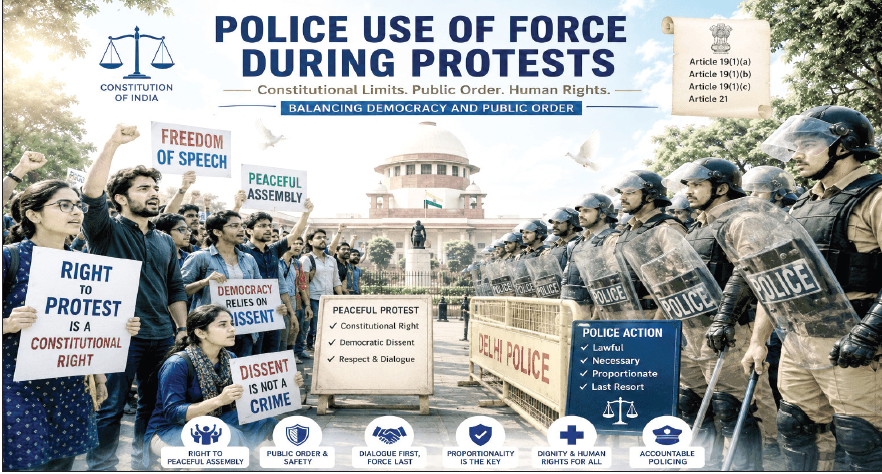
The heart of Indian democracy does not beat inside legislative chambers or courtrooms; it resides quietly within the electoral roll—the master list that guarantees every citizen their fundamental right to a voice. When that list becomes the subject of arbitrary altercations, unilateral modifications, and widespread voter purges, the core of our republic trembles. The escalation of street protests at Jantar Mantar against Chief Election Commissioner Gyanesh Kumar, alongside widespread outrage over the Special Intensive Revision (SIR) exercise, signifies a perilous threshold. This clash is no longer merely a political tussle; it is a full-blown crisis of constitutional propriety that threatens to erode public faith in the nation's most critical referee.
At the center of this controversy lies a glaring violation of the constitutional architecture governing the Election Commission of India. Under Article 324 and Section 18 of the Chief Election Commissioner and Other Election Commissioners Act, 2023, the poll panel is explicitly designed to function as a collegial, multi-member body where decisions must be made unanimously or by majority consensus. The revelation that two Election Commissioners formally recorded 14 distinct objections over 10 months—flagging top-down software alterations, modifications to voter inclusion forms, and the centralisation of electoral data—exposes an unprecedented institutional fracture. When a Chief Election Commissioner bypassed the majority view to act as a singular authority, he breached the statute and abandoned the fundamental principle of collective responsibility that guards against administrative tyranny. The operational fallout of this centralized overreach is as alarming as its legal impropriety.
The mass deletion of voter names across multiple states, executed through centralized digital software that reportedly locked out local Electoral Registration Officers (EROs), represents a severe infringement on voting rights. By embedding unverified procedural hurdles into software systems like ERONET, millions of genuine voters, including youth and mobile workers, have faced sudden disenfranchisement without due process or a clear avenue for redress. When an administrative apparatus makes it harder for a citizen to enter or remain on the electoral roll than to be erased from it, the system ceases to serve the electorate and begins to engineer it.







[[comment.comment_text]]