THE MARCH OF DEMOCRACY: From the Abolition of Slavery to India’s Independence
 an hour ago
The next phase of democratic development was therefore shaped by movements that demanded the extension of freedom and political rights to those whom earlier systems had ignored
The Expanding Struggle for Freedom, Equality and Human Dignity
The march of democracy did not end with the American and French Revolutions. Their declarations of liberty and equality raised expectations that existing political institutions were often unwilling to fulfil. Slavery continued, women remained excluded from voting, and millions lived under colonial domination. The next phase of democratic development was therefore shaped by movements that demanded the extension of freedom and political rights to those whom earlier systems had ignored.
The abolitionist struggle, women’s suffrage movements and the campaigns against colonialism transformed democracy from a limited political arrangement into a broader demand for human dignity and equal citizenship.
The Abolition of Slavery and the Expansion of Human Freedom
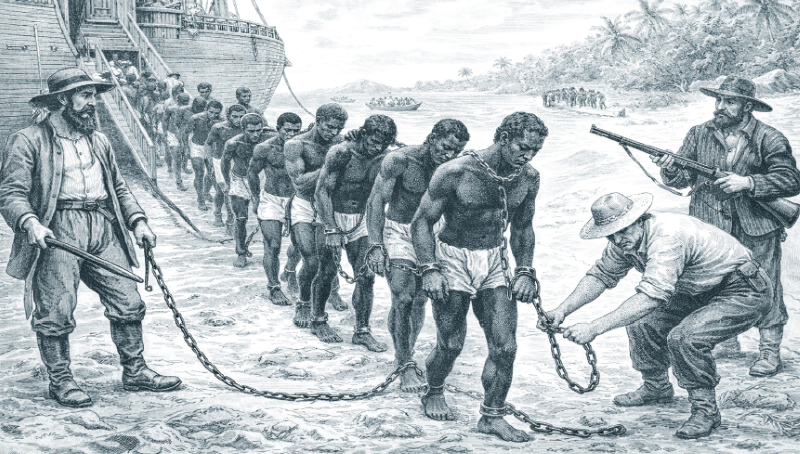
For centuries, millions of people were enslaved and denied freedom, legal protection and control over their own lives. The existence of slavery exposed a fundamental contradiction in societies that proclaimed liberty while denying it to vast sections of humanity.
Abolitionist movements gradually emerged on both sides of the Atlantic. Among their influential figures were Olaudah Equiano, William Wilberforce, Thomas Clarkson, Frederick Douglass, Harriet Tubman, Sojourner Truth and William Lloyd Garrison. Enslaved and formerly enslaved people played indispensable roles in exposing the brutality of the system and demanding freedom.
Britain passed the Slavery Abolition Act in 1833, which took effect in most British colonies in 1834. Apprenticeship provisions delayed full freedom for many formerly enslaved people until 1838.
In the United States, the struggle over slavery became increasingly intense and eventually led to the Civil War of 1861–1865. President Abraham Lincoln emerged as the central political figure in the Union’s effort to preserve the country and bring slavery to an end. Lincoln’s Emancipation Proclamation, issued on 1 January 1863, declared enslaved people in designated areas still in rebellion to be free. The Thirteenth Amendment, ratified in 1865, subsequently abolished slavery throughout the United States.
The Civil War cost hundreds of thousands of lives. It demonstrated the extraordinary moral and political challenges that arise when constitutional ideals are contradicted by social practices. On 19 November 1863, Lincoln delivered his famous Gettysburg Address. In a brief but powerful speech, he reaffirmed the aspiration that government of the people, by the people and for the people should endure.
The abolition of slavery, however, did not immediately establish racial equality. Discrimination, segregation and unequal access to political rights continued. The subsequent civil-rights struggle, carried forward by leaders including Frederick Douglass, W. E. B. Du Bois, Rosa Parks and Martin Luther King Jr., demonstrated that freedom must be protected through continuing public action. The universal lesson was clear: democracy cannot be measured merely by the promises contained in constitutional documents. Its real value depends on whether those promises reach people who have historically been denied their rights.
Women’s Suffrage: Democracy Must Include Women
For much of recorded history, women were excluded from voting and from positions of public authority. The expansion of democracy therefore required a sustained campaign to recognize women as equal political citizens. During the nineteenth century, women’s rights movements gathered strength in Europe, North America and other parts of the world.
In the United States, Elizabeth Cady Stanton and Lucretia Mott helped organize the Seneca Falls Convention in New York in July 1848. The gathering became a landmark in the campaign for women’s equality and political rights.
Susan B. Anthony emerged as another prominent campaigner for women’s suffrage. In Britain, activists including Emmeline Pankhurst and members of the suffrage movement campaigned persistently for voting rights.
New Zealand became the first self-governing country to grant women the parliamentary vote in 1893. Other countries followed at different times. In the United States, the Nineteenth Amendment, ratified in 1920, prohibited denying the right to vote on the basis of sex, although discriminatory practices continued to prevent many women, particularly women of colour, from exercising that right freely. In Britain, many women gained voting rights on equal terms with men in 1928.
India adopted universal adult suffrage under its Constitution, giving women and men equal formal voting rights from the beginning of the Republic. Unlike several older democracies, India did not make women wait through a prolonged, gradual expansion of the franchise.
The inclusion of women transformed the meaning of citizenship. A government cannot credibly claim to represent its people if half the population is excluded from political participation. Women’s suffrage was therefore not simply an additional electoral reform. It was a fundamental recognition that democracy must be based on equal citizenship.
The Struggle Against Colonialism
The expansion of democracy was also closely connected with the worldwide struggle against colonialism. European imperial powers had established political and economic control over large parts of Asia, Africa and other regions. Colonised populations were often denied the right to determine their own political future.
The demand for national independence became an important extension of the democratic principle that people should govern themselves.
In India, the freedom struggle developed into one of the most influential anti-colonial movements in modern history. It involved constitutional reformers, political organizations, revolutionaries, workers, peasants, students, women and people from diverse religious and social backgrounds.
Among its major figures were Dadabhai Naoroji, Bal Gangadhar Tilak, Lala Lajpat Rai, Bipin Chandra Pal, Gopal Krishna Gokhale, Jawaharlal Nehru, Sardar Vallabhbhai Patel, Maulana Abul Kalam Azad, Subhas Chandra Bose, Sarojini Naidu and Dr. B. R. Ambedkar.
However, the movement acquired a distinctive international character through the philosophy and leadership of Mahatma Gandhi.
Mahatma Gandhi: India’s Freedom Struggle and the Conscience of the World
Born on 2 October 1869 at Porbandar in Gujarat, Mohandas Karamchand Gandhi trained in law in London and later worked in South Africa. There, he confronted racial discrimination against Indians. His experiences helped shape his philosophy of satyagraha—the pursuit of truth through nonviolent resistance.
Gandhi returned to India in 1915. He gradually emerged as a national leader who transformed the freedom struggle from a movement led largely by educated political elites into a mass campaign involving people from different regions and social backgrounds.
The Champaran Satyagraha of 1917 in present-day Bihar brought attention to the hardships of indigo cultivators. The Kheda Satyagraha of 1918 in Gujarat challenged land-revenue collection under conditions of agricultural distress. The Ahmedabad mill workers’ struggle of 1918 demonstrated Gandhi’s commitment to nonviolent methods in social and economic disputes.
The Rowlatt Act of 1919, which expanded extraordinary powers of detention, provoked widespread opposition. The Jallianwala Bagh massacre at Amritsar on 13 April 1919, when British troops under Brigadier-General Reginald Dyer fired on a gathering, intensified public anger and severely damaged the moral legitimacy of colonial rule.
Gandhi launched the Non-Cooperation Movement in 1920, encouraging Indians to withdraw their cooperation from colonial institutions. The movement sought to mobilize the country through peaceful resistance, boycotts and constructive social work. However, following the violence at Chauri Chaura in February 1922, Gandhi suspended the movement. His decision reflected his insistence that the struggle for freedom must remain rooted in nonviolence.
On 12 March 1930, Gandhi began the historic Salt March from Sabarmati Ashram near Ahmedabad to Dandi on the Gujarat coast. He reached Dandi on 6 April and broke the colonial salt law. Salt was an extraordinary symbol because it was essential to daily life, while the colonial law represented the intrusion of imperial authority into the everyday existence of ordinary people.
The Salt March attracted international attention. Newspapers, writers and political observers across the world followed the campaign. It demonstrated that disciplined mass action and civil disobedience could challenge an empire without armed insurrection.
Gandhi’s contribution should not be understood as the work of one individual alone. India’s independence was the result of a collective struggle involving countless known and unknown participants. The political philosophies of Gandhi, Nehru, Patel, Bose, Ambedkar and other leaders differed in important respects, but their contributions formed part of the wider national experience. Gandhi’s methods nevertheless gave the freedom movement a distinctive moral dimension. He demonstrated the political power of nonviolent protest, civil disobedience and organized public participation.
The Quit India Movement, launched in August 1942, became another major episode in the demand for British withdrawal. It faced severe repression, and many national leaders were imprisoned. The Second World War weakened European imperial powers and transformed international politics. Anti-colonial movements gained momentum across Asia and Africa, and the principle of self-determination acquired greater international significance.
India finally became independent on 15 August 1947. Independence was achieved amid the tragedy of Partition, which caused immense displacement, suffering and loss of life. Freedom was therefore both a historic triumph and a solemn reminder of the human cost of political division.
Mahatma was assassinated in New Delhi on 30 January 1948. His death shocked India and the world. His philosophy continued to influence movements for civil rights and freedom, including Martin Luther King Jr.‘s campaign in the United States and Nelson Mandela’s struggle against apartheid in South Africa, although their circumstances and methods were distinct.
Gandhi’s enduring legacy was that political courage does not always require violence. A determined people, united around a moral cause, can challenge entrenched authority through collective action and disciplined resistance.
India’s Independence: Freedom and a New Responsibility
India’s independence was not merely the transfer of political power from British rulers to Indian leaders. It represented the fulfilment of a long struggle for self-government and the beginning of a new constitutional responsibility.
The challenge was immense. India was a vast country characterized by linguistic, religious, cultural and social diversity. It had to build institutions capable of protecting individual rights while maintaining national unity. The freedom struggle had also exposed the dangers of social discrimination, communal division and political exclusion. Independence alone could not resolve these challenges. The country required a constitutional framework that would establish democratic institutions, guarantee fundamental rights and provide equal political citizenship.
The experience of colonial rule had made the importance of accountable government especially clear. Indians had struggled against a political system in which decisions affecting their lives were taken without their consent. The new Republic therefore had to rest on the principle that sovereignty ultimately belonged to the people.
The adoption of universal adult suffrage was central to this transformation. It recognized that political participation was not a privilege reserved for the wealthy, educated or socially powerful. Every adult citizen would have a voice in determining the country’s political future. India’s freedom struggle thus connected the national demand for independence with the larger international movement for equality and self-determination.
The abolition of slavery, women’s suffrage and India’s freedom movement expanded the meaning of democracy. They demonstrated that freedom could not remain the privilege of a few; it had to become the right of all. The next historic challenge was to translate these ideals into a durable constitutional order and establish institutions capable of protecting them.
(The author, a former Cabinet Minister and Acting Chief Minister in UP government, is a widely respected political leader and educationist. A life President for The Organisation of Nuclear Disarmament and World Peace, he has extensively traveled to the US, UK, Turkey, Afghanistan, Hong Kong, Italy, Russia, Iran, Iraq,Kuwait and South East Asian countries.)





[[comment.comment_text]]