Efforts to Make Cancer Screening Cheaper and Accessible

 47 minutes ago
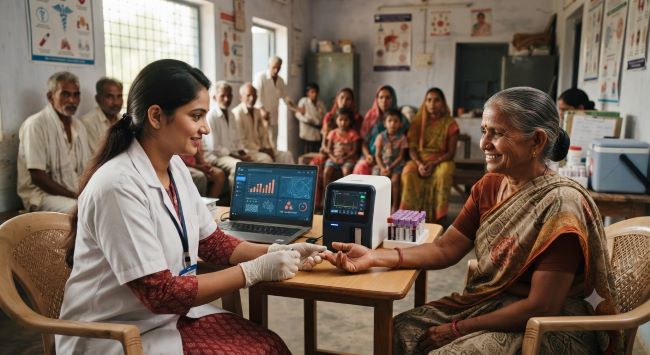
Cancer is one of the most serious health challenges facing the world today. The most important factor in fighting this disease is detecting it in time. If cancer is found at an early stage, the chances of successful treatment can improve. However, in a country with a huge population like India, timely cancer screening remains a major challenge. The high cost of tests, limited availability of advanced laboratories and lack of awareness about the disease are some of the main reasons.
In this situation, a new blood-testing technology being developed with the help of Artificial Intelligence (AI) has emerged as a ray of hope. Hyderabad-based CareOnco Biotech Private Limited has received an MD-13 licence from the Central Drugs Standard Control Organisation (CDSCO) to develop AI-based medical kits for cancer detection. This is an important step in this direction. The company is working on a testing facility that may help detect early biological signs linked to cancer in the human body. It is setting up its first laboratory in Hyderabad.
This initiative is important for India because the country needs to make timely cancer screening available to a large section of its population. People often visit hospitals only when the symptoms become serious. If screening is made available at an affordable cost, more people may come forward for timely tests. This could help identify people who may be at risk and refer them for further tests and treatment.
A key feature of this project is the use of modern scientific methods such as AI, genomics, molecular biology and single-cell analysis. According to the project's chief scientific adviser, Dr Debarka Sengupta, who is also Associate Dean of Innovation, Research and Development at IIIT-Delhi, the test kit could help in detecting cancer and planning its treatment. The aim is not just to identify the possibility of cancer but also to provide doctors with useful information to decide the next steps for further testing and treatment.
Researchers have developed an AI-based blood test that may help screen for several types of cancer at a relatively low cost. An important part of this technology is an 11-gene blood test based on platelet RNA. It will use a technique called Real-Time Polymerase Chain Reaction (RT-PCR). By analysing certain biological signals and gene-related changes in the blood, the test may help identify signs that could point to cancer.
Understanding small biological changes in the body is very important for detecting cancer. In many cases, there are no clear symptoms in the early stages of the disease. Patients may not realise that something is wrong until the cancer has progressed. In such cases, a technology that can identify cancer-related signals through a blood sample could prove useful to the medical field. However, finding a possible sign of cancer through screening does not mean that the disease has been confirmed. Medical advice and further tests will be necessary to establish a diagnosis.
If this system can be used for cancer screening on a wider scale, it could have far-reaching benefits. There may be less need to install new and expensive machines at every location. Existing laboratories could be prepared to carry out these tests through proper technical training and by following required quality standards. This could help extend cancer screening facilities to smaller cities and towns.
AI also has an important role to play in this process. It can analyse large amounts of biological and genetic data and help identify patterns that may be difficult to detect through conventional methods. This could help in assessing test results and support doctors in making decisions. However, the actual usefulness of this technology will depend on scientific validation, accuracy, sensitivity and the results of tests conducted on different population groups.
It is also important to carefully assess the reliability and effectiveness of any new testing technology before it is introduced on a large scale. Different types of cancer have different biological characteristics, and this must be taken into account.
Overall, CareOnco Biotech's initiative is a promising effort to make early cancer detection more accessible and affordable in India. The RT-PCR infrastructure developed during the Covid pandemic could now also prove useful in the fight against serious diseases such as cancer. The true purpose of science and technology is fulfilled only when their benefits reach ordinary people.
If this new testing technology proves its scientific claims and becomes widely available, it could give India a new advantage in its fight against cancer. For patients battling the disease and their families, the ability to detect it in time could bring immense relief.
(Author is a senior Delhi-based journalist and commentator on culture, diversity, and pluralism.)










[[comment.comment_text]]