Why Groundwater Levels are Declining in Palamu?

 2 years, 5 months ago

Sanjay Kumar Pandey
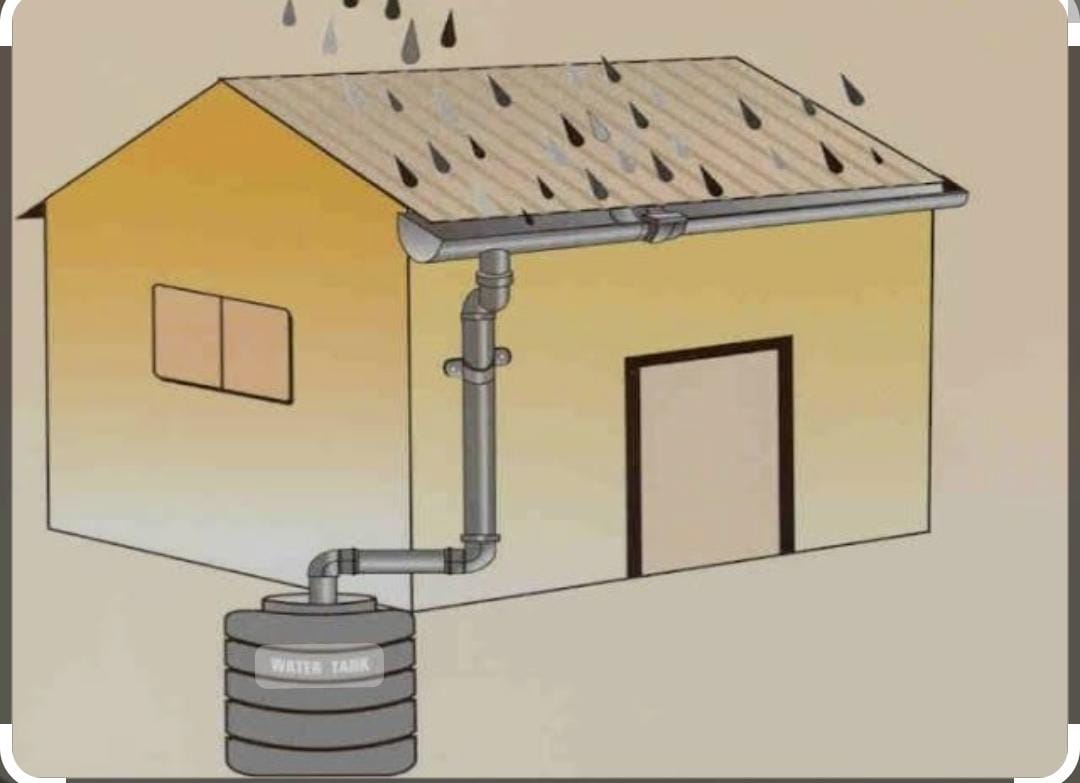
Groundwater levels in Palamu are rapidly declining, primarily due to excessive extraction exacerbated by limited rainfall in the region. The high demand for groundwater to meet various needs has led to a daily decrease in water levels, worsening the situation over time. It is imperative to recharge groundwater by channeling rainwater into the earth. Experts suggest various methods, including rainwater harvesting, with an estimated potential to store 36,000 liters of water annually per 100 square meters of rooftop area in regions like Palamu. Several specialists have highlighted solutions based on their experiences, emphasizing the urgent need for action.
Recharge Well: Rainwater Pipes Installed on Rooftops" In order to facilitate the downward flow of rainwater from the roof of a house, rainwater pipes are installed. All these rainwater pipes are directed towards the recharge well by creating an outlet into a concrete drain of 150 mm x 150 mm. Recharge wells should ideally be constructed near the electrical surface of the house, with a minimum diameter of 1.5 meters and a rainfall water entry hole equipped with a PVC pipe of 5 meters length and a diameter of 200 mm. Above this, a layer of 400 mm gravel and 400 mm sand is applied. Rainwater from the roof of the house enters the recharge well through the PVC pipe, passing through the sand and gravel layers. If an old well is available in the vicinity of the house which is not in use, it can be utilized for this purpose. The estimated cost for this setup ranges from 10,000 to 15,000 rupees.
Utilizing Unused Borewells for Groundwater Recharge
If there's an old borewell on the premises of a house that is no longer in use, it can be repurposed to channel rainwater from the roof into the ground. This system can be implemented for small houses with a roof area of up to 150 square meters. By attaching a pipe with a diameter of 50-80 mm to the rainwater pipe, it is directed into a concrete chamber measuring 600 mm x 600 mm. The chamber is filled with gravel and sand. A smaller pipe with a diameter of 30-40 mm is connected underneath the chamber to link it to the unused borewell. The estimated cost for this setup ranges from 5,000 to 6,000 rupees.
Recharge Pit: A Solution for Rainwater Harvesting in Small Houses"
For small houses with a roof area of up to 100 square meters, the recharge pit system is quite useful. It involves digging a pit that is 1-2 meters long, wide, and 2-3 meters deep. This pit is filled with boulders, pebbles, and sand, and covered with a perforated cement lid. Rainwater is directed into the pit through a water pipe, and the pit can be shaped round, square, or rectangular. The estimated cost for this setup ranges from 6,000 to 8,000 rupees.
"Recharge Trench: Suitable for Larger Houses"
For larger houses with a roof area of 200-300 square meters, the recharge trench system is appropriate. A trench 0.5-1 meter wide and 1-1.5 meters deep is dug, with a length of up to 10-20 meters. The trench is filled with gravel and sand, and rainwater is directed into it through a water pipe. It's crucial for the trench bottom to be free from rocks and boulders to allow water to penetrate the ground. The estimated cost for this setup ranges from 9,000 to 15,000 rupees.
"Expert Opinion: Considerations for Implementation"
Experts emphasize that in all the above systems, it's important to ensure that water does not enter these recharge structures during the first year. For this purpose, appropriate bypass mechanisms are integrated into the entry pipes to filter out debris and sediment. Utilizing rainwater after the first monsoon is advisable, especially in areas of Jharkhand facing water scarcity. Implementing a scientific method for rainwater harvesting in every household is essential, requiring a concerted effort and campaign for effective execution.










[[comment.comment_text]]