Two New Kendriya Vidyalayas Approved for Jharkhand in Giridih and Latehar Districts
EW•NN
1 year, 7 months ago
Sanjay Pandey
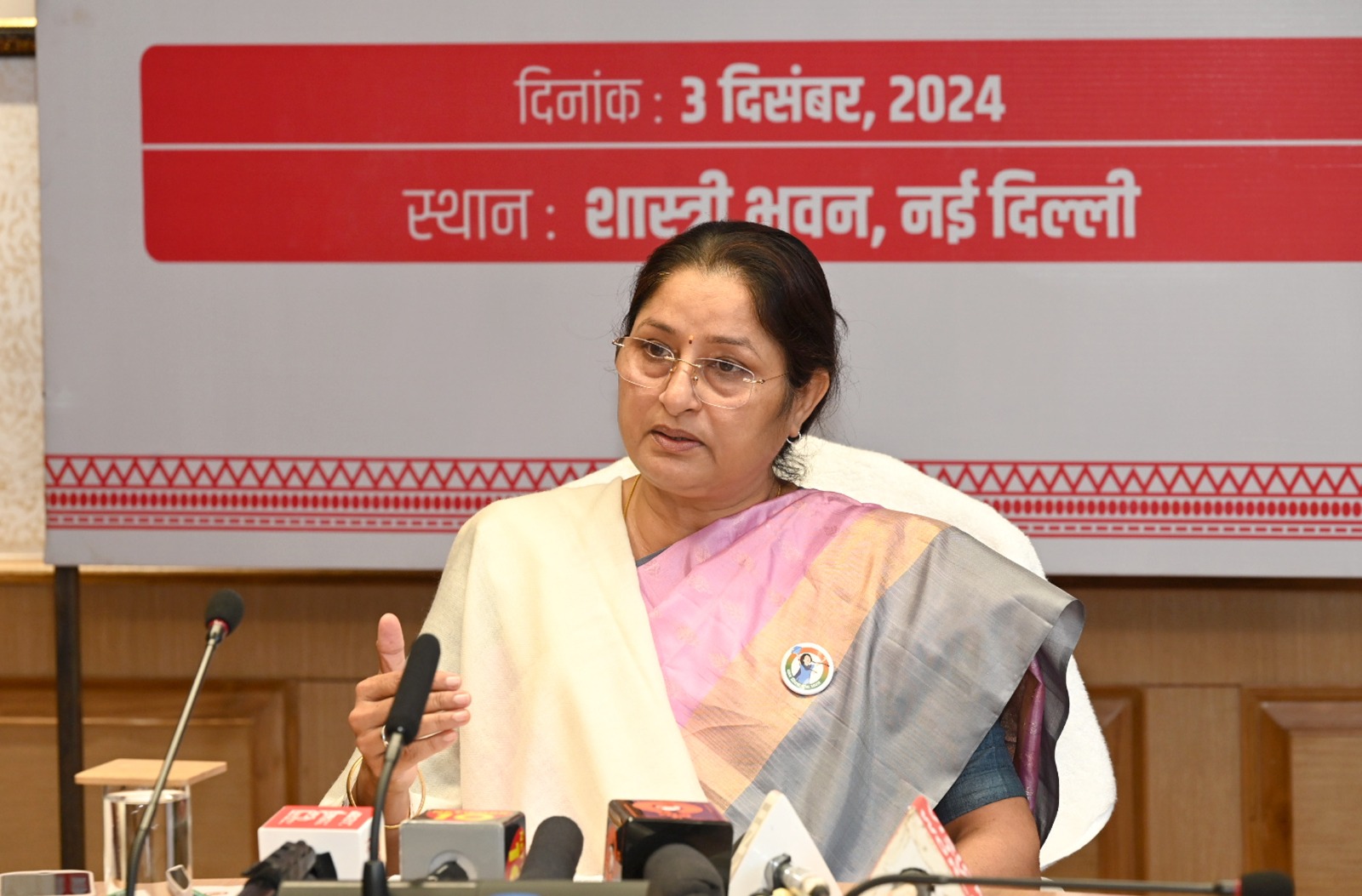
Ranchi: The Union Cabinet, chaired by Prime Minister Narendra Modi, has approved the establishment of 85 new Kendriya Vidyalayas (KVs) across India, including two for Jharkhand. These schools will be set up in Giridih (Dhanwar Block) and Latehar (Barwadih) districts.This decision was part of the Cabinet Committee on Economic Affairs' Friday meeting. Union Minister for Women and Child Development and Koderma MP, Annapurna Devi, expressed her gratitude to Prime Minister Narendra Modi and Education Minister Dharmendra Pradhan for fulfilling the long-standing demand of the Koderma constituency for a Kendriya Vidyalaya. Minister Annapurna Devi highlighted that she had consistently advocated for the establishment of a Kendriya Vidyalaya in Dhanwar and was elated that this demand was met. Key Highlights of the National Plan: The project involves an estimated funding requirement of ₹5,872.08 crore over eight years (2025-26 onwards), with ₹2,862.71 crore allocated for capital expenses and ₹3,009.37 crore for operational costs. Currently, there are 1,256 functional Kendriya Vidyalayas across the country, including three international locations (Moscow, Kathmandu, and Tehran), serving 13.56 lakh students. Each new Kendriya Vidyalaya is designed to accommodate approximately 960 students, providing direct employment to 63 staff members per school. The addition of two new KVs in Jharkhand is expected to benefit the educational landscape by providing high-quality education in the region and generating local employment opportunities. The schools will adhere to the guidelines of the National Education Policy (NEP) 2020, ensuring innovation in teaching practices and infrastructure development. Kendriya Vidyalayas remain in high demand for their superior academic results, with students consistently excelling in CBSE board examinations. The newly approved schools in Jharkhand will bring these benefits to the children of Giridih and Latehar, supporting their academic and overall development. This initiative is seen as a significant step toward improving educational access and infrastructure in rural areas, aligning with the government's broader educational and developmental goals.
It is the 18th day as of 16th July 2026. For eighteen days, Sonam Wangchuk the visionary engineer, the educator who taught an entire generation that learning could be joyful, the man who inspired millions to think innovatively has been lying on a makeshift bed at Delhi’s Jantar Mantar. He has consumed nothing but salt water. According to medical bulletins released by the youth-led Cockroach Janta Party (CJP), his body weight has plummeted by nearly 9 kilograms, dropping dangerously to 57.15 kg.
There is a photograph that the Ministry of Road Transport and Highways loves to circulate. A freshly laid six-lane expressway stretches into a golden horizon. Smooth asphalt. Clean white markings. The kind of road that makes you believe, for a brief and generous moment, that India has arrived. Minister Nitin Gadkari has built an entire political identity around such photographs — and to be fair, he has earned some of it. When I began my career as a cost engineer on national highway projects in 2010
Temperature soared across the entire European continent in the latter half of June and early July. France, the Netherland and Belgium recorded 3700 excess human deaths and authorities warned that these numbers are preliminary and may even rise. People above 50 years of age accounted for larger proportion of the deaths. Several deaths are reported due to persons drowning in water bodies; those who did not know swimming also jumped in deep water to beat the heat and perished. Experts have found that the current heat waves in Europe is worst recorded in its history.
The contemporary struggle over religious monuments in India cannot be understood without revisiting the deeper historical questions that underlie it: the nature of “Hinduism” in the past, the evolution of temple architecture, the role of Buddhism under state patronage, and the present-day politicisation of Islamic-period monuments. Taken together, these questions reveal not only a contested past but also a deliberate project of mythmaking in the present, designed to forge a unified religious-national identity by cultivating hostility toward Muslims.
Can governments introduce sweeping policy reforms without adequate public consultation? This opinion piece examines the democratic implications of E20 ethanol, governance, accountability, and citizen participation, arguing that lasting public trust depends on transparency, evidence-based policymaking, and meaningful consultation rather than one-way administrative decisions.
An analytical look at India's ethanol blending programme, examining its impact on energy security, farmers, fuel prices, food security, water resources and the country's clean energy transition.
[[comment.comment_text]]