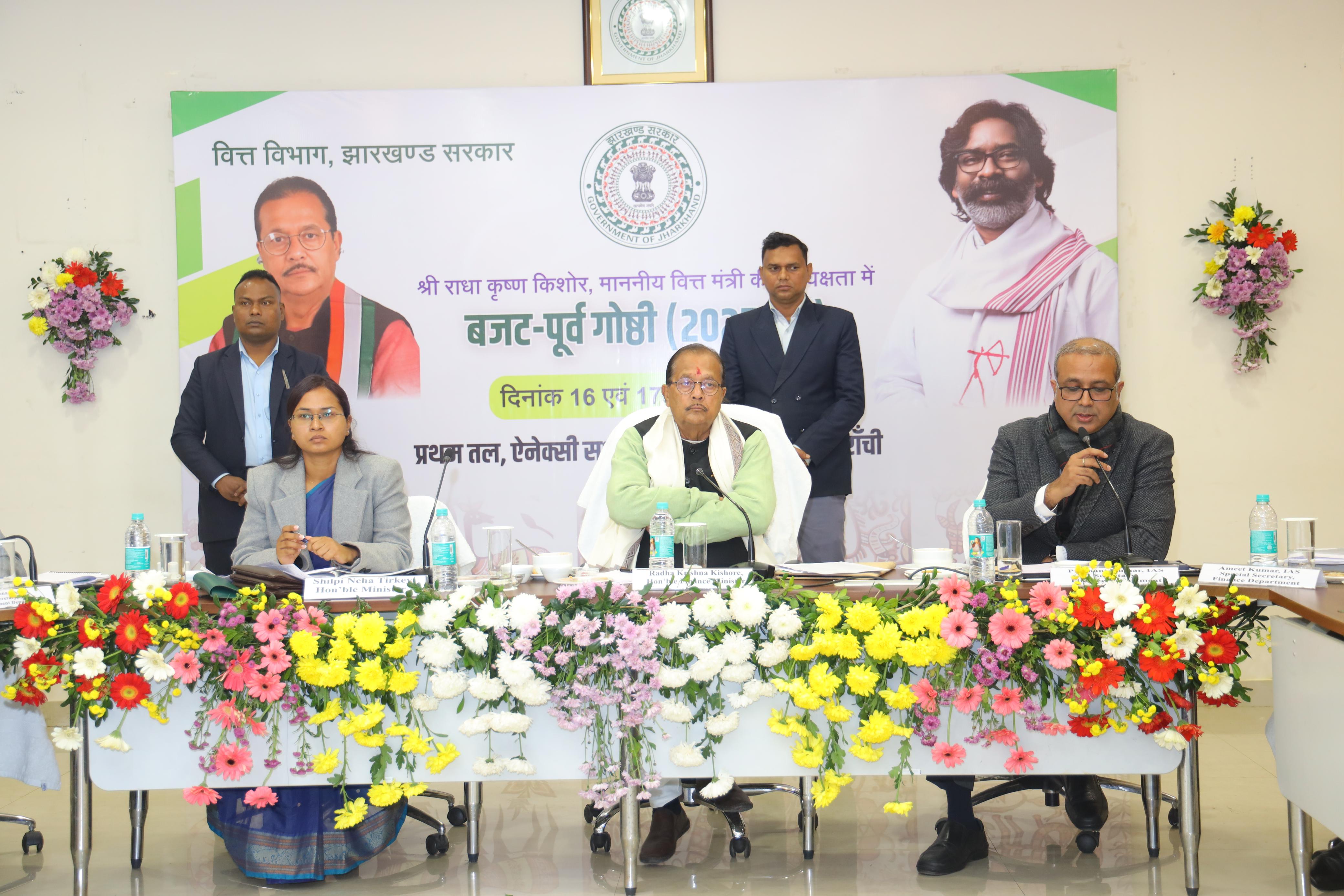
Pre-Budget Seminar Held Under the Chairmanship of Finance Minister

 1 year, 8 months ago
Experts Provide Suggestions for Agriculture, Irrigation, Environment, Rural Development, Livelihood Mission, Urban Development, Tourism, Industry, Mining, Labor, and Skill Development
Sanjay Pandey

EW Correspondent, Ranchi: A pre-budget seminar for the financial year 2025-26 was organized at Project Bhavan under the leadership of Finance Minister Radhakrishna Kishore. The objective of the seminar was to gather suggestions aimed at bringing prosperity to the people of Jharkhand, particularly farmers, the rural poor, and communities living in remote forest areas. Experts from various fields, including agriculture, irrigation, forestry, rural development, urban development, and tourism, participated and shared their insights. Present at the event were Rural Development Minister Deepika Pandey Singh and Agriculture Minister Neha Shilpi Tirkey.
Addressing the gathering, Finance Minister Radhakrishna Kishore announced that the upcoming budget would be known as the "Abua Budget, reflecting Jharkhand’s unique identity. He stated, “This budget will prioritize the welfare of every section of society, including the forests, farmers, and underprivileged. Our goal is to prepare a budget that brings smiles to everyone’s faces, and therefore, we are seeking inputs from the public and experts alike. He emphasized the importance of including critical suggestions for rural development, agriculture, irrigation, and environmental conservation. The minister also highlighted the need for preserving rainwater and strengthening rural economies through agriculture and horticulture.Focus Areas for the Abua Budget 2025-26: Rural Development: Rural Development Minister . Deepika Pandey Singh stressed empowering women through financial assistance and training under the Jharkhand State Livelihood Promotion Society (JSLPS). She highlighted plans to connect rural women to urban markets and introduce small-scale rural drinking water and solar energy projects in the budget. Agriculture: Agriculture Minister Neha Shilpi Tirkey emphasized improving farmers' economic conditions by promoting multi-cropping and providing better irrigation facilities. She mentioned plans to expand the "Birsa Pathshala" program for farmer training and strengthen livestock and dairy initiatives.

Water Resource Management: Principal Secretary of the Water Resources Department Prashant Kumar, suggested enhancing traditional irrigation systems and focusing on solar-based and minor irrigation solutions. He highlighted the success of the Birsa Irrigation Well Scheme and proposed including over 50 irrigation projects in the upcoming budget. Tourism and Industry: Experts recommended promoting eco-tourism, food processing, and industrial clusters. Proposals for branding local products and supporting mining activities were also discussed. Expert Suggestions for Inclusive Development. Experts shared valuable inputs such as natural farming, millet cultivation, strengthening forest rights, and creating a 2050 vision document for Jharkhand. They advocated for skill development programs for rural youth and initiatives to connect remote forest areas with better roads and facilities. The Finance Minister assured that these suggestions would be carefully evaluated and included in the 2025-26 budget to address the state’s socio-economic challenges and pave the way for inclusive growth. The seminar witnessed active participation from officials, experts, and representatives from various departments, reaffirming the government’s commitment to making Jharkhand’s 25th budget a progressive and people-centric one.







[[comment.comment_text]]