Jharkhand's Economy Rooted in Agriculture, Calls for Comprehensive Development


 2 years, 10 months ago
Sanjay Kumar Pandey
The state of Jharkhand, known for its rich history and diverse culture, is predominantly driven by agriculture, forming the backbone of its economy. To elevate the districts of Jharkhand as key participants in the global economy, there is an urgent need for holistic planning and consideration of various facets related to agriculture. Despite being the oldest district, it is unfortunate that adequate measures have not been taken at the administrative level to address the critical issues. This negligence has led to a significant oversight of agriculture in the region. In this context, there is a pressing need for improved education, healthcare facilities, afforestation, advanced agricultural techniques, optimal utilization of rural power, development of irrigation systems, and mechanization.
Emphasizing education and environmental awareness is paramount for sustainable rural economic growth. Many villages still lack educational facilities. If previous plans had been implemented honestly, the rural areas, including agriculture and small industries, would have thrived more vibrantly. The migration from villages to urban areas has increased due to the lack of education, advanced technology, and agricultural opportunities in rural areas. This trend underscores the need to make the economy village-centric rather than urban-centric.
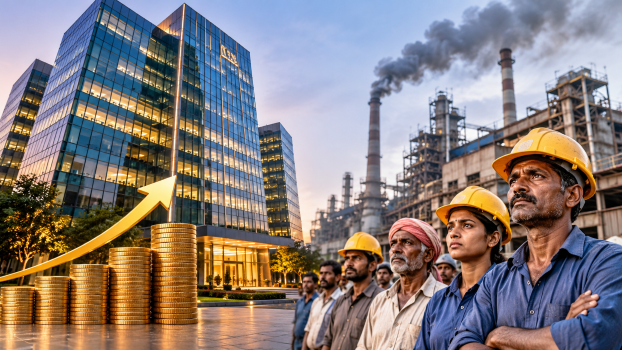
Local schools should be operational in every village, and agricultural technology and higher education should be available at select rural centers in each district. Education can pave the way for solutions to many challenges, including family planning, advanced agricultural techniques, and utilizing local resources. The present economic scenario, which heavily favors large industries, is neither conducive nor beneficial for small-scale industries. It's a bitter truth that an investment of five lakh rupees in a small-scale industry provides employment to 50-75 people, whereas the same investment in a large industry caters to only one individual.
Jharkhand's economy is fundamentally based on agriculture, not on establishing large factories but in cultivating its fields. Local planning is essential for every village, focusing on education, healthcare, housing, clothing, and food. The creation of self-employment opportunities, a self-reliant economy, stable consumption patterns, and the consolidation of various facilities such as grain banks, cooperative banks for industrial assistance, and private investment options is crucial. The day the majority of Jharkhand's villages become self-reliant, they will achieve self-sufficiency, strengthening the rural economy and ushering in prosperity across the









[[comment.comment_text]]