Breaking Barriers: Notopedia Delivers Free, Quality Education to Every Corner of India
 3 hours ago
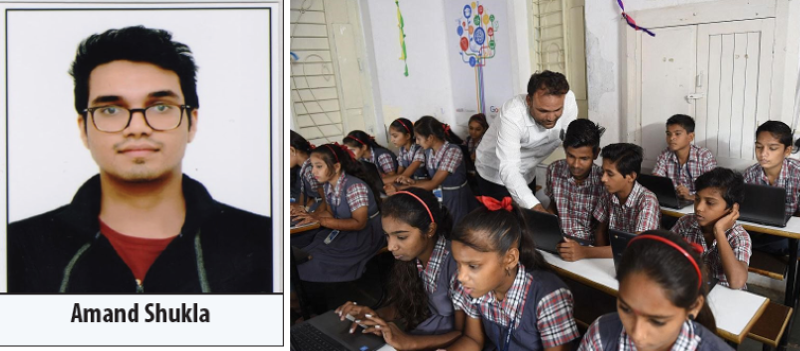
“Education Should Be a Fundamental Right, Not a Privilege”: Amand Shukla
At a time when the rising cost of education is putting quality learning beyond the reach of many, Notopedia, a non-profit ed-tech platform founded by young entrepreneur Amand Shukla, is working to make education accessible to all. Built on the principle that financial circumstances should never determine a student’s future, the platform seeks to bridge India’s socioeconomic divide by ensuring equal opportunities for learners, irrespective of their background. Backed by academics, educators, policy planners and opinion leaders, Notopedia challenges the commercialisation of education by offering free learning resources that empower students to pursue their aspirations without the burden of expensive coaching.
Notopedia provides a comprehensive, one-stop learning platform covering school curricula across CBSE, ICSE and various state boards, alongside career counselling, higher education resources and preparation materials for a wide range of competitive and government examinations, including the UPSC, Banking, Railways, Defence and SSC exams. By combining academic support with career and employment guidance, the platform aims to help students, particularly those from rural and economically disadvantaged communities, navigate the journey from education to employment. Its central mission is to ensure that access to knowledge and opportunity is not restricted by the ability to pay.
In this interview with The Emerging World (EW) newsdaily and magazine, Amand Shukla discusses Notopedia’s vision, its efforts to democratise education and the role of accessible digital learning in creating a more equitable future for India’s students.
EW: What inspired you to create Notopedia?
Ans: The inspiration behind Notopedia came from a realisation I encountered repeatedly throughout my personal and professional journey: talent is universal, but opportunity is not.
One of my most formative experiences was researching and writing my book, Weakest on Earth: Orphans of India, published by Bloomsbury. While documenting the challenges faced by orphaned and vulnerable children across the country, I witnessed firsthand how a lack of access to education, information and institutional support limits human potential. The book contributed to policy discussions and reforms relating to orphan welfare in eight Indian states, reinforcing my belief that meaningful social change requires systemic reform and accessible knowledge.
My subsequent engagement with students, educators and communities across India revealed a recurring pattern: countless talented young people were denied opportunities not because they lacked intelligence or ambition, but because they lacked access. A student’s future often depended on where they were born, the language they spoke and their family’s financial circumstances.
As India underwent rapid digital transformation, educational resources remained fragmented, expensive and inaccessible to millions. We therefore set out to build not merely another educational platform, but public educational infrastructure for the digital age—free, multilingual, inclusive and designed for the realities of India and the Global South.
Today, having served more than five million learners across all 28 states, eight Union Territories and over 600 districts, our founding belief remains unchanged: education should be a fundamental right, not a privilege reserved for those who can afford it.
EW: Why did you choose a free educational model in an increasingly commercialised education system?
Ans: Because education is not merely a market opportunity; it is a public good.
India’s education sector has become increasingly commercialised, with access to quality learning often depending on purchasing power. Families frequently spend between ₹50,000 and ₹3 lakh or more annually on coaching for a single examination. Such expenses can create financial distress and deepen social and economic inequality.
We deliberately chose a non-profit, free-access model because educational opportunity should not be treated as a luxury product. Technology enables educational resources to reach millions at relatively low additional cost. The ethical question is why access should remain restricted when knowledge can be distributed so widely.
Our model demonstrates that technological innovation and social responsibility can coexist. Education should create opportunity, not debt.
EW: How do you define the purpose of education in modern society, and how can it reduce social and economic inequality?
Ans: The purpose of education is not simply to produce employees. It is to create capable, ethical, informed and empowered citizens.
Education should enable people to think critically, solve problems, participate meaningfully in society and improve their lives and communities. Beyond examinations and memorisation, it must nurture creativity, adaptability, digital and financial literacy, empathy and civic responsibility.
Quality education is also one of the most effective instruments of social mobility. It can expand economic opportunities, reduce poverty, strengthen social participation and enable individuals to overcome inherited disadvantages. Although education cannot eliminate every form of inequality, it can help ensure that opportunity depends less on privilege and more on talent, effort and aspiration.
Ultimately, an education system should be judged not only by its economic contribution but also by how effectively it expands human potential and creates a fairer society.
EW: What major educational inequalities in India motivated Notopedia’s mission?
Ans: Several interconnected inequalities motivated our work.
The first is the urban-rural divide. Students in metropolitan cities often have access to coaching institutes, career counsellors and educational infrastructure unavailable to many rural learners.
The second is economic inequality, which prevents millions of families from affording supplementary educational support. Third, there is an information divide: many students lack adequate information about scholarships, careers, colleges, degree programmes and employment opportunities.
Language is another major barrier. A significant proportion of educational resources remain concentrated in English despite India’s extraordinary linguistic diversity. Finally, the digital divide excludes students who lack reliable internet access, suitable devices or adequate digital skills.
Notopedia was designed to address these barriers by making educational information and opportunities more accessible regardless of geography, income, language or social background.
EW: How can technology bridge the gap between privileged and underprivileged students, and what makes Notopedia different from other EdTech platforms?
Ans: Technology cannot replace sound education policy, qualified teachers or strong public institutions, but it can dramatically expand access.
A single digital platform can deliver educational resources to millions of students, irrespective of their location. It can reduce costs, provide career guidance, support learning and connect students with opportunities that might otherwise remain inaccessible.
However, technology becomes an equaliser only when inclusion is built into its design. This requires low-bandwidth optimisation, mobile-friendly interfaces, multilingual content, accessibility features and free access.
The fundamental difference between Notopedia and many commercial platforms is philosophical. We began by asking how learning could be democratised, rather than how it could be monetised.
Notopedia is a non-profit, community-driven educational platform providing free resources covering more than 400 competitive examinations, over 20,000 colleges, more than 3,000 scholarships and over 800 degree programmes, alongside career guidance, employment opportunities, current affairs and professional development resources.
We have designed the platform with low-cost smartphones, limited-bandwidth environments and multilingual accessibility in mind. Most importantly, we do not view students merely as customers. We believe their educational aspirations deserve support regardless of their financial circumstances.
EW: How important is multilingual education, and what role can Notopedia play in implementing the National Education Policy?
Ans: Multilingual education is essential to India’s educational future. Our linguistic diversity is one of our greatest strengths, yet language frequently becomes a barrier to opportunity. Students should not be disadvantaged because educational resources are unavailable in languages they understand comfortably.
The National Education Policy emphasises accessibility, multilingual education, digital learning, flexibility and lifelong learning. These principles align closely with Notopedia’s mission.
We can support its implementation by expanding multilingual educational resources, improving access to career guidance, strengthening digital learning ecosystems, promoting vocational and skill-based education, and creating inclusive pathways for underserved communities.
Technology platforms can serve as important implementation partners, but meaningful progress also requires affordable internet access, teacher training, inclusive infrastructure and strong public educational institutions.
EW: Do you believe the expensive coaching culture is contributing to social inequality? How can free educational platforms help families?
Ans: Yes. Coaching culture contributes to social inequality when educational outcomes depend not only on talent and effort but also on purchasing power. Families often face enormous financial pressure to secure supplementary instruction for their children.
Coaching itself is not inherently problematic. The concern arises when access to educational opportunity becomes heavily dependent on the ability to pay for expensive services.
By providing free educational resources, examination preparation materials, scholarship information, career guidance and employment support, platforms such as Notopedia can help families reduce their expenditure on supplementary educational services.
Based on our estimates, even a conservative reduction of ₹7,500–₹15,000 in expenditure per learner could generate substantial cumulative savings. If 25 per cent of our reported reach of more than five million learners benefited at this level, the potential savings would amount to approximately ₹94 crore–₹188 crore.
These figures are illustrative estimates, not independently verified savings. Actual savings would depend on how many learners use the platform as a substitute for paid services and how much they would otherwise have spent.
The broader benefit is equally important: reduced financial stress, less dependence on borrowing and greater opportunities for students who might otherwise be excluded from quality educational resources.
EW: How can state governments collaborate with Notopedia to promote public welfare and educational equality?
Ans: There are several opportunities for collaboration. Governments can integrate free digital educational resources into public education systems, support multilingual content development, promote digital literacy, strengthen career counselling and expand access to scholarship and employment information.
Public-private-social partnerships can create scalable, cost-effective educational interventions that benefit millions of students while reducing financial barriers.
Such collaborations should complement public education institutions rather than replace them. By bringing together government agencies, civil society organisations, educators and technology platforms, we can make educational opportunities more accessible to underserved communities.
EW: What challenges did you face while building Notopedia?
Ans: One of our greatest challenges was demonstrating that a non-profit educational technology model could achieve both scale and sustainability.
Building a free platform requires balancing technological innovation, content quality, infrastructure costs, operational sustainability and social purpose. Funding constraints and the challenge of attracting and retaining talent have also been significant hurdles.
Many questioned whether a free educational platform could grow while maintaining quality. Our experience has reinforced our belief that mission-driven organisations can innovate as effectively as commercial enterprises.
The greatest lesson has been that meaningful social impact requires patience, persistence and a long-term commitment.
EW: What has been Notopedia’s reach and impact so far, and what are your future expansion plans?
Ans: Since its inception, Notopedia has served more than five million learners across all 28 states and eight Union Territories, covering over 600 districts. Our users include students from metropolitan cities, remote rural villages, aspirational districts, tribal regions and underserved communities.
The platform is also accessed by learners worldwide, including those from South Asia, the Middle East, Africa, Europe, North America and the wider Indian diaspora.
Our resources cover competitive examinations, colleges, scholarships, degree programmes, career pathways, employment opportunities, current affairs and professional development. We also undertake educational awareness initiatives, digital literacy programmes, community engagement and grassroots outreach.
Our impact is not simply a matter of website traffic or registrations. It lies in helping students discover opportunities, make informed educational choices and pursue pathways that might otherwise remain beyond their reach.
Our long-term vision is to empower more than 15 million learners by 2030 while building one of the world’s largest free, multilingual educational ecosystems for India and the wider Global South. We are also investing in AI-assisted learning support, financial literacy, employment pathways, accessibility technologies and locally relevant educational content.
EW: What national and international recognition has Notopedia received?
Ans: We are grateful that Notopedia’s work has received recognition nationally and internationally. These acknowledgements are meaningful because they reinforce the idea that educational accessibility, social impact and technological innovation can coexist.
The recognitions reported by our organisation include selection in the HundrED Global Collection 2026; Gold Awards at the Economic Times Education Excellence Awards 2025 for Outstanding Emerging EdTech Startup and Outstanding Open Educational Resources and Digital Publishing; the EdEx Education Awards 2025 for Outstanding Emerging E-Learning Solution Provider; and recognition at the Entrepreneur Indian Education Awards 2025 for contributions to Rural Skill Learning and Educational Accessibility.
Other reported honours include the International Business and Education Awards 2026 Tech for Education Award, the National Excellence Awards 2026 Best Non-Profit Initiative of the Year and Inclusive India Impact Award, the Economic Times Education Excellence Awards 2026 for Excellence in Social Impact EdTech, the Elite Education Awards for Most Outstanding Online Library and Education Platform, and a Business Standard feature among India’s 10 Most Disruptive Startups in the education sector.
I have also received individual recognitions, including Entrepreneur of the Year – North India 2025, the Social Impact Leader Award, Education Reformer of the Year and the National Excellence Awards 2026 Nation Builder Award.
However, our most meaningful recognition comes from the students who continue to trust and use our platform. Awards validate our work, but our true measure of success is the number of lives we positively impact.
EW: Can India become a global leader in free digital learning, and what lessons can developing countries learn from Notopedia?
Ans: Absolutely. India possesses the scale, technological capacity, demographic advantage and educational need to pioneer a model of globally accessible digital education.
Developing countries can use technology to create educational systems that are affordable, multilingual, inclusive and locally relevant. Community participation, open access and public-interest technology can produce transformative outcomes without making expensive commercial models the only available option.
India has an opportunity to demonstrate that educational innovation can combine scale with social responsibility. The future of learning should not be measured by profitability alone; it must also be equitable, accessible and sustainable.
EW: What message would you give policymakers and India’s youth regarding education, innovation and social responsibility?
Ans: Accessibility in education should not be viewed merely as welfare expenditure. It should be recognised as a strategic national investment. Every talented student denied opportunity represents not only a personal tragedy but also a loss of national human capital.
To India’s young people, my message is simple: never underestimate the power of knowledge, curiosity and compassion. Your circumstances do not define your potential. Continue learning, questioning and building, and help others rise alongside you Innovation is not simply about creating successful companies or developing new technologies. It is about solving meaningful problems and improving people’s lives.
India’s greatest resource is the talent, creativity and resilience of its young people. The country’s future will be built by millions of young people who pursue excellence while remaining committed to social responsibility. That, ultimately, is the purpose of education and the foundation of nation-building.
(The author, a former Pro-Vice Chancellor, Tribhuwan University, Kathmandu, is a well-recognised educationist and commentator.)





[[comment.comment_text]]