ndia's Crude Steel Output Rises 4.5% in June, Q1 Consumption Grows 8.3%

 2 months, 2 weeks ago
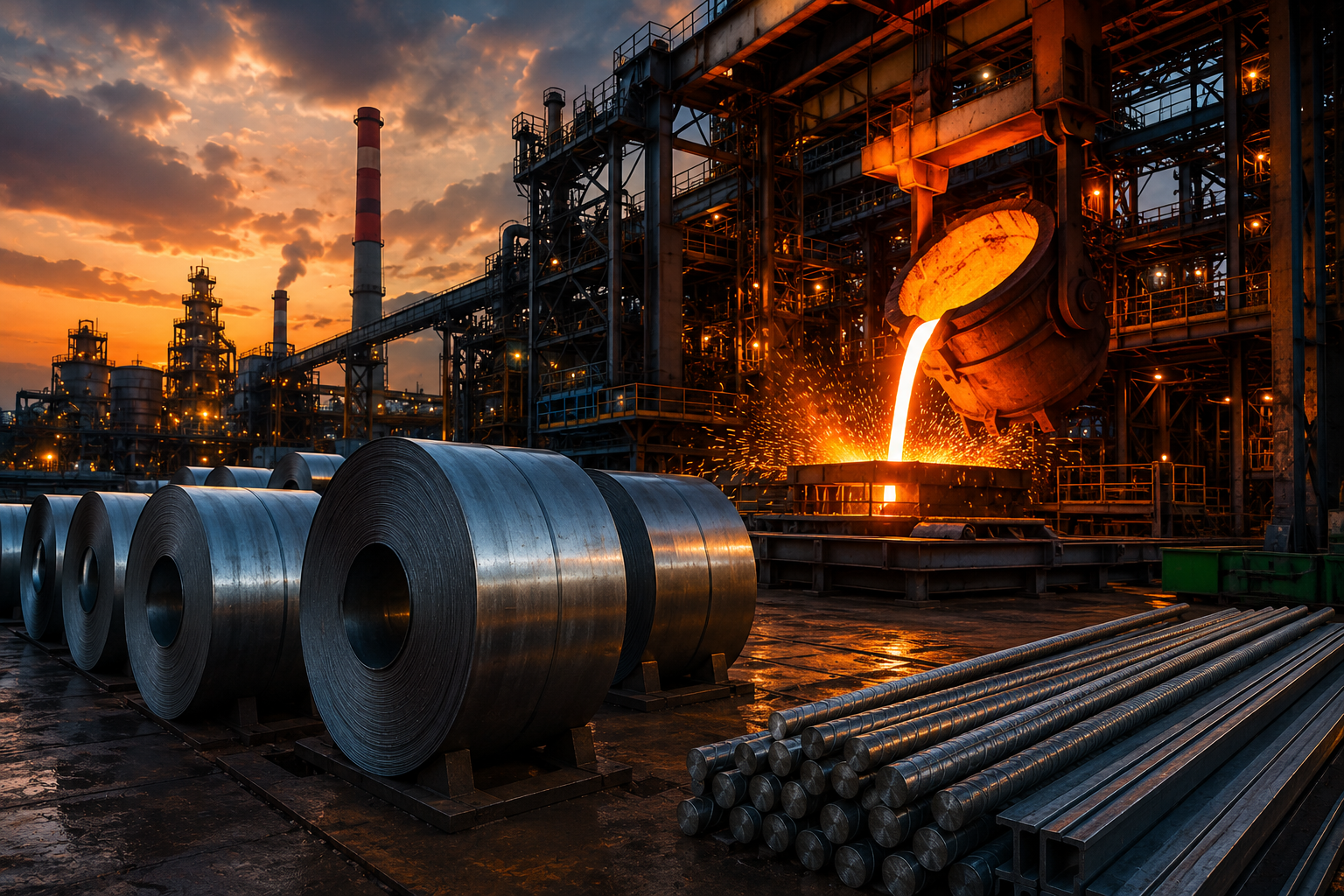
INew Delhi, EW-NN: India's steel sector sustained its growth trajectory in the first quarter of FY 2026-27, with crude steel production increasing 4.5 per cent year-on-year to 14.1 million tonnes (MT) in June, while domestic finished steel consumption rose 7.5 per cent during the month, according to provisional data released by the Ministry of Steel on Friday.
During the April-June quarter, crude steel production stood at 42.1 MT, up 3 per cent from 40.8 MT in the corresponding period last year. Finished steel production increased 4.9 per cent to 40.6 MT, while domestic consumption expanded 8.3 per cent to 41.6 MT, reflecting continued demand from infrastructure, construction and manufacturing sectors.
The report showed that India remained a net importer of finished steel during the first quarter despite a healthy rise in exports. Finished steel imports surged 49.2 per cent year-on-year to 2.06 MT during April-June, while exports increased 31.4 per cent to 1.59 MT. China remained India's largest source of finished steel imports, accounting for 32 per cent of total inbound shipments, followed by South Korea and Japan. On the export front, the UAE and Vietnam emerged as the leading destinations for Indian steel products.
Steel prices displayed a mixed trend during July. Prices of TMT bars declined 5.6 per cent month-on-month to ₹56,698 per tonne, while hot rolled coil, cold rolled coil and galvanised sheets also registered marginal declines. Raw material prices softened as NMDC iron ore prices, manganese ore and scrap all witnessed monthly reductions of 3 to 5 per cent, offering some cost relief to producers.
The alloy steel segment recorded strong growth, with production rising 28.2 per cent during the first quarter and domestic consumption increasing 25.6 per cent. In contrast, stainless steel production declined marginally by 1.9 per cent, although domestic consumption rose sharply by 27.5 per cent, supported by robust imports.
The Ministry said India's crude steelmaking capacity reached approximately 222 million tonnes per annum (MTPA) by June 2026, moving closer to the National Steel Policy target of 300 MTPA by 2030. Capacity expansion continued during the quarter, with Bhilai Steel Plant signing an EPCM consultancy agreement with MECON to expand production capacity from 7 MTPA to 10.2 MTPA. SAIL also announced that Bokaro Steel Plant would receive about 8.3 MT of iron ore annually through the 258-km Jamda-Bokaro slurry pipeline to ensure uninterrupted raw material supply.
On the sustainability front, the Ministry said 97 producers across 15 states have been issued Green Steel Certificates under the Government's Green Steel Initiative, with a majority receiving the highest five-star rating. SAIL also received the Golden Peacock Environment Management Award 2026 for its decarbonisation, pollution control and sustainable steelmaking initiatives.




[[comment.comment_text]]