Strategic Focus: A Turning Point as Washington and New Delhi Near Historic Trade Pact

 56 minutes ago
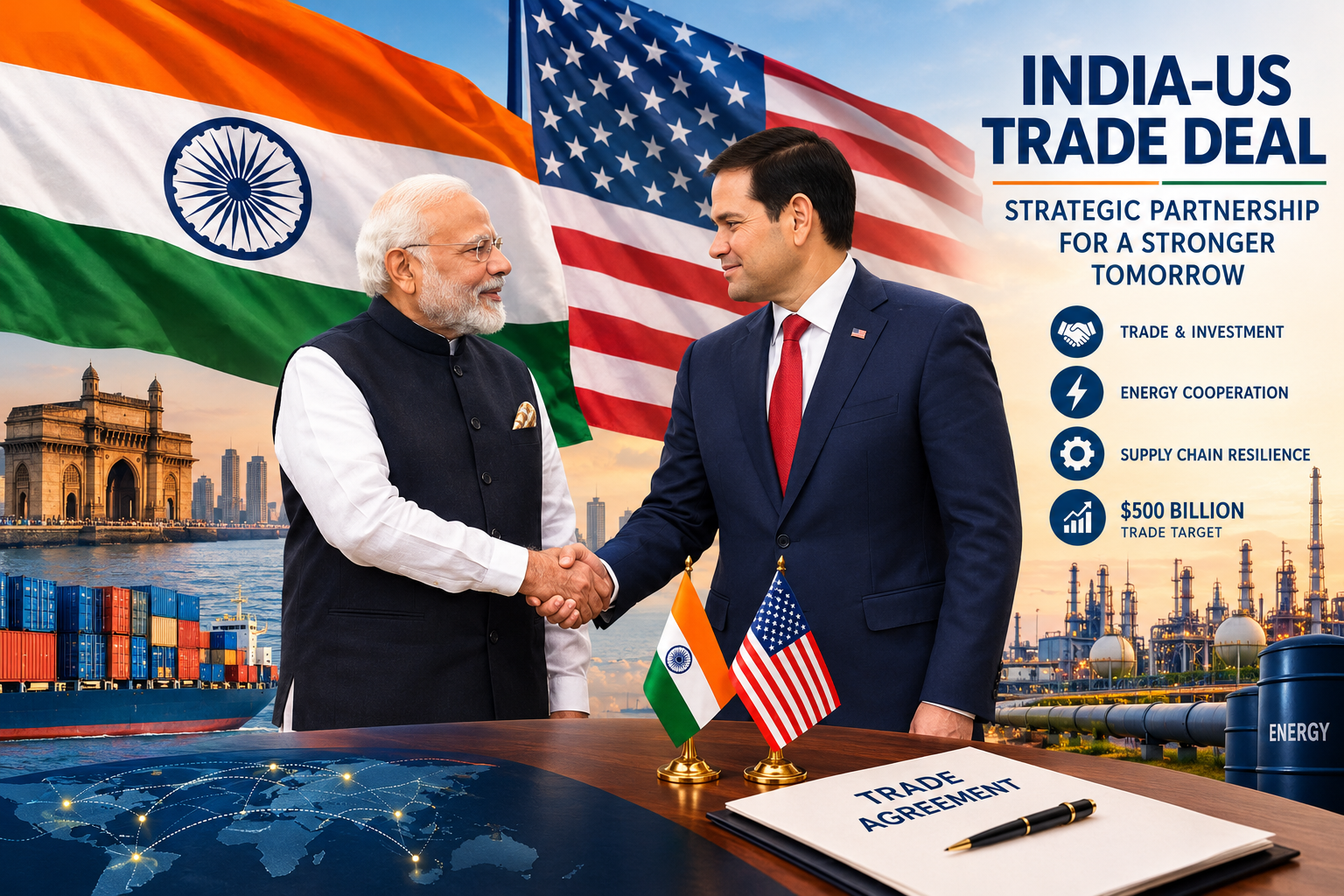
The partnership between India and the United States stands at a crucial crossroads, characterised by optimism over an impending trade pact and complex geopolitical negotiations. Ambassador Sergio Gor’s recent assurance that a bilateral trade deal is "very close" reflects a shared desire by both nations to overcome prior hurdles. Despite necessary legal redrafting prompted by recent domestic judicial interventions in the US, both Washington and New Delhi remain committed to ironing out tariff friction and expanding market access. Commerce Minister Piyush Goyal’s update on the first tranche undergoing final legal contours underscores that both governments are eager to transition from prolonged dialogue to tangible implementation.
Against this backdrop of imminent trade agreements, US Secretary of State Marco Rubio’s upcoming visit to Mumbai and Gujarat’s Jamnagar on October 19-22 carries profound significance. As bilateral trade eyes an ambitious target of $500 billion within the next three years, energy cooperation has emerged as a central pillar of strategic talks. Jamnagar—home to the world's largest refining hub—serves as an ideal backdrop for discussions centered on energy security, investment, and the shifting paradigms of global supply chains. Secretary Rubio’s presence in India highlights how economic policy and energy diplomacy are deeply intertwined in the contemporary bilateral framework.
However, these progressive trade discussions do not exist in a vacuum and must navigate nuanced diplomatic friction points, particularly concerning global energy markets and secondary considerations. With Washington keeping a close watch on international energy sourcing and trade alignments, Secretary Rubio’s itinerary provides a timely platform to address overlapping economic and strategic interests. Dialogue in financial capitals like Mumbai will likely emphasize how both democracies can harmonize their commercial ambitions while managing external pressures, ensuring that strategic autonomy and economic growth move hand in hand.
The broader trajectory of India-US relations continues to mature past traditional roadblocks, propelled by high-level political alignment between Prime Minister Narendra Modi and President Donald Trump. Ambassador Gor’s emphasis on the exponential growth of bilateral commerce—surpassing $250 billion—demonstrates the sheer resilience and depth of economic ties across sectors like pharmaceuticals, information technology, and advanced manufacturing. As regulatory frameworks tighten and legal details are finalized, both sides are positioning themselves to transform foundational trade chapters into a long-term, mutually beneficial economic engine.
Secretary Rubio’s three-day India visit bridges the gap between high-level diplomatic optimism and ground-level economic execution. By addressing energy frameworks in Jamnagar and financial cooperation in Mumbai, the visit bridges policy intent with industrial reality just as the first trade tranche nears the finish line. If both nations successfully leverage this momentum, the unfolding chapter will not only secure a robust bilateral trade agreement but also cement a resilient, multi-dimensional partnership capable of weathering global economic shifts for decades to come.









[[comment.comment_text]]